
What Is Secure Remote Access for Industrial Equipment
Secure remote access for industrial equipment is a protected method that allows authorized personnel to monitor, control, and maintain manufacturing systems from outside locations without exposing those systems to cyber threats. Unlike basic remote desktop connections, industrial-grade secure access uses multiple layers of security controls to protect critical operational technology (OT) systems.
The key difference between standard remote access and secure industrial remote access lies in the security framework. Standard solutions often rely on simple username-password combinations and basic VPN tunnels. Industrial secure access incorporates identity verification, encrypted communications, network segmentation, and continuous monitoring to prevent unauthorized access to production systems.
Who needs secure remote access for industrial equipment:
- Manufacturing facilities with distributed operations across multiple locations
- Companies using third-party maintenance vendors for specialized equipment
- Plants operating 24/7 that need off-hours technical support
- Organizations with aging equipment that requires frequent expert intervention
- Facilities subject to compliance requirements like NIST, ISO 27001, or industry-specific standards
Common use cases include:
- Remote diagnostics and troubleshooting of production line issues
- Software updates and configuration changes to industrial control systems
- Preventive maintenance monitoring and scheduling
- Emergency response when on-site personnel aren’t immediately available
- Training and knowledge transfer between facilities
The technology works by creating secure, encrypted tunnels between remote users and industrial networks while maintaining strict access controls. This allows necessary maintenance and monitoring activities without leaving systems vulnerable to ransomware, data theft, or operational disruption.
How Does Remote Access Work on Industrial Systems
Remote access on industrial systems operates through secure communication channels that connect external users to operational technology (OT) networks while maintaining strict security boundaries. The process involves authentication, authorization, and encrypted data transmission between remote devices and industrial control systems.
The basic workflow follows these steps:
- User Authentication: Remote users must prove their identity through multi-factor authentication before gaining any system access
- Authorization Check: The system verifies what specific equipment and functions the user is permitted to access
- Secure Connection: An encrypted tunnel is established between the user’s device and the industrial network
- Session Monitoring: All activities are logged and monitored in real-time for security compliance
- Controlled Access: Users can only interact with approved systems within their permission levels
- Session Termination: Access automatically expires after predetermined time limits
Key technical components include:
- Industrial Firewalls: Specialized firewalls designed for OT environments that understand industrial protocols
- VPN Gateways: Secure entry points that encrypt all data transmission
- Identity Management Systems: Centralized platforms that control user permissions and access rights
- Session Recording Tools: Software that captures all remote activities for audit and compliance purposes
- Network Segmentation: Isolation of critical systems from general network access
Industrial systems require different approaches from standard IT networks because they often use specialized communication protocols like Modbus, DNP3, or Ethernet/IP. These protocols weren’t originally designed with security in mind, so secure remote access solutions must add protection layers without disrupting normal operations.
The connection process also accounts for the real-time nature of industrial operations. Unlike office applications that can tolerate brief delays, manufacturing systems need consistent, low-latency connections to maintain production efficiency and safety.
Best Secure Remote Access Tools for Manufacturing
The most effective secure remote access tools for manufacturing environments combine industrial-specific security features with operational reliability. Leading solutions include Claroty, Nozomi Networks, and Dragos for comprehensive OT security platforms, while specialized tools like TeamViewer Industrial and Ewon Flexy focus specifically on remote equipment access.
Top-tier industrial remote access platforms:
Claroty Platform: Provides complete OT security with remote access capabilities, asset discovery, and threat detection. Best for large manufacturing operations requiring comprehensive security oversight. Pricing typically ranges from $100-300 per asset annually.
Nozomi Networks offers industrial cybersecurity with built-in remote access controls, network monitoring, and compliance reporting. Ideal for facilities with strict regulatory requirements. Cost varies based on network size and features.
Dragos Industrial: Specializes in OT threat detection with secure remote access modules. Particularly strong for critical infrastructure and high-security manufacturing environments.
Specialized remote access tools:
TeamViewer Industrial: Designed specifically for manufacturing equipment with industrial-grade security features. Offers role-based access, session recording, and integration with existing OT systems. Pricing starts around $50 per user monthly.
Ewon Flexy: Hardware-based solution that creates secure VPN connections for industrial equipment. Popular for legacy system integration and vendor access management.
Choosing the right tool depends on several factors:
- Size and complexity of your industrial network
- Compliance requirements in your industry
- Budget for both software licensing and implementation
- Integration needs with existing security infrastructure
- Level of technical expertise available in-house
Common mistake to avoid: Don’t select tools based solely on IT department familiarity. Industrial environments have unique requirements that standard business remote access tools cannot adequately address. The cheapest option often becomes the most expensive when security incidents occur.
For most mid-sized manufacturing operations, a combination approach works best, using a comprehensive OT security platform for overall network protection while implementing specialized remote access tools for specific equipment or vendor needs.
Secure Remote Access vs VPN for Industrial Use
Secure remote access solutions designed for industrial use provide significantly better protection than traditional VPNs for manufacturing environments. While VPNs create encrypted tunnels, they typically grant broad network access that can expose critical systems to threats, whereas industrial secure access uses Zero Trust principles to limit access to only necessary systems and functions.
Key differences in security approach:
Traditional VPNs operate on a “trust but verify” model; once users authenticate, they often gain access to entire network segments. This creates risk because compromised credentials can lead to widespread system exposure. Industrial secure access follows Zero Trust Network Access (ZTNA) principles, continuously verifying user identity and device security while restricting access to specific equipment or functions.
VPN limitations for industrial environments:
- Broad network access increases the attack surface
- Limited visibility into user activities within the network
- Difficulty integrating with industrial protocols and systems
- Poor performance with real-time industrial applications
- Minimal control over what users can do once connected
Advantages of purpose-built industrial remote access:
- Granular access controls down to the individual equipment level
- Built-in understanding of industrial protocols and safety systems
- Session recording and detailed audit trails for compliance
- Integration with existing OT security infrastructure
- Performance optimization for industrial applications
When VPNs might still be appropriate:
- Small facilities with limited industrial systems
- Temporary access needs that don’t justify specialized solutions
- Budget constraints that prevent comprehensive security upgrades
- Legacy systems that cannot integrate with modern security platforms
Cost considerations: While industrial secure access solutions typically cost 2-3 times more than basic VPN services, they prevent the much higher costs of security incidents. The average manufacturing cyber attack costs $3.6 million in downtime and recovery, making the investment in proper security economically justified.
Implementation timeline: VPNs can be deployed quickly but may require extensive configuration to work safely with industrial systems. Purpose-built solutions take longer to implement but provide better security from day one.
Choose VPNs only for low-risk applications or as temporary solutions while implementing comprehensive industrial security. For any access to critical production systems, invest in solutions specifically designed for OT environments.
How Much Does Industrial Remote Access Software Cost
Industrial remote access software costs typically range from $50 to $200 per user per month for comprehensive solutions, with enterprise platforms reaching $300+ monthly per user depending on features and support levels. Hardware-based solutions may require additional upfront investments of $500 to $2,000 per connection point.
Pricing structure breakdown:
Entry-level solutions ($50-75 per user monthly):
- Basic secure remote access with standard encryption
- Limited session recording and audit capabilities
- Email or chat support during business hours
- Suitable for small manufacturing facilities with simple needs
Mid-tier platforms ($100-150 per user monthly):
- Advanced security features, including multi-factor authentication
- Comprehensive session monitoring and compliance reporting
- Integration with existing security infrastructure
- 24/7 technical support and faster response times
- Role-based access controls and approval workflows
Enterprise solutions ($200-300+ per user monthly):
- Complete OT security platforms with remote access modules
- Advanced threat detection and response capabilities
- Custom integrations and dedicated support teams
- Compliance assistance and regulatory reporting tools
- Unlimited session recording and long-term data retention
Additional cost factors:
- Implementation and training services: $5,000-50,000 depending on complexity
- Hardware components for legacy system integration: $500-2,000 per device
- Ongoing security assessments and updates: $10,000-25,000 annually
- Compliance consulting and audit support: $15,000-40,000 per assessment
Hidden costs to consider:
- Network infrastructure upgrades to support secure access
- Staff training on new security procedures and tools
- Increased bandwidth requirements for encrypted communications
- Integration work with existing manufacturing execution systems
Cost-benefit analysis: While these solutions require significant investment, they typically pay for themselves by preventing a single major security incident. Manufacturing downtime costs average $50,000 per hour, making security investments highly cost-effective.
Budget planning tip: Start with pilot implementations on non-critical systems to demonstrate value and refine requirements before full deployment. Many vendors offer proof-of-concept pricing that reduces initial investment risk.
Most organizations find that investing in mid-tier solutions provides the best balance of security, functionality, and cost for typical manufacturing environments.
Can Remote Access Compromise Industrial Equipment Security
Remote access can significantly compromise industrial equipment security if implemented without proper safeguards, but well-designed secure access systems actually improve overall security by providing better visibility and control over system interactions. The key difference lies in the implementation approach and ongoing security management.
Primary security risks from poorly implemented remote access:
Credential-based attacks: Weak or shared passwords provide easy entry points for attackers. Once inside, malicious actors can move laterally through industrial networks, accessing critical control systems and potentially causing production shutdowns or safety incidents.
Always-on connections: Permanent remote access connections create persistent attack vectors. If these connections lack proper monitoring and access controls, they can serve as backdoors for ransomware deployment or data theft.
Unmonitored sessions: Without session logging and real-time monitoring, unauthorized activities can go undetected for weeks or months, allowing attackers to study systems and plan more sophisticated attacks.
How proper implementation prevents these risks:
Multi-layered authentication: Combining something you know (password), something you have (token), and something you are (biometrics) makes unauthorized access exponentially more difficult.
Time-limited access: Sessions that automatically expire after predetermined periods reduce exposure windows. Even if credentials are compromised, access remains limited in duration.
Network segmentation: Isolating industrial systems from general IT networks prevents lateral movement. Remote users can only access specifically authorized equipment and functions.
Continuous monitoring: Real-time session monitoring and automated threat detection identify suspicious activities immediately, enabling a rapid response to potential security incidents.
Security improvement through proper remote access:
- Better visibility into all system interactions and changes
- Centralized access control replaces scattered local accounts
- Detailed audit trails for compliance and incident investigation
- Reduced need for physical access, improving facility security
- Standardized security procedures across all remote interactions
Common implementation mistake: Treating remote access as purely a convenience feature rather than a security-critical system. Organizations that approach remote access with proper security planning typically see improved overall security posture.
The answer isn’t to avoid remote access but to implement it correctly with appropriate security controls and ongoing management.
What Are the Risks of Remote Access to Factory Equipment
The primary risks of remote access to factory equipment include ransomware infiltration, unauthorized system manipulation, data theft, and operational disruption. However, these risks can be effectively managed through proper security controls and monitoring systems.
Immediate operational risks:
Production shutdown: Attackers gaining control of critical equipment can halt manufacturing operations, costing an average of $50,000 per hour in lost production. This risk is highest when remote access lacks proper authentication and authorization controls.
Safety system compromise: Unauthorized access to safety-critical systems could disable protective measures, potentially leading to equipment damage or worker injury. This is particularly concerning in chemical processing, power generation, or heavy manufacturing environments.
Quality control manipulation: Attackers might alter production parameters to create defective products, leading to recalls, customer dissatisfaction, and regulatory penalties. These subtle changes can go undetected for extended periods.
Long-term security risks:
Intellectual property theft: Remote access provides potential pathways to proprietary manufacturing processes, product designs, and operational data. Competitors or nation-state actors often target this information for economic advantage.
Supply chain infiltration: Compromised systems can serve as launching points for attacks on suppliers, customers, or partner organizations, potentially damaging business relationships and creating legal liability.
Regulatory compliance violations: Inadequate remote access security can lead to violations of industry regulations like NERC CIP for power utilities or FDA requirements for pharmaceutical manufacturing.
Risk mitigation strategies:
Implement Zero Trust architecture: Verify every access request regardless of user location or previous authentication status. This prevents lateral movement even if initial access is compromised.
Use application-specific access: Instead of providing broad network access, limit remote users to specific applications or equipment functions they actually need.
Deploy behavioral monitoring: Advanced systems can detect unusual user behavior patterns that might indicate compromised accounts or insider threats.
Maintain offline backups: Ensure critical system configurations and data are backed up to offline storage that cannot be accessed through remote connections.
Edge case consideration: Legacy equipment often lacks built-in security features, making it particularly vulnerable to remote access risks. These systems may require additional protective measures like hardware security modules or air-gapped networks.
The key is balancing operational needs with security requirements through layered protection strategies rather than avoiding remote access entirely.
Secure Remote Access for Legacy Industrial Systems
Legacy industrial systems require specialized security approaches because they were designed before cybersecurity became a critical concern, often lacking built-in authentication, encryption, or access control capabilities. The solution involves adding security layers around these systems without disrupting their core operations or requiring expensive replacements.
Common challenges with legacy equipment:
- Operating systems that no longer receive security updates
- Industrial protocols that transmit data in plain text
- Shared or default passwords that cannot be easily changed
- Limited processing power that cannot support modern security software
- Critical production roles that prevent system downtime for upgrades
Effective protection strategies:
Network segmentation and isolation: Create secure network zones that isolate legacy systems from general network access. Remote users connect to a secure gateway that controls and monitors all interactions with older equipment.
Protocol translation and security: Deploy industrial security appliances that translate between secure modern protocols and legacy communication methods. These devices add encryption and authentication without requiring changes to existing equipment.
Hardware security modules: Install dedicated security devices that provide authentication and encryption capabilities for systems that lack these features natively. These modules can often be added without modifying existing equipment.
Secure remote access gateways: Use specialized industrial gateways that create secure tunnels for remote access while maintaining compatibility with legacy protocols and interfaces.
Implementation approach for legacy systems:
- Asset inventory and risk assessment: Document all legacy equipment, communication protocols, and current security gaps
- Prioritize by criticality: Focus security improvements on systems that pose the highest operational or safety risks
- Pilot testing: Test security additions on non-critical systems first to ensure compatibility
- Phased deployment: Implement security improvements gradually to minimize operational disruption
- Ongoing monitoring: Establish continuous monitoring to detect any issues with legacy system performance
Cost considerations: Adding security to legacy systems typically costs 20-40% of full system replacement while providing 80-90% of the security benefits. This makes it an attractive option for equipment that still has years of useful operational life.
When replacement becomes necessary: If legacy systems cannot support any security additions without compromising safety or reliability, consider replacement as part of planned maintenance cycles rather than emergency upgrades.
Success factors: Work with vendors who understand both legacy industrial systems and modern cybersecurity requirements. Avoid solutions that require significant changes to existing operational procedures.
Who Needs Secure Remote Access for Industrial Equipment
Manufacturing facilities with distributed operations, third-party maintenance contracts, or 24/7 production schedules have the greatest need for secure remote access to industrial equipment. Organizations subject to regulatory compliance requirements or those handling sensitive production data also require these capabilities to maintain both operational efficiency and security standards.
Primary candidates for implementation:
Multi-site manufacturers: Companies operating multiple facilities need secure remote access to maintain consistent operations, share expertise between locations, and provide centralized technical support. This is particularly important for organizations with specialized equipment that requires expert knowledge not available at every site.
Companies using external service providers: Facilities that rely on equipment vendors, system integrators, or specialized maintenance contractors need secure methods for providing temporary access without compromising overall network security.
Critical infrastructure operators: Power plants, water treatment facilities, and other essential services require secure remote access for emergency response while maintaining strict security standards mandated by regulatory bodies.
High-value manufacturing operations: Pharmaceutical, semiconductor, and aerospace manufacturers handling sensitive processes or intellectual property need secure access methods that protect proprietary information while enabling necessary remote operations.
Specific organizational indicators:
- Annual revenue over $50 million with significant manufacturing components
- Operations that cannot tolerate more than 4-6 hours of unplanned downtime
- Facilities subject to FDA, NERC, or other regulatory oversight
- Companies with cyber insurance policies requiring specific security controls
- Organizations with distributed engineering or technical support teams
Industry-specific considerations:
Automotive manufacturing requires secure access for production line optimization and quality control systems across multiple assembly plants.
Food and beverage processing: Needs remote monitoring for safety-critical systems while maintaining FDA compliance and protecting consumer safety.
Chemical processing: Must balance operational efficiency with strict safety and environmental regulations that govern remote access to control systems.
Decision factors for implementation:
- The cost of downtime exceeds $25,000 per hour
- Current remote access methods rely on basic VPNs or unsecured connections
- Recent security assessments identified remote access as a significant risk
- Compliance audits require improved access controls and monitoring
- Growth plans include adding new facilities or expanding operations
When secure remote access might not be necessary: Small, single-location manufacturers with simple equipment and on-site technical expertise may find that basic security measures and local support provide adequate protection and operational capability.
Alternatives to Remote Access for Industrial Monitoring
Several alternatives to remote access can provide industrial monitoring capabilities while reducing cybersecurity risks, including on-site technical support, automated monitoring systems, and hybrid approaches that combine local presence with limited remote capabilities.
On-site support strategies:
Dedicated technical staff: Maintaining qualified technicians at each facility eliminates remote access needs for routine monitoring and maintenance. This approach works well for larger facilities where the cost of additional staff is justified by reduced security risks and faster response times.
Traveling technical teams: Some organizations use mobile technical teams that rotate between facilities at scheduled intervals. This reduces staffing costs while maintaining local expertise for complex issues.
Vendor service contracts: Comprehensive on-site service agreements can provide expert support without requiring remote access. Vendors maintain a local presence or guarantee a rapid on-site response for critical issues.
Automated monitoring and response systems:
Industrial IoT sensors: Deploy sensors that monitor equipment health, performance, and environmental conditions without requiring human remote access. These systems can alert staff to issues while maintaining network security through one-way data transmission.
Automated diagnostic systems: Advanced equipment often includes built-in diagnostic capabilities that can identify and report problems without external access. These systems can trigger maintenance requests or automatic shutdowns when necessary.
Predictive maintenance platforms: Machine learning systems can analyze equipment data patterns to predict failures and schedule maintenance proactively, reducing the need for reactive remote troubleshooting.
Hybrid approaches:
Limited remote monitoring with local response: Use secure, read-only remote monitoring to track system status while requiring physical presence for any control actions or system changes.
Scheduled remote access windows: Allow remote access only during predetermined time periods with additional security measures and oversight during these sessions.
Emergency-only remote access: Maintain secure remote access capabilities but restrict use to genuine emergencies with special authorization procedures.
Cost-benefit analysis considerations:
On-site alternatives typically involve higher ongoing labor costs but lower technology and security infrastructure investments. Remote access solutions require significant upfront security investments but can reduce long-term operational costs through improved efficiency.
When alternatives work best:
- Facilities with relatively simple equipment that doesn’t require specialized expertise
- Organizations with strong local technical capabilities
- High-security environments where remote access risks outweigh operational benefits
- Smaller operations where remote access infrastructure costs exceed benefits
The optimal approach often combines multiple strategies based on specific equipment criticality, security requirements, and operational needs.
How to Set Up Secure Remote Access Without Vulnerabilities
Setting up secure remote access without vulnerabilities requires a systematic approach that implements multiple security layers, follows Zero Trust principles, and maintains ongoing monitoring and management. The process involves careful planning, proper technology selection, and rigorous testing before deployment.
Phase 1: Security architecture planning
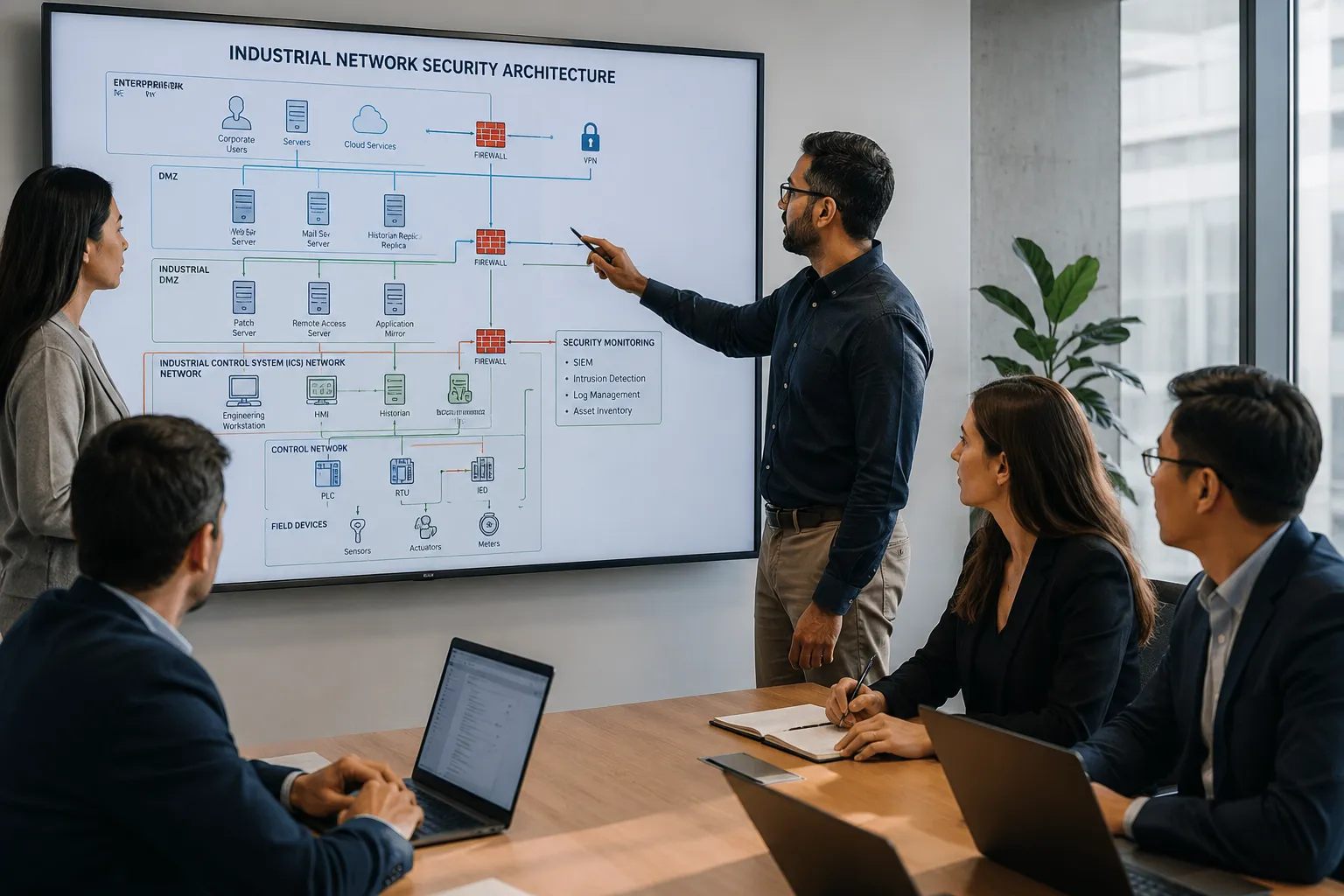
Network segmentation design: Create isolated network zones for industrial systems, separating them from general IT networks and internet access. Design secure pathways that allow necessary communication while preventing lateral movement.
Access control framework: Define exactly who needs access to which systems and under what circumstances. Create detailed role-based permissions that limit users to only the equipment and functions essential for their responsibilities.
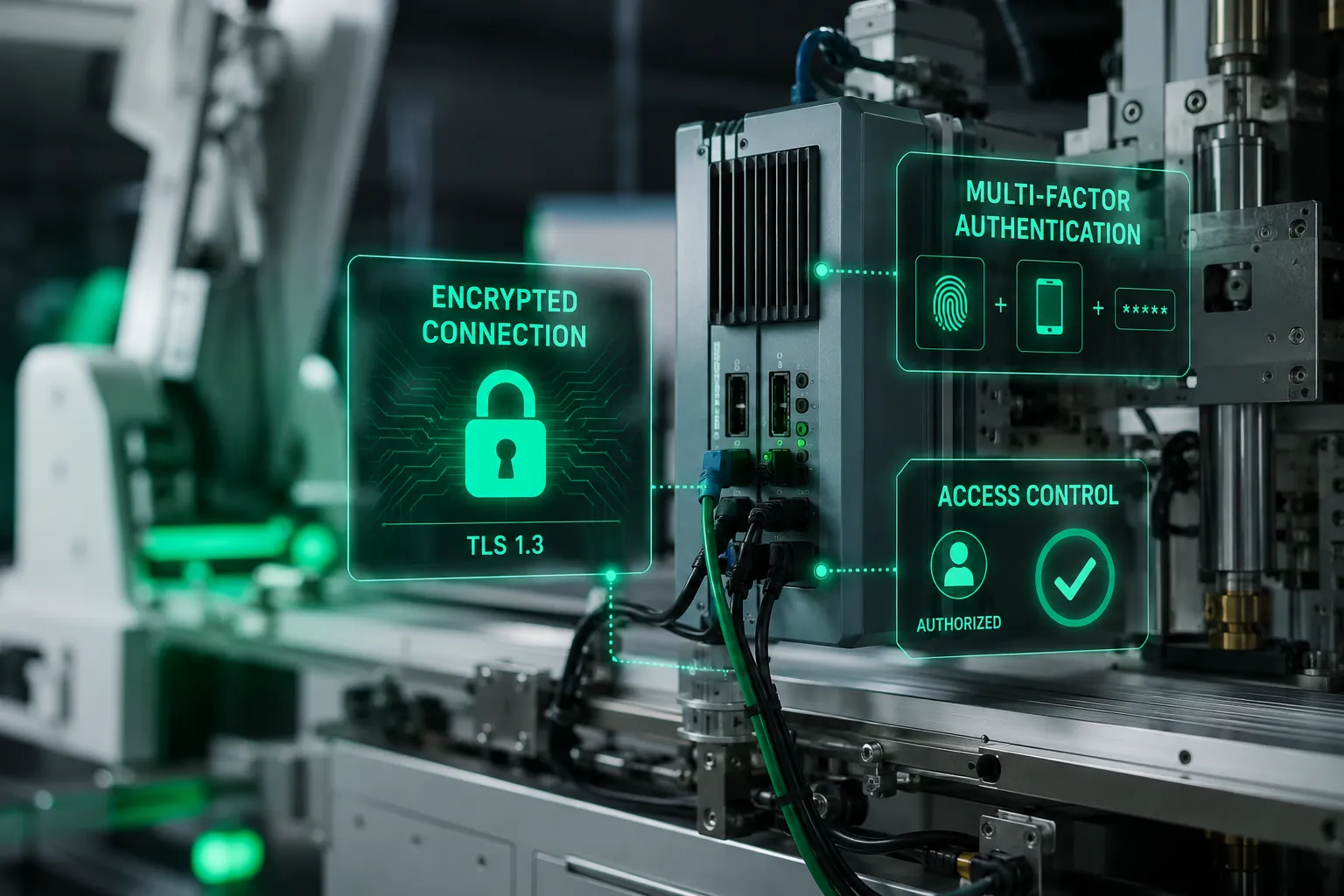
Authentication strategy: Implement multi-factor authentication using at least two different verification methods. Consider biometric authentication for high-security environments or time-sensitive access tokens for temporary users.
Phase 2: Technology implementation
Deploy industrial firewalls: Install firewalls specifically designed for OT environments that understand industrial protocols and can inspect traffic for anomalies without disrupting operations.
Configure secure gateways: Set up dedicated access points that encrypt all communications and log every interaction. These gateways should include session recording capabilities for audit and compliance purposes.
Implement monitoring systems: Deploy real-time monitoring that tracks user behavior, system performance, and security events. Configure automated alerts for suspicious activities or unauthorized access attempts.
Phase 3: Testing and validation
Penetration testing: Conduct thorough security testing to identify potential vulnerabilities before going live. Include both automated scanning and manual testing by qualified security professionals.
Operational testing: Verify that remote access doesn’t interfere with normal production operations. Test during different operational scenarios to ensure compatibility with existing workflows.
Compliance verification: Ensure all security controls meet relevant regulatory requirements and industry standards for your specific manufacturing environment.
Ongoing security maintenance:
- Regular security assessments and updates to address new threats
- Continuous monitoring of access logs and user behavior patterns
- Periodic review and update of access permissions and user roles
- Training programs to keep staff current on security procedures
Critical implementation mistakes to avoid:
- Rushing deployment without adequate testing
- Using default passwords or weak authentication methods
- Failing to monitor and log remote access activities
- Neglecting regular security updates and maintenance
- Implementing solutions without proper staff training
Timeline expectations: Proper implementation typically takes 3-6 months for comprehensive deployment, including planning, testing, and staff training. Organizations that rush this process often create security gaps that require expensive remediation later.
Secure Remote Access for IoT Industrial Devices
IoT industrial devices present unique security challenges for remote access because they often have limited processing power, minimal built-in security features, and operate in environments where traditional security software cannot be installed. Securing these devices requires specialized approaches that work within their technical constraints while maintaining operational effectiveness.
Common IoT device vulnerabilities:
- Default or weak authentication credentials that cannot be easily changed
- Limited encryption capabilities due to processing power constraints
- Infrequent or impossible security updates from manufacturers
- Plain-text communication protocols that expose data transmission
- Minimal logging capabilities that make security monitoring difficult
Effective security strategies for IoT devices:
Network-level protection: Implement security controls at the network level rather than on individual devices. Use industrial firewalls and secure gateways that can inspect and protect IoT communications without requiring device modifications.
Device identity management: Deploy systems that can uniquely identify and authenticate each IoT device, even when the devices themselves have limited security features. This often involves certificate-based authentication managed by network infrastructure.
Encrypted communication tunnels: Create secure communication channels between IoT devices and monitoring systems using network-level encryption that doesn’t require device-side processing power.
Microsegmentation: Isolate IoT devices into small network segments that limit potential attack spread. Each device or device type operates in its own secure zone with carefully controlled communication paths.
Implementation approaches:
Gateway-based security: Deploy industrial IoT gateways that aggregate multiple device connections and provide centralized security services including authentication, encryption, and monitoring.
Cloud-based device management: Use secure cloud platforms specifically designed for industrial IoT that can manage device authentication, data encryption, and access controls without requiring local security infrastructure.
Edge computing security: Implement security processing at the network edge, closer to IoT devices, to provide real-time protection without introducing latency that could affect operational performance.
Monitoring and management considerations:
- Implement anomaly detection that can identify unusual device behavior patterns
- Use network traffic analysis to monitor IoT device communications for security threats
- Establish automated response procedures for compromised or malfunctioning devices
- Maintain detailed inventories of all IoT devices and their security status
Cost-effective security measures:
- Group similar devices for centralized security management
- Use network-based security solutions that protect multiple devices simultaneously
- Implement automated security monitoring to reduce manual oversight requirements
- Focus security investments on devices that pose the highest operational or safety risks
Future-proofing strategies: When selecting new IoT devices, prioritize those with built-in security features, regular update capabilities, and support for modern authentication protocols, even if initial costs are higher.
What Happens If Industrial Remote Access Gets Hacked
When industrial remote access gets compromised, attackers can potentially shut down production lines, steal sensitive manufacturing data, deploy ransomware across operational systems, or manipulate safety controls, leading to costs that average $3.6 million per incident in the manufacturing sector. The impact depends on the level of access gained and how quickly the breach is detected and contained.
Immediate operational consequences:
Production shutdown: Attackers often target manufacturing execution systems to halt operations, either for ransom demands or to cause maximum business disruption. Recovery typically requires 24-72 hours even with good backup systems, resulting in significant revenue loss and customer impact.
Safety system compromise: In worst-case scenarios, attackers might disable safety interlocks or emergency shutdown systems, potentially creating hazardous conditions for workers and equipment. This is particularly dangerous in chemical processing, power generation, or heavy manufacturing environments.
Quality control manipulation: Subtle attacks might alter production parameters to create defective products without immediate detection. This can lead to product recalls, liability issues, and long-term brand damage that extends far beyond the initial incident.
Data and intellectual property theft:
Process knowledge theft: Manufacturing processes often represent significant competitive advantages. Stolen process data, recipes, or operational parameters can be sold to competitors or used to replicate proprietary manufacturing capabilities.
Customer and supplier information: Compromised systems may expose sensitive business relationships, pricing information, or customer data, leading to regulatory penalties and business relationship damage.
Financial and operational data: Access to production planning, inventory, and financial systems can provide attackers with valuable information for further attacks or corporate espionage.
Long-term business impact:
Regulatory penalties: Manufacturing sectors often face strict compliance requirements. Security breaches can result in regulatory fines, increased oversight, and mandatory security improvements that add ongoing operational costs.
Cyber insurance complications: Many policies require specific security measures for coverage. Inadequate remote access security can void coverage or significantly increase future premiums.
Customer and partner confidence: Major security incidents often damage business relationships, particularly with customers who depend on reliable supply chains or partners who share sensitive information.
Recovery and remediation process:
- Immediate containment: Isolate affected systems and revoke all remote access until security is restored
- Forensic investigation: Determine attack methods, scope of compromise, and data exposure
- System restoration: Rebuild compromised systems from clean backups and implement additional security measures
- Communication management: Notify stakeholders, regulators, and customers as required by law and business relationships
- Security improvement: Address vulnerabilities that enabled the attack and enhance the overall security posture
Prevention is far more cost-effective than recovery: Investing in proper secure remote access typically costs 10-20% of potential breach recovery expenses while providing ongoing operational benefits.
Compliance Requirements for Remote Access Industrial Equipment
Compliance requirements for remote access to industrial equipment vary by industry but generally mandate multi-factor authentication, session logging, access controls, and regular security assessments. Key frameworks include NIST Cybersecurity Framework, ISO 27001, NERC CIP for power utilities, and FDA regulations for pharmaceutical manufacturing.
Universal compliance elements:
Identity and access management: All major frameworks require strong user authentication, role-based access controls, and regular review of user permissions. This includes requirements for unique user accounts, prohibition of shared credentials, and documented access approval processes.
Audit trails and logging: Comprehensive logging of all remote access sessions is required for compliance across industries. Logs must include user identity, systems accessed, actions performed, and session duration. Most frameworks require log retention for 1-7 years, depending on industry.
Encryption and data protection: All remote communications must use strong encryption both in transit and at rest. This includes protection of authentication credentials, session data, and any information transmitted during remote access sessions.
Industry-specific requirements:
Power and utilities (NERC CIP): Requires extensive documentation of remote access procedures, mandatory security training for users, and specific technical controls for critical cyber assets. Remote access must be approved, monitored, and automatically terminated after predetermined periods.
Pharmaceutical manufacturing (FDA 21 CFR Part 11) mandates electronic signature requirements, detailed audit trails, and system validation for any remote access to systems involved in drug manufacturing or quality control.
Financial services manufacturing: Must comply with SOX requirements for financial reporting systems and may face additional state and federal regulations depending on products manufactured.
Healthcare device manufacturing: Subject to HIPAA requirements if handling patient data, plus FDA medical device regulations for quality management systems.
Implementation requirements:
Documentation and procedures: All frameworks require written policies covering remote access approval, monitoring, and incident response. These policies must be regularly updated and include staff training requirements.
Regular assessments: Annual or bi-annual security assessments are typically required, including penetration testing, vulnerability scanning, and compliance audits by qualified third parties.
Incident response planning: Detailed procedures for responding to remote access security incidents, including notification requirements, containment procedures, and recovery processes.
Common compliance challenges:
- Balancing operational needs with security requirements
- Maintaining documentation and evidence for audit purposes
- Keeping up with evolving regulatory requirements
- Training staff on compliance procedures and updates
- Managing compliance across multiple regulatory frameworks
Cost of non-compliance: Regulatory penalties can range from $10,000 to $1 million per violation, plus potential business license restrictions and increased regulatory oversight. The reputational damage often exceeds direct financial penalties.
Best practices for maintaining compliance:
- Work with compliance specialists familiar with your specific industry requirements
- Implement automated compliance monitoring and reporting tools
- Conduct regular internal audits to identify and address gaps
- Maintain detailed documentation of all security controls and procedures
- Establish relationships with qualified third-party assessors for objective compliance validation