


The Harsh Reality: Why Small Business Cybersecurity Plans Exist Only on Paper
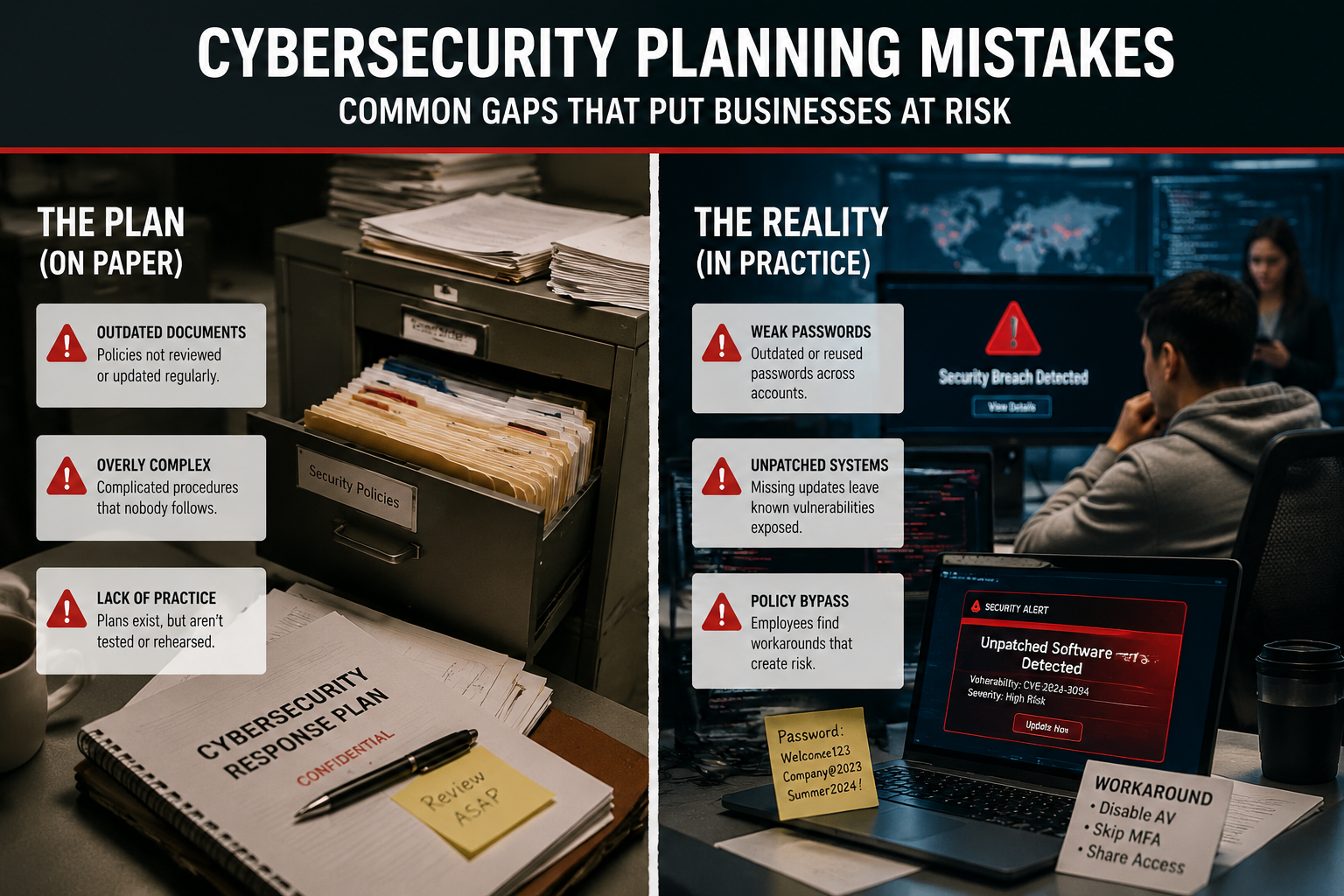
Most small business cybersecurity plans fail because they never leave the filing cabinet. Business owners spend weeks crafting detailed security policies, then file them away and return to business as usual. This creates a dangerous illusion of protection while leaving the company completely vulnerable.
I’ve seen this pattern countless times. A dental practice creates a comprehensive HIPAA compliance plan but continues using the same weak passwords from 2018. An accounting firm develops detailed data protection procedures but never trains staff on recognizing phishing emails. A manufacturing company writes incident response protocols but has no idea how to actually implement them during a real attack.
The disconnect happens because creating a plan feels like solving the problem. Business owners check “cybersecurity” off their to-do list without realizing that writing the plan is just the beginning. Real protection comes from daily execution, not document creation.
Here’s what separates successful cybersecurity from failed attempts: successful plans include specific implementation steps, assigned responsibilities, and regular check-ins. Failed plans read like academic papers with no connection to daily operations.
Common Planning Mistakes That Guarantee Failure
Small business cybersecurity plans fail when they focus on compliance rather than protection. Many business owners create plans to satisfy insurance requirements or regulatory demands without considering whether these plans actually defend against modern threats.
The biggest mistake is treating cybersecurity as a one-time project instead of an ongoing process. Business owners often think, “We’ll implement this plan and be secure forever.” This approach ignores the reality that cyber threats evolve daily, and yesterday’s protection becomes today’s vulnerability.
Another critical error is copying generic templates without customization. A healthcare practice downloads a manufacturing company’s security plan and wonders why it doesn’t address patient data protection. Effective cybersecurity plans must reflect your specific business operations, data types, and risk factors.
Many plans also fail because they’re written by people who don’t understand the daily workflow. The plan requires employees to change passwords every 30 days, but the business uses software that can’t handle frequent password changes. The plan mandates two-factor authentication, but the company’s main application doesn’t support it.
Resource allocation represents another common failure point. Plans often require security measures that exceed the company’s technical capabilities or budget. A five-person law firm can’t implement enterprise-level security monitoring, but their plan assumes they can.
Missing Components That Leave Businesses Vulnerable
The most overlooked component in small business cybersecurity plans is employee training. Plans typically focus on technical controls—firewalls, antivirus software, backup systems—while ignoring the human element that causes most security breaches.
Employees need regular, practical training on recognizing social engineering attempts, creating strong passwords, and following security protocols. Yet most plans either skip training entirely or include vague statements like “provide annual security awareness training” without specifying content or delivery methods.
Incident response procedures represent another critical gap. Plans often include theoretical response frameworks but lack practical details like who to call, what information to gather, and how to communicate with customers during a breach. When an actual incident occurs, employees waste precious time figuring out basic response steps.
Regular security testing rarely appears in small business plans, yet it’s essential for identifying vulnerabilities before attackers do. This includes testing backup systems, verifying that security software actually works, and conducting simulated phishing exercises to gauge employee awareness.
Vendor management policies are frequently missing despite representing significant risk. Small businesses often grant broad system access to IT support companies, cloud service providers, and software vendors without establishing security requirements or monitoring their access.
Business continuity planning also gets overlooked. Plans focus on preventing attacks but don’t address how to maintain operations during recovery. This leaves businesses scrambling to serve customers while rebuilding compromised systems.
Why Technology Alone Never Provides Complete Protection
Technology forms the foundation of cybersecurity, but it cannot solve security problems created by poor processes and untrained employees. The most expensive security software becomes useless when employees consistently bypass it or use it incorrectly.
I’ve worked with companies that invested thousands in advanced security tools while allowing employees to use “password123” for critical systems. The technology could detect sophisticated attacks but couldn’t prevent basic credential theft through social engineering.
Security software requires proper configuration and ongoing maintenance to provide protection. Many small businesses install security tools with default settings and never update them. Firewalls remain configured for the company’s network from three years ago. Antivirus software runs with outdated definitions. Backup systems haven’t been tested since installation.
The human element determines whether technology succeeds or fails. Employees must understand why security measures exist and how to use them properly. They need to recognize when something seems suspicious and know how to report potential threats.
Effective cybersecurity combines technology with clear processes and regular training. Technology handles routine monitoring and detection. Processes ensure consistent security practices across the organization. Training helps employees make good security decisions when technology can’t guide them.
This integrated approach provides much better protection than expensive technology alone. A small business with basic security tools, clear procedures, and well-trained employees typically faces fewer successful attacks than a company with advanced technology but poor security practices.
The Critical Role of Training, Testing, and Monitoring
Employee training represents the most cost-effective cybersecurity investment for small businesses. Well-trained employees can identify and stop attacks that bypass technical controls, while untrained employees can compromise even the best security systems.
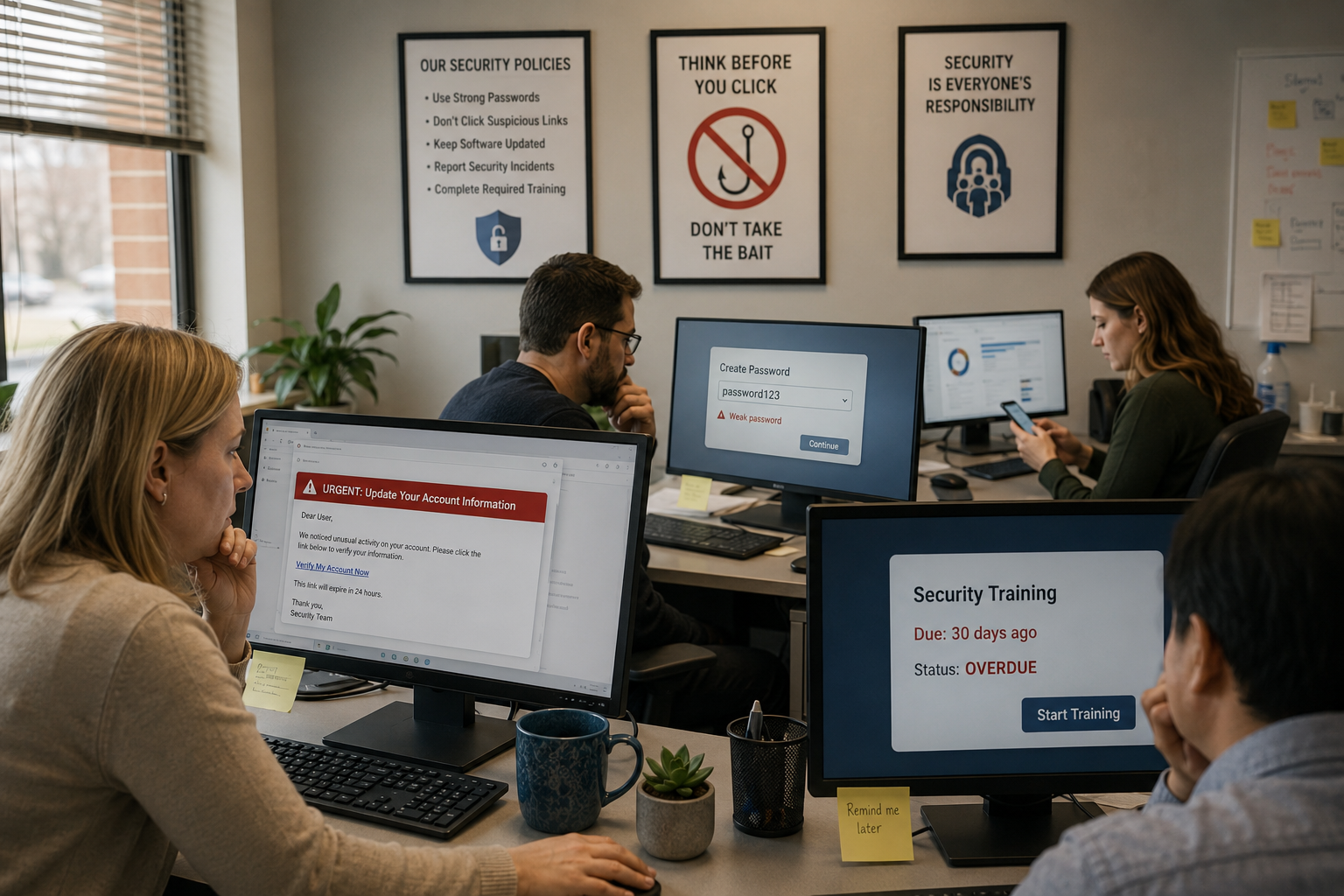
Effective training goes beyond annual presentations about password security. Employees need regular, practical exercises that simulate real attack scenarios. This includes phishing simulations, social engineering tests, and hands-on practice with security tools.
Regular testing reveals whether security measures actually work when needed. Many businesses discover during actual incidents that their backup systems don’t function, their incident response procedures are outdated, or their security software isn’t properly configured.
Testing should include technical systems and human processes. Technical testing verifies that firewalls block unauthorized access, antivirus software detects malware, and backup systems can restore data. Process testing ensures employees know how to respond to security incidents and follow established procedures.
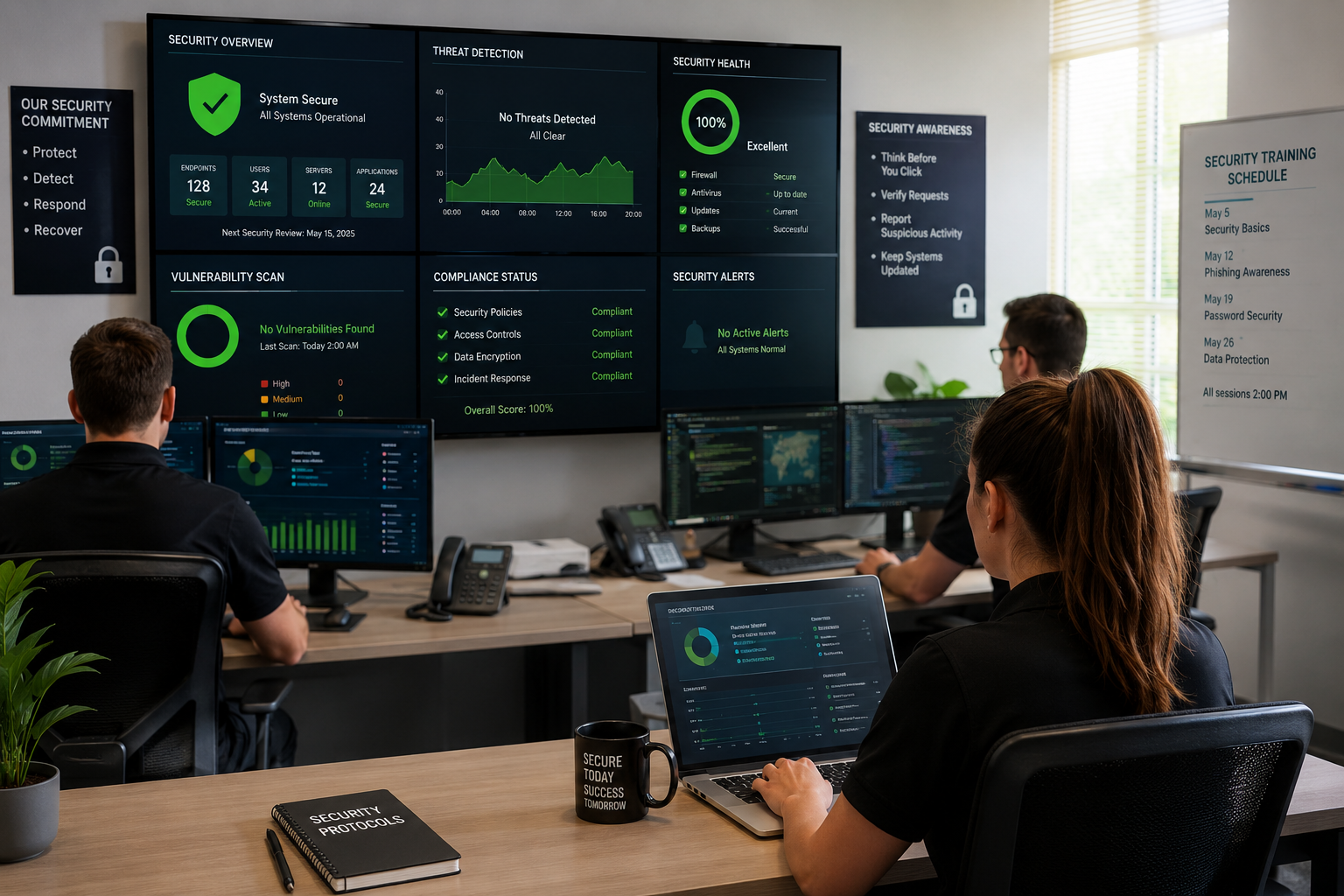
Continuous monitoring provides early warning of potential threats and policy violations. This doesn’t require expensive enterprise monitoring tools. Small businesses can implement basic monitoring through security software logs, failed login alerts, and regular system reviews.
The key is establishing monitoring routines and following them consistently. Weekly reviews of security logs can identify suspicious activity before it becomes a major incident. Monthly assessments of employee security practices can catch policy violations before they create vulnerabilities.
Documentation and improvement complete the cycle. Each test and monitoring review should generate specific action items for improving security. This creates a continuous improvement process that strengthens cybersecurity over time.
Building a Small Business Cybersecurity Plan That Actually Works
Successful cybersecurity plans start with a realistic assessment of current capabilities and specific business needs. Instead of copying generic templates, effective plans address the unique risks and resources of each business.
Begin by identifying what you’re actually trying to protect. Customer data, financial records, intellectual property, and operational systems each require different security approaches. A marketing agency protecting client campaigns needs different measures than a medical practice protecting patient records.
Focus on practical, implementable measures rather than theoretical best practices. Your plan should include specific steps that employees can follow using existing systems and skills. If the plan requires technical expertise your team doesn’t have, include provisions for training or outside support.
Assign clear responsibilities for each security measure. Generic statements like “employees must follow security policies” provide no accountability. Effective plans specify who implements each control, who monitors compliance, and who addresses violations.
Include realistic timelines and resource requirements. Security improvements take time and money. Plans that try to implement everything immediately usually fail because they overwhelm available resources. Prioritize the most critical measures first, then build additional protections over time.
Build monitoring and testing into the plan from the beginning. Schedule regular reviews of security measures, employee training sessions, and system tests. Make these activities part of normal business operations rather than special projects.
Create simple, actionable procedures for common scenarios. Employees need clear instructions for handling suspicious emails, reporting security incidents, and following data protection requirements. Complex procedures get ignored during busy periods.
Ongoing Maintenance and Improvement: The Key to Long-term Success
Cybersecurity plans require regular updates to remain effective against evolving threats. A plan that worked perfectly last year may leave you vulnerable to this year’s attack methods. Successful businesses treat cybersecurity as an ongoing process rather than a completed project.
Schedule quarterly reviews of your cybersecurity plan and make updates based on new threats, business changes, and lessons learned from testing. This doesn’t require complete plan rewrites—most updates involve adjusting procedures, updating contact information, or adding new security measures.
Employee turnover requires ongoing training and awareness efforts. New employees need security training as part of their onboarding process. Existing employees need regular refresher training and updates on new threats. Make security awareness part of your company culture rather than an annual requirement.
Technology updates and business changes often create new vulnerabilities. Adding new software, changing business processes, or expanding to new locations can introduce security risks that weren’t addressed in your original plan. Regular plan reviews help identify and address these emerging risks.
Track and measure your cybersecurity effectiveness. Monitor metrics like employee completion of security training, results of phishing simulations, and time to detect and respond to security incidents. Use this data to identify areas for improvement and demonstrate the value of your security investments.
Build relationships with reliable partners who can provide expertise and support when needed. This might include IT support companies, cybersecurity consultants, or industry peers who face similar challenges. Having trusted resources available helps you respond quickly to new threats and implement security improvements effectively.
Creating Your Action Plan for Cybersecurity Success
Start with immediate, high-impact security measures that require minimal resources. Enable two-factor authentication on critical accounts, implement regular backup procedures, and provide basic phishing awareness training to all employees. These steps provide significant protection while you develop more comprehensive security measures.
Conduct a realistic assessment of your current security posture. Identify your most valuable data, assess current protection measures, and document existing vulnerabilities. This assessment forms the foundation for prioritizing security improvements.
Develop written procedures for common security scenarios. Create step-by-step instructions for reporting suspicious emails, responding to potential data breaches, and maintaining security during remote work. Make these procedures easily accessible to all employees.
Establish regular security routines that become part of normal business operations. This includes weekly backup verification, monthly security software updates, and quarterly employee security training. Consistent execution of basic security practices provides better protection than sporadic implementation of advanced measures.
Plan for incident response before you need it. Identify who will lead response efforts, how you’ll communicate with customers and partners, and what resources you’ll need for recovery. Having a clear response plan reduces confusion and speeds recovery during actual incidents.
Consider working with experienced cybersecurity professionals who understand small business needs and constraints. Look for partners who provide practical guidance, same-day support when incidents occur, and ongoing monitoring to catch threats early. The right partnership can provide enterprise-level protection without enterprise-level complexity or cost.