


What Is OT Asset Inventory and Why Do Manufacturers Need It
OT asset inventory is a comprehensive catalog of all operational technology devices, software, and systems within a manufacturing environment. This includes everything from programmable logic controllers and human-machine interfaces to industrial computers and network infrastructure that controls production processes.
Manufacturing facilities typically contain hundreds or thousands of connected devices that most organizations don’t fully understand or track. Unlike traditional IT environments, operational technology often includes legacy systems that were never designed with cybersecurity in mind. These systems frequently run for decades without updates, making them attractive targets for cybercriminals.
The complexity of modern manufacturing environments makes manual asset tracking nearly impossible. Production lines integrate equipment from multiple vendors, each with different communication protocols and security capabilities. Without proper OT asset inventory, manufacturers cannot assess their cyber risk, implement appropriate security controls, or respond effectively to incidents.
Choose complete OT asset inventory if your facility has more than 50 connected devices, operates critical infrastructure, or requires compliance with cybersecurity frameworks. Manual tracking becomes unreliable beyond this scale, and the cost of a security incident far exceeds the investment in proper asset management.
How Does Asset Inventory Help With Manufacturing Cybersecurity
Manufacturing cybersecurity inventory provides the foundation for every security control and response capability. You cannot protect systems you don’t know exist, monitor devices you haven’t identified, or patch vulnerabilities on unknown equipment.
Asset inventory enables three critical cybersecurity functions. First, it establishes a security baseline by identifying which devices need protection and what security controls already exist. Second, it enables continuous monitoring by providing a reference point for detecting unauthorized changes or new devices. Third, it supports incident response by helping security teams quickly identify affected systems and contain threats.
Manufacturing environments face unique cybersecurity challenges that make asset inventory even more critical. Production systems often cannot be taken offline for security updates, creating long windows of vulnerability. Legacy equipment may lack modern security features, requiring compensating controls that depend on knowing exactly what needs protection.
Common cybersecurity benefits include:
- Faster threat detection and response times
- Reduced attack surface through better device management
- Improved vulnerability assessment and patch prioritization
- Enhanced network segmentation and access controls
- Better compliance with cybersecurity frameworks and standards
The most successful manufacturing cybersecurity programs treat asset inventory as a continuous process rather than a one-time project. Threats evolve constantly, and production environments change frequently through equipment upgrades, process improvements, and capacity expansion.
What’s the Difference Between IT and OT Asset Management
IT and OT asset management serve different purposes and face distinct challenges, though both are essential for comprehensive cybersecurity. IT asset management focuses on computers, servers, and business applications that support administrative functions, while OT asset management covers the industrial control systems that run production processes.
The key differences lie in system priorities and constraints. IT systems prioritize data confidentiality and can typically be updated or restarted during business hours. OT systems prioritize availability and safety, often running continuously for months or years without interruption. This creates different approaches to security, maintenance, and change management.
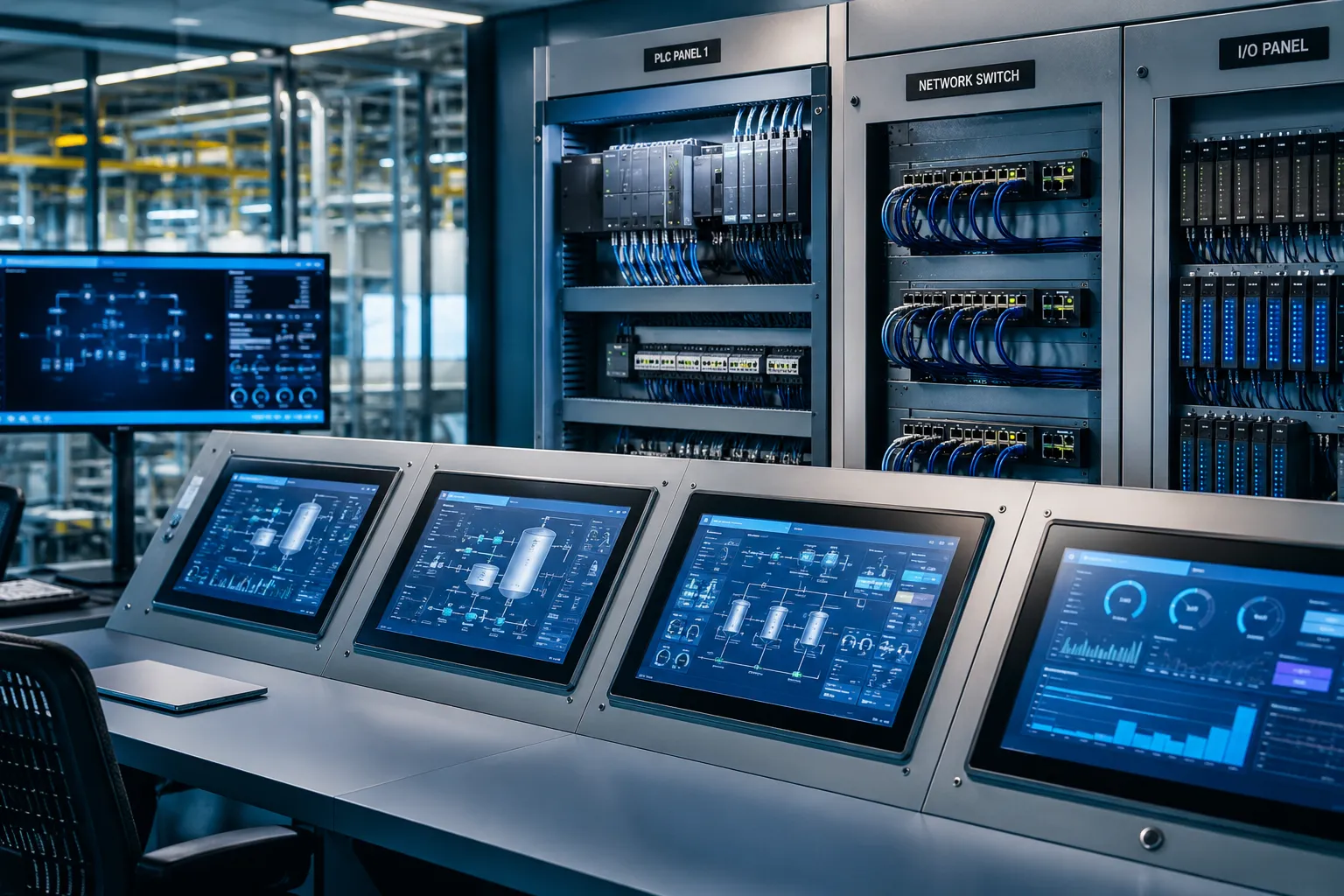
OT environments also include specialized equipment that IT teams may not understand. PLCs use industrial communication protocols like Modbus or EtherNet/IP rather than standard TCP/IP. HMIs run embedded operating systems that may not support traditional security tools. Industrial networks often lack the segmentation and monitoring capabilities found in modern IT environments.
IT asset management typically includes:
- Desktop computers and laptops
- Business servers and applications
- Network infrastructure for office environments
- Standard operating systems and software packages
OT asset management covers:
- Programmable logic controllers and distributed control systems
- Human-machine interfaces and operator workstations
- Industrial computers and embedded devices
- Sensors, actuators, and field devices
- Industrial network equipment and protocols
The convergence of IT and OT networks requires coordinated asset management across both domains. Many modern manufacturing facilities use industrial internet of things devices that bridge traditional boundaries, making comprehensive asset inventory even more important for security and operations.
How Do You Create a Complete Manufacturing Asset Inventory
Creating a complete manufacturing asset inventory requires a systematic approach that combines automated discovery tools with manual verification processes. Start with network scanning to identify connected devices, then use specialized OT discovery tools to gather detailed information about industrial equipment and protocols.
Begin asset discovery during planned maintenance windows when possible, as some scanning activities may temporarily impact production systems. Use passive monitoring tools that can identify devices without sending potentially disruptive network traffic. Document not only what devices exist, but also their current configuration, firmware versions, and security status.
The discovery process should cover both active and inactive equipment. Many facilities have backup systems, spare controllers, or seasonal equipment that may not appear during normal operations but still represent potential security risks. Include portable devices like maintenance laptops and engineering workstations that connect periodically to production networks.
Essential discovery steps:
- Network scanning – Identify all IP addresses and network segments
- Protocol analysis – Detect industrial communication protocols and device types
- Physical verification – Confirm discovered devices match actual equipment
- Documentation review – Check engineering drawings and maintenance records
- Stakeholder interviews – Gather information from operators and technicians
Establish clear ownership and responsibility for each asset category. Production teams understand equipment function and criticality, while IT teams handle network infrastructure and security tools. Maintenance departments often have the most complete records of device specifications and service history.
Plan for ongoing discovery rather than treating this as a one-time project. Manufacturing environments change frequently through equipment upgrades, process modifications, and temporary connections. Schedule regular discovery scans and establish procedures for documenting new equipment before it connects to production networks.
What Assets Should Be Included in an Industrial Asset Inventory
A comprehensive industrial device inventory must capture every component that could impact production operations or cybersecurity. This includes obvious equipment like PLCs and HMIs, but also extends to network infrastructure, support systems, and even temporary connections that operators might not consider part of the “production system.”
Start with control system components that directly manage production processes. Document each device’s manufacturer, model, firmware version, and network configuration. Include both primary and backup systems, as redundant equipment often receives less attention during security updates but represents equally significant risk.
Network infrastructure requires special attention in industrial environments. Many facilities use a mix of industrial Ethernet switches, wireless access points, and legacy serial communication systems. Each network segment may have different security capabilities and requirements based on the equipment it connects.
Core industrial assets to inventory:
Control Systems:
- Programmable Logic Controllers (PLCs)
- Distributed Control Systems (DCS)
- Safety Instrumented Systems (SIS)
- Human Machine Interfaces (HMIs)
- Engineering workstations and programming software
Computing Infrastructure:
- Industrial PCs and servers
- Operator workstations
- Maintenance laptops and tablets
- Virtual machines and applications
- Database and historian systems
Network Equipment:
- Industrial Ethernet switches and routers
- Wireless access points and controllers
- Firewalls and security appliances
- Remote access systems and VPNs
- Serial-to-Ethernet converters
Field Devices:
- Sensors and transmitters
- Motor drives and actuators
- Smart instruments and analyzers
- Industrial IoT devices
- Barcode scanners and RFID readers
Don’t overlook support systems that may not directly control production but could impact operations if compromised. This includes building management systems, security cameras, and even networked printers in control rooms. Each represents a potential entry point for attackers seeking to move laterally through industrial networks.
How Often Should Manufacturers Update Their Asset Inventory
Manufacturing asset inventory requires continuous maintenance rather than periodic updates, with formal reviews conducted quarterly and comprehensive audits performed annually. Production environments change too frequently for static documentation to remain accurate, and new cybersecurity threats emerge constantly.
Implement automated discovery tools that run continuously or daily to detect new devices and configuration changes. Set up alerts when unknown devices connect to production networks or when existing equipment changes its network behavior. This provides early warning of both legitimate changes and potential security incidents.
Schedule formal inventory reviews to coincide with maintenance windows and capital project cycles. Many facilities perform major equipment updates during scheduled shutdowns, making these ideal times for comprehensive asset discovery and documentation updates. Include inventory verification in standard procedures for equipment installation and decommissioning.
Recommended update frequency:
- Continuous monitoring – Automated discovery and change detection
- Weekly reviews – Investigate alerts and validate recent changes
- Monthly reporting – Update asset databases and security dashboards
- Quarterly audits – Comprehensive review of all asset categories
- Annual assessments – Full discovery scan and documentation verification
Establish triggers for immediate inventory updates beyond the regular schedule. Any cybersecurity incident should prompt asset verification to ensure complete understanding of potentially affected systems. Major process changes, equipment installations, or network modifications also require prompt documentation updates.
The frequency of updates should reflect the criticality and change rate of different asset categories. Core production systems may need daily monitoring, while support infrastructure might only require weekly verification. Adjust monitoring intensity based on risk assessment and operational requirements rather than applying uniform schedules across all equipment types.

What Happens If a Manufacturer Doesn’t Have Asset Visibility
Manufacturers without complete asset visibility face significantly higher cybersecurity risks, longer incident response times, and potential compliance failures that can result in costly penalties and operational disruptions. Unknown devices become unmanaged security gaps that attackers can exploit to gain persistent access to production networks.
The immediate impact appears during security incidents when response teams cannot quickly identify affected systems or understand potential blast radius. Without asset inventory, investigators must perform discovery activities while managing an active threat, dramatically extending response times and increasing potential damage. Critical production systems may remain vulnerable longer because teams don’t know they exist.
Compliance frameworks increasingly require comprehensive asset management as a foundational control. Cyber insurance policies often mandate asset inventory as a prerequisite for coverage, and claims may be denied if organizations cannot demonstrate adequate asset visibility. Regulatory audits become more difficult and expensive when asset documentation is incomplete or outdated.
Specific risks of poor asset visibility:
- Extended incident response – Teams cannot quickly identify affected systems
- Unpatched vulnerabilities – Unknown devices don’t receive security updates
- Compliance failures – Inability to demonstrate required security controls
- Insurance claim denials – Policies may require comprehensive asset management
- Lateral movement – Attackers use unknown devices to persist in networks
- Operational blind spots – Cannot assess impact of equipment failures or changes
The financial impact compounds over time as security gaps accumulate and compliance requirements become more stringent. Organizations often discover the true cost of poor asset visibility only after experiencing a major incident that could have been prevented with better preparation and visibility.
Recovery from poor asset visibility requires significant investment in both technology and processes. Emergency discovery projects during incident response cost far more than proactive asset management programs and often produce incomplete results under pressure.
Can Asset Inventory Help Prevent Ransomware Attacks
Asset inventory significantly improves ransomware prevention and response capabilities by enabling better network segmentation, faster threat detection, and more effective backup strategies. Complete visibility into manufacturing systems allows security teams to implement targeted protections for the most critical equipment and establish monitoring that can detect ransomware before it spreads.
Ransomware attacks often succeed by moving laterally through networks to find and encrypt valuable systems. Asset inventory enables network segmentation that limits this lateral movement by identifying which devices need to communicate and blocking unnecessary connections. This containment strategy can prevent ransomware from reaching critical production systems even if it compromises other network segments.
The backup and recovery benefits may be even more important than prevention. Asset inventory ensures that backup strategies cover all critical systems and that recovery procedures account for dependencies between different equipment. During ransomware incidents, complete asset documentation enables faster assessment of damage and more targeted recovery efforts.
Ransomware protection benefits:
- Network segmentation – Limit lateral movement between systems
- Backup coverage – Ensure all critical assets have appropriate backups
- Threat detection – Monitor known assets for suspicious behavior
- Recovery planning – Understand system dependencies and recovery priorities
- Incident response – Quickly assess impact and containment options
Asset inventory also supports proactive vulnerability management that can prevent ransomware infections. Many ransomware attacks exploit known vulnerabilities in unpatched systems. Complete asset visibility enables systematic patch management and vulnerability assessment that closes these attack vectors before they can be exploited.
However, asset inventory alone cannot prevent ransomware attacks. It must be combined with other security controls like endpoint protection, network monitoring, and user training to create comprehensive defense strategies. The inventory provides the foundation that makes other security controls more effective.
Best Tools for Managing PLC and HMI Inventory
Specialized OT asset discovery tools provide the most effective approach for PLC asset management and HMI inventory, as they understand industrial protocols and can safely interact with operational technology without disrupting production processes. Generic IT discovery tools often miss industrial devices or may cause unintended equipment behavior.
Leading OT asset management platforms combine passive network monitoring with active protocol interrogation to build comprehensive device inventories. These tools can identify PLCs by their communication signatures, extract firmware versions from HMI systems, and map industrial network topologies without sending disruptive commands to production equipment.
The most effective tools integrate with existing manufacturing systems to gather additional context about device function and criticality. Integration with historians, maintenance management systems, and engineering databases provides richer asset information than network discovery alone can provide.
Key capabilities for OT asset tools:
- Industrial protocol support – Native understanding of Modbus, EtherNet/IP, Profinet, and other OT protocols
- Passive discovery – Identify devices without disrupting production operations
- Firmware detection – Extract version information for vulnerability assessment
- Network mapping – Understand communication patterns and dependencies
- Change detection – Alert on new devices or configuration modifications
- Integration APIs – Connect with existing maintenance and security systems
Consider tools that provide both discovery and ongoing monitoring capabilities rather than point-in-time scanning solutions. Manufacturing environments change frequently, and static inventories become outdated quickly. Continuous monitoring provides better visibility and faster detection of unauthorized changes.
Evaluate tools based on your specific industrial protocols and equipment vendors. Some solutions excel with particular PLC families or communication standards but may have gaps with other equipment types. Plan for hybrid approaches that combine multiple tools to achieve comprehensive coverage across diverse manufacturing environments.
How to Track Firmware Versions Across Manufacturing Devices
Firmware inventory tracking requires specialized tools and processes that can safely extract version information from industrial devices without disrupting production operations. Many manufacturing devices don’t report firmware versions through standard network protocols, requiring direct interrogation using vendor-specific commands or manual verification procedures.
Automated firmware discovery works best with modern equipment that supports standard industrial protocols. Tools can query PLCs and HMIs for firmware versions during normal communication cycles, building databases that track version information across entire facilities. However, legacy equipment may require manual verification during maintenance windows.
Establish firmware tracking as part of standard equipment installation and maintenance procedures. Document baseline firmware versions when equipment is commissioned, and update records whenever firmware changes occur. Include firmware verification in preventive maintenance checklists to ensure ongoing accuracy.
Firmware tracking strategies:
- Automated scanning – Use OT discovery tools to query device firmware versions
- Manual verification – Check firmware during scheduled maintenance activities
- Vendor coordination – Work with equipment suppliers to understand update procedures
- Change management – Document firmware updates as part of modification procedures
- Vulnerability correlation – Cross-reference firmware versions with security advisories
The challenge with firmware inventory lies in the diversity of industrial equipment and the lack of standardized reporting mechanisms. Different vendors use different methods for firmware identification, and some legacy devices may not report version information at all. Plan for hybrid approaches that combine automated discovery with manual verification.
Firmware tracking becomes critical for vulnerability management and incident response. Security researchers regularly discover vulnerabilities in industrial device firmware, and response requires knowing which equipment runs affected versions. Complete firmware inventory enables rapid assessment of exposure and prioritization of update activities.

What Are Common Mistakes When Setting Up Asset Inventory
The most common mistake manufacturers make is treating asset inventory as a one-time project rather than an ongoing process, leading to outdated documentation that becomes increasingly inaccurate over time. Production environments change frequently through equipment upgrades, process modifications, and temporary connections that may not be properly documented.
Many organizations focus exclusively on major equipment like PLCs and HMIs while overlooking network infrastructure, support systems, and portable devices that connect periodically to production networks. These “invisible” assets often represent significant security risks because they receive less attention during security updates and monitoring activities.
Another frequent error involves using IT discovery tools for OT environments without understanding the potential impact on production systems. Standard network scanners may send commands that cause industrial devices to fault or behave unexpectedly, creating safety risks and production disruptions.
Critical mistakes to avoid:
- One-time discovery – Treating inventory as a project rather than an ongoing process
- Incomplete scope – Missing network infrastructure and support systems
- Wrong tools – Using IT discovery methods on OT equipment
- Poor documentation – Failing to capture device context and criticality
- No ownership – Lacking clear responsibility for inventory maintenance
- Manual processes – Relying entirely on spreadsheets and manual updates
- Ignoring dependencies – Not documenting relationships between systems
Organizations often underestimate the complexity of industrial environments and attempt to use simple tools or manual processes that cannot scale effectively. Manufacturing facilities may contain thousands of devices with complex interdependencies that require specialized asset management platforms to track accurately.
The lack of integration between discovery tools and existing manufacturing systems represents another common gap. Asset inventory provides the most value when it connects with maintenance management, process control, and cybersecurity systems to provide comprehensive operational context.
How Does Asset Inventory Help With Compliance and Audits
Manufacturing asset inventory serves as foundational evidence for cybersecurity compliance frameworks and significantly streamlines audit processes by providing auditors with comprehensive documentation of systems and security controls. Most cybersecurity standards require organizations to maintain current asset inventories as a prerequisite for other security requirements.
Compliance frameworks like NIST Cybersecurity Framework, IEC 62443, and ISO 27001 explicitly require asset identification and management as fundamental security controls. Auditors expect to see not just lists of equipment, but also evidence of ongoing asset management processes, change control procedures, and integration with other security activities.
The audit benefits extend beyond simple compliance checking. Complete asset inventory enables more efficient audits by allowing auditors to quickly understand system scope and focus their testing on the most critical components. This can reduce audit time and costs while improving the quality of security assessments.
Compliance and audit benefits:
- Framework requirements – Satisfy mandatory asset management controls
- Evidence documentation – Provide auditors with comprehensive system inventories
- Scope definition – Clearly define which systems are subject to compliance requirements
- Control validation – Demonstrate that security controls cover all relevant assets
- Change tracking – Show evidence of ongoing asset management processes
- Risk assessment – Support compliance risk assessments with accurate asset data
Cyber insurance requirements increasingly include asset inventory as a prerequisite for coverage. Insurance companies want evidence that organizations understand their technology environment and have implemented basic cybersecurity hygiene. Claims may be denied if organizations cannot demonstrate adequate asset visibility and management.
The key to compliance success lies in treating asset inventory as a business process rather than a technical exercise. Auditors look for evidence of management oversight, regular reviews, and integration with other business processes like change management and incident response.
What’s the Cost of Implementing an Asset Management System
Asset management system costs vary significantly based on facility size, equipment complexity, and integration requirements, with typical implementations ranging from $50,000 to $500,000 for mid-sized manufacturing facilities. However, the cost of not having proper asset visibility often exceeds implementation costs within the first year through improved incident response and compliance efficiency.
Initial costs include software licensing, professional services for implementation, and staff training to operate the system effectively. Ongoing costs cover maintenance, support, and regular updates to keep pace with evolving cybersecurity requirements. Factor in integration costs with existing manufacturing and IT systems for maximum value.
The return on investment typically comes through reduced incident response times, improved compliance efficiency, and better maintenance planning. Organizations often recover implementation costs through the first major security incident that benefits from complete asset visibility, as response teams can quickly identify affected systems and contain threats more effectively.
Typical cost components:
- Software licensing – $20,000-$200,000 annually based on device count and features
- Professional services – $30,000-$150,000 for implementation and integration
- Training and certification – $5,000-$25,000 for staff development
- Ongoing support – 15-20% of license costs annually for maintenance and updates
- Integration costs – $10,000-$100,000 for connections to existing systems
Consider the cost of alternatives when evaluating asset management investments. Manual processes may appear less expensive initially but become unsustainable as facilities grow and compliance requirements increase. The hidden costs of poor asset visibility include extended incident response, compliance failures, and missed opportunities for operational improvements.
Many organizations find that starting with basic asset discovery and expanding capabilities over time provides better value than attempting comprehensive implementations immediately. This phased approach allows teams to demonstrate value and refine requirements before making larger investments in advanced features.
How to Discover Hidden or Forgotten Devices in a Manufacturing Network
Hidden and forgotten devices represent some of the highest cybersecurity risks in manufacturing environments, as they often run outdated software and receive no security monitoring or maintenance. Comprehensive device discovery requires multiple techniques and tools, as no single approach can identify all types of equipment that may be connected to production networks.
Start with comprehensive network scanning using tools designed for industrial environments that understand OT protocols and can safely interrogate devices without disrupting operations. Combine active scanning with passive monitoring that observes network traffic to identify devices that may not respond to direct queries.
Physical verification remains essential for complete discovery, as some devices may be connected but not actively communicating during scanning windows. Walk the production floors with network diagrams and verify that the documented equipment actually exists and matches the current configurations. Look for undocumented connections, temporary equipment, and devices that may have been added for troubleshooting or testing.
Discovery techniques for hidden devices:
- Multi-protocol scanning – Use tools that understand both IT and OT communication protocols
- Passive monitoring – Observe network traffic to identify silent or intermittent devices
- Physical verification – Walk facilities to find undocumented equipment and connections
- Historical analysis – Review maintenance records and engineering drawings for missing devices
- Vendor coordination – Work with equipment suppliers to identify all installed components
- Wireless surveys – Scan for unauthorized wireless access points and connected devices
Pay special attention to maintenance and engineering networks that may contain forgotten equipment. Many facilities have separate networks for programming and troubleshooting that operators don’t consider part of the “production system,” but that may provide attack paths to critical equipment.
Document discovery findings immediately and establish procedures to prevent devices from becoming “hidden” in the future. Require asset registration before equipment connects to production networks, and implement network monitoring that alerts on unknown devices. Regular discovery scans should become part of standard cybersecurity procedures rather than emergency response activities.