
What Exactly Happens During a Manufacturing Cyberattack
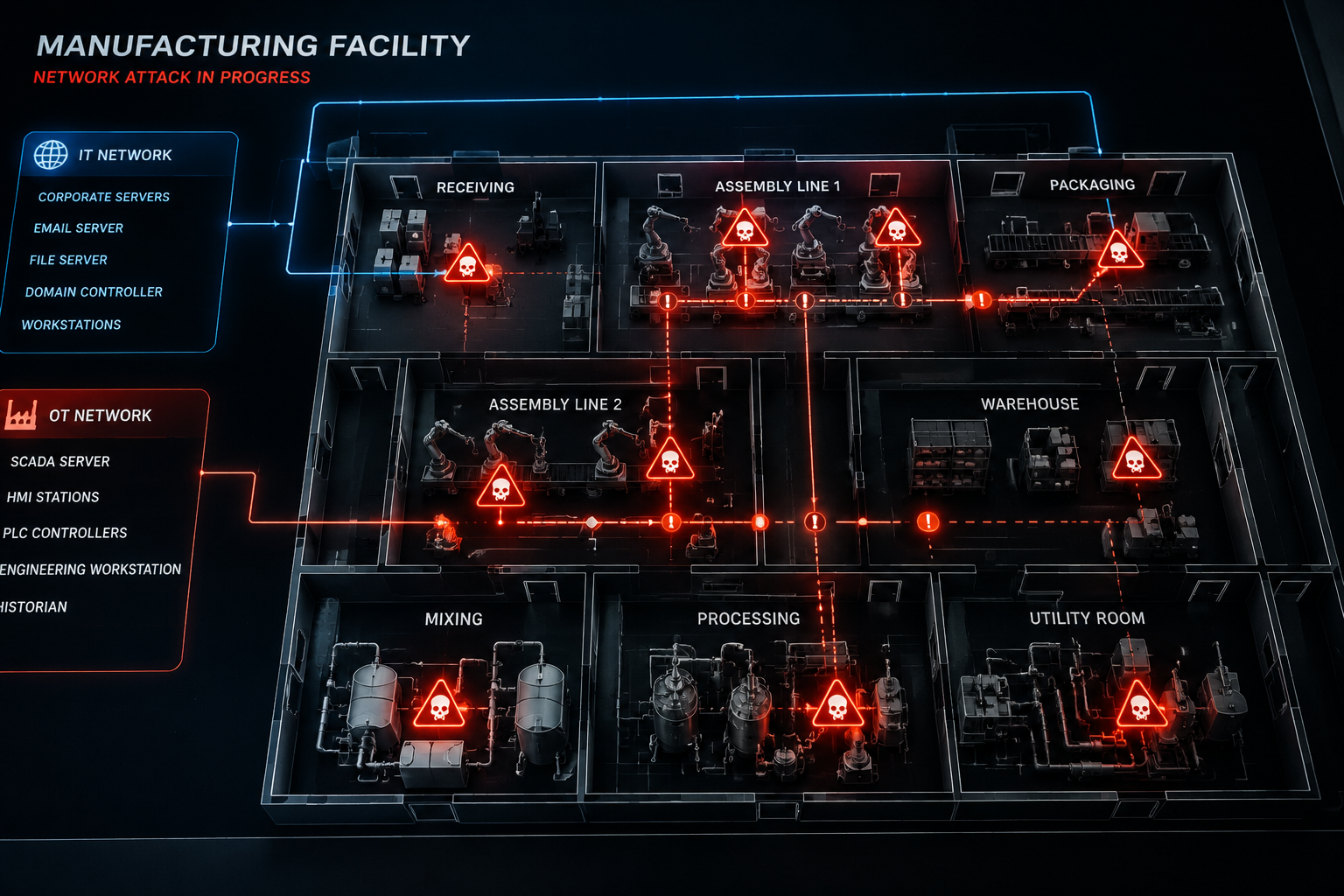
A cyberattack in a manufacturing facility unfolds like a carefully orchestrated invasion, moving through your systems in four distinct stages. It starts quietly in your office network and gradually spreads to your production floor, causing increasingly severe operational disruptions.
Stage 1: The Initial Breach
The attack typically begins through one of three common entry points. A plant supervisor receives what appears to be a legitimate email from a trusted supplier, complete with familiar logos and realistic language. When they click the attachment to review the “updated delivery schedule,” malware silently installs on their computer.
Alternatively, attackers exploit remote access connections used by equipment vendors or maintenance contractors. These connections often use default passwords or lack proper security controls, providing an easy pathway into your network.
The third common entry point involves unsecured wireless networks or poorly configured VPN connections that remote workers use to access plant systems.
Stage 2: Network Reconnaissance and Lateral Movement
Once inside your network, the attackers spend days or weeks mapping your systems. They identify which computers control production equipment, where your most critical data resides, and how your IT and OT networks connect.
During this phase, they move laterally through your network, gaining access to additional systems and escalating their privileges. They’re particularly interested in finding connections between your business systems and production control networks.
Stage 3: Targeting Operational Technology
The attackers eventually reach your operational technology systems, the computers that control your production equipment, safety systems, and facility operations. This is where a cyberattack in a manufacturing facility becomes truly dangerous.
They may install ransomware on human-machine interface (HMI) computers, modify programmable logic controller (PLC) settings, or disrupt communication between control systems and equipment.
Stage 4: Production Disruption
The final stage involves the actual attack on your production capabilities. Equipment suddenly stops responding to commands, safety systems trigger unexpected shutdowns, or production schedules become corrupted, creating chaos on your plant floor.
How Much Damage Can a Cyberattack Cause to a Factory
The financial impact of a cyberattack in a manufacturing facility ranges from hundreds of thousands to tens of millions of dollars, with costs extending far beyond the immediate ransom demand. The total damage includes lost production revenue, recovery expenses, regulatory fines, and long-term reputation damage.
Direct Production Losses
A single day of unplanned downtime in manufacturing typically costs between $50,000 and $5 million, depending on your facility size and production value. Automotive plants, for example, can lose $1.3 million per hour when production lines stop running.
Chemical processing facilities face even higher costs due to the complexity of restarting their operations safely. A week-long shutdown can result in $10-20 million in lost revenue, not including the additional costs of safely purging and restarting chemical processes.
Recovery and Remediation Expenses
Beyond lost production, you’ll face high costs to restore your systems and strengthen your defenses. These expenses include:
- Cybersecurity forensics and incident response services ($100,000-$500,000)
- System rebuilding and software replacement ($250,000-$2 million)
- Additional security implementations ($150,000-$1 million)
- Legal and regulatory compliance costs ($50,000-$300,000)
Supply Chain and Customer Impact
Manufacturing cyberattacks create ripple effects throughout your supply chain. Customers may impose financial penalties for delayed deliveries, and some may permanently switch to alternative suppliers. These relationship costs often exceed the immediate technical recovery expenses.
Insurance can help offset some costs, but most policies have significant exclusions and may not cover business interruption losses from cyberattacks.
What Types of Systems Are Most Vulnerable in Manufacturing
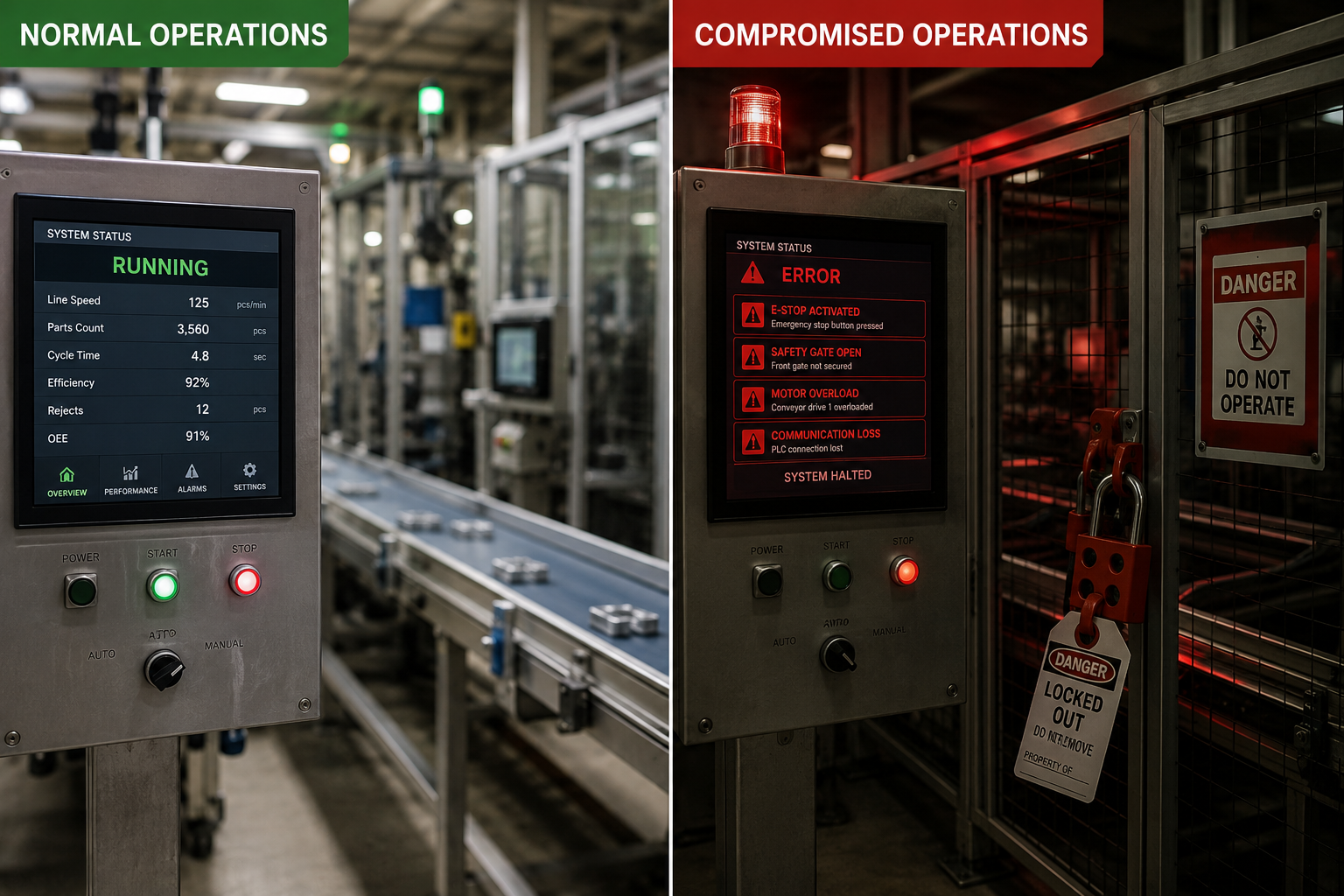
Legacy systems and poorly segmented networks create the biggest security gaps in manufacturing environments. These vulnerabilities exist because many industrial systems were designed for reliability and uptime rather than cybersecurity, often predating modern security threats by decades.
Legacy Control Systems
Older programmable logic controllers (PLCs) and distributed control systems (DCS) represent your highest-risk assets. Many of these systems run on outdated operating systems that no longer receive security updates, use default passwords that were never changed, and lack encryption for network communications.
Human-machine interfaces (HMIs) running on Windows XP or other obsolete operating systems are particularly vulnerable. These systems often have direct connections to both your business network and production equipment, making them perfect stepping stones for attackers.
Network Infrastructure Weaknesses
Poor network segmentation allows attackers to move freely between your IT and OT systems. Many facilities have direct connections between office computers and production networks, eliminating the security barriers that should exist between these environments.
Wireless networks used for mobile devices or temporary equipment often lack proper security controls. These networks can provide easy access points for attackers who gain physical proximity to your facility.
Remote Access Vulnerabilities
Vendor remote access systems frequently use weak authentication and lack proper monitoring. Equipment suppliers often require permanent remote connections for maintenance and support, but these connections may use shared credentials or remain active even when not needed.
VPN systems configured for remote workers may have overly broad access permissions, allowing compromised accounts to reach critical production systems.
Common Vulnerable Equipment Types
- Building automation systems controlling HVAC, lighting, and security
- Quality control systems and laboratory equipment with network connections
- Inventory management systems connected to production scheduling
- Safety systems that interface with emergency shutdown procedures
How Do Hackers Typically Break Into Industrial Control Systems
Attackers use a combination of social engineering, network exploitation, and physical access to compromise industrial control systems. The most successful attacks exploit the trust relationships and interconnections that make modern manufacturing operations efficient.
Social Engineering Attacks
Phishing emails remain the most common initial attack vector. Attackers research your facility and suppliers to create convincing emails that appear to come from trusted partners. These emails might contain fake invoices, delivery notifications, or technical documentation that employees routinely handle.
Spear-phishing attacks target specific individuals with access to critical systems. An attacker might impersonate your automation vendor and send a “critical security update” to your control systems engineer.
Network-Based Exploitation
Once inside your network, attackers use various techniques to reach your control systems. They exploit unpatched vulnerabilities in Windows systems, use credential-stealing malware to harvest passwords, and take advantage of overly permissive network access controls.
Many attacks succeed by exploiting the trust relationships between systems. If your business network trusts your control network, a compromised office computer can potentially access production systems.
Physical and Supply Chain Attacks
Some attackers gain physical access to your facility or compromise equipment during the supply chain. Malicious USB devices left in parking lots or common areas can infect systems when curious employees plug them in.
More sophisticated attackers may compromise equipment or software before it reaches your facility, embedding malware in industrial devices or engineering software.
Insider Threats
Disgruntled employees or contractors with legitimate access can cause significant damage. These threats are particularly dangerous because insiders already have authorized access to critical systems and understand your operational processes.
What’s the Average Cost of a Manufacturing Cybersecurity Breach
Manufacturing cybersecurity breaches cost an average of $3.6 million per incident, but this figure can vary dramatically based on facility size, attack type, and recovery complexity. Large facilities with complex operations can face costs exceeding $50 million for severe incidents.
Cost Breakdown by Category
The largest expense category is typically business interruption, accounting for 60-70% of total costs. This includes lost production revenue, overtime payments for recovery efforts, and expedited shipping costs to fulfill delayed orders.
Technical recovery costs represent 20-25% of the total, covering system restoration, forensic analysis, and security improvements. Legal and regulatory costs account for 10-15%, including compliance violations, customer lawsuits, and regulatory fines.
Industry-Specific Variations
Automotive manufacturers face higher costs due to just-in-time production models and complex supply chain relationships. A cyberattack that disrupts automotive production can trigger penalty clauses with multiple customers simultaneously.
Chemical and pharmaceutical manufacturers experience extended recovery times due to regulatory requirements for validating system integrity before resuming production. These facilities often face additional costs for product disposal and re-qualification processes.
Small vs. Large Manufacturer Costs
Small manufacturers (under 100 employees) typically face costs between $200,000 and $2 million per incident. While lower in absolute terms, these costs often represent a larger percentage of annual revenue compared to larger facilities.
Large manufacturers may have higher absolute costs but often have better insurance coverage and dedicated recovery resources that can reduce the overall business impact.
Can Small Manufacturers Protect Themselves from Cyberattacks
Small manufacturers can absolutely protect themselves from cyberattacks, but they need to focus on the most impactful security measures rather than trying to implement enterprise-level solutions. The key is prioritizing basic security hygiene and leveraging managed services for advanced protection.
Essential Security Foundations
Start with network segmentation to separate your office systems from production equipment. This doesn’t require expensive hardware; even basic firewalls can create meaningful barriers between your IT and OT networks.
Implement regular backup procedures for both business data and control system configurations. Store backups offline or in isolated network segments where ransomware can’t reach them.
Establish basic access controls with unique passwords for each system and regular password updates. Remove default passwords from all equipment and disable unnecessary network services.
Managed Security Services
Partner with a managed security service provider who understands manufacturing environments. These providers can offer 24/7 monitoring, threat detection, and incident response capabilities that would be prohibitively expensive to build in-house.
Look for providers who offer industry expertise and can help you navigate the unique challenges of securing both IT and OT systems. The right partner becomes an extension of your team, providing proactive solutions and peace of mind.
Cost-Effective Protection Strategies
Focus your security investments on the areas with the highest risk and impact. This typically means protecting your most critical production systems first, then expanding coverage to less critical assets.
Consider cloud-based security solutions that provide enterprise-level protection without requiring significant on-site infrastructure. These solutions often include automatic updates and threat intelligence that keep pace with evolving threats.
Employee training represents one of the most cost-effective security investments. Regular awareness training helps your team recognize and avoid common attack techniques.
What Are Common Signs That a Manufacturing Network Has Been Compromised
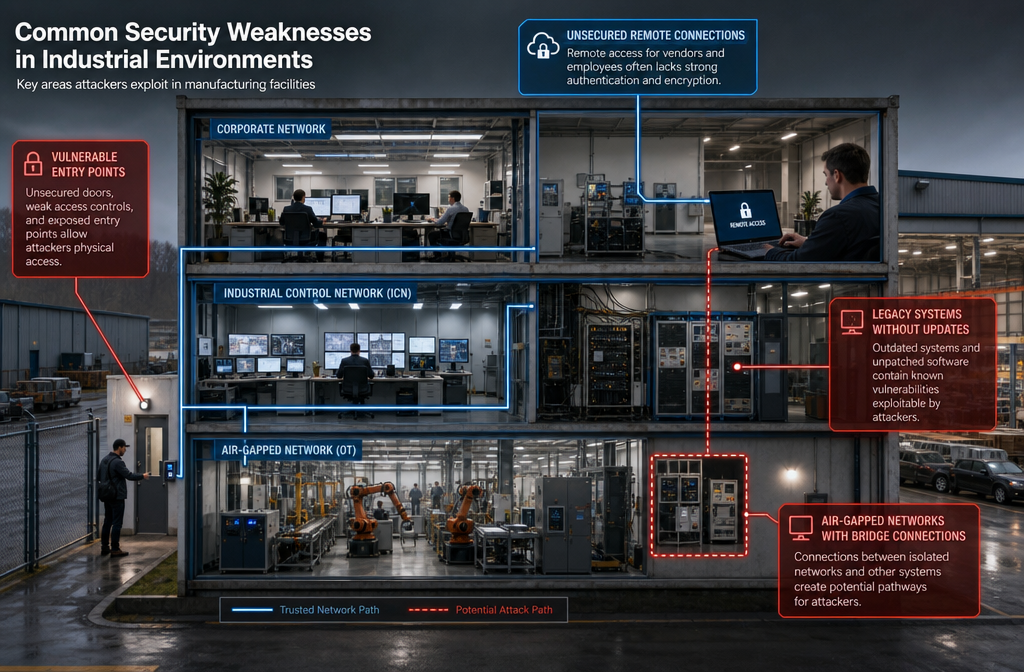
Network compromise indicators in manufacturing environments often appear as subtle operational anomalies before becoming obvious cybersecurity incidents. Recognizing these early warning signs can help you respond before attackers cause significant production disruption.
Network and System Anomalies
Unusual network traffic patterns often indicate compromise, such as unexpected data transfers during off-hours or communications between systems that normally don’t interact. Your network monitoring tools might show increased bandwidth usage or connections to unfamiliar external IP addresses.
System performance degradation can signal malware activity. If your HMI computers become sluggish, experience frequent crashes, or display unusual error messages, these could indicate malicious software running in the background.
Operational Warning Signs
Equipment behavior changes may indicate control system compromise. This includes unexpected equipment stops and starts, parameter changes that operators didn’t make, or safety systems activating without clear cause.
Production scheduling anomalies, such as orders disappearing from queues or production targets changing unexpectedly, often indicate attackers are testing their access to critical systems.
User Account and Access Indicators
Failed login attempts, especially for service accounts or administrative users, may indicate password-cracking attempts. Pay particular attention to failed logins outside normal business hours.
New user accounts appearing in your systems, or existing accounts gaining unexpected privileges, often indicate attackers have compromised administrative systems.
File and Configuration Changes
Unexpected modifications to control system configurations, especially changes made outside normal maintenance windows, warrant immediate investigation. Many attacks involve subtle changes to operational parameters that gradually degrade performance.
New files appearing in system directories, particularly executable files in unusual locations, may indicate malware installation.
How Long Does It Take to Recover from a Serious Industrial Cyberattack
Recovery from a serious industrial cyberattack typically takes 2-4 weeks for full production restoration, though some facilities require months to completely rebuild their systems and restore normal operations. The recovery timeline depends heavily on your preparation level, backup quality, and the extent of system damage.
Immediate Response Phase (Days 1-3)
The priority involves containing the attack and assessing the damage. This includes isolating affected systems, determining which equipment can safely continue operating, and establishing manual backup procedures for critical processes.
During this phase, you’ll work with cybersecurity experts to understand the attack scope and begin forensic analysis. Production may continue at reduced capacity using manual controls or isolated systems.
System Restoration Phase (Week 1-2)
The bulk of recovery time involves rebuilding compromised systems and restoring data from backups. Control systems require careful validation to ensure they’re operating correctly before reconnecting to production equipment.
This phase often involves reinstalling operating systems, reconfiguring network settings, and testing all system interfaces. Each system must be verified as clean before reconnection to prevent reinfection.
Production Ramp-Up Phase (Week 2-4)
Once systems are restored, production gradually returns to normal capacity. This involves retraining operators on any system changes, validating product quality, and rebuilding production schedules.
Quality control becomes particularly important during this phase, as subtle system changes might affect product specifications or safety parameters.
Factors That Extend Recovery Time
Facilities without current backups may require weeks or months to rebuild system configurations from scratch. Regulatory requirements in industries like pharmaceuticals can add significant validation time before production can resume.
Complex, highly integrated systems take longer to restore because each component must be tested individually and then validated as part of the complete system.
Which Manufacturing Sectors Are Most at Risk for Cybercrime
Chemical processing, automotive manufacturing, and food production facilities face the highest cybercrime risk due to their safety-critical systems, complex supply chains, and high-value production processes. These sectors attract attackers because successful attacks can cause significant disruption and generate substantial ransom payments.
Chemical and Pharmaceutical Manufacturing
Chemical facilities represent prime targets because cyberattacks can create safety hazards that extend beyond the facility boundaries. Attackers know that chemical manufacturers will pay significant ransoms to prevent potential environmental or safety incidents.
Pharmaceutical manufacturers face additional risks due to intellectual property theft and regulatory compliance requirements. The combination of valuable research data and strict production validation requirements makes these facilities particularly vulnerable to extended disruptions.
Automotive Industry
Automotive manufacturers operate on just-in-time production models that make them extremely vulnerable to supply chain disruptions. A cyberattack that stops production for even a few hours can trigger costly delays throughout the entire automotive supply chain.
The industry’s increasing connectivity, including IoT sensors and automated quality control systems, creates multiple potential entry points for attackers.
Food and Beverage Processing
Food processing facilities face unique risks due to food safety regulations and perishable inventory. Cyberattacks that disrupt refrigeration systems or contaminate production records can result in massive product recalls and regulatory sanctions.
The sector’s combination of legacy control systems and increasing automation creates security gaps that attackers frequently exploit.
Critical Infrastructure Sectors
Energy production facilities, water treatment plants, and transportation systems face state-sponsored attacks in addition to criminal activity. These facilities often have older control systems and face challenges implementing security updates without disrupting critical services.
What Equipment Gets Targeted in a Typical Factory Cyberattack
Human-machine interfaces (HMIs) and programmable logic controllers (PLCs) represent the primary targets in factory cyberattacks because they provide direct control over production processes. Attackers focus on these systems to maximize operational disruption and increase the likelihood of ransom payment.
Primary Control System Targets
HMI computers running production oversight software are frequent targets because they typically have network connections to both business systems and production equipment. These systems often run on standard Windows operating systems with known vulnerabilities.
PLCs controlling critical production processes become targets when attackers want to cause physical damage or safety concerns. Modern PLCs with network connectivity are particularly vulnerable to remote attacks.
Distributed Control Systems (DCS) in process industries represent high-value targets because they control entire production processes rather than individual machines.
Supporting Infrastructure Equipment
Network infrastructure devices like switches, routers, and wireless access points provide attackers with persistent access to your facility networks. Compromising these devices allows attackers to monitor traffic and maintain access even after other systems are cleaned.
Building automation systems controlling HVAC, lighting, and physical security often have weak security controls but provide useful information about facility operations and occupancy patterns.
Quality and Safety Systems
Quality control computers and laboratory information systems contain valuable production data and often have privileged access to manufacturing execution systems.
Safety instrumented systems (SIS) and emergency shutdown systems represent critical targets because compromising these systems can create dangerous conditions that force immediate facility evacuation.
Data Storage and Backup Systems
File servers containing engineering drawings, production recipes, and historical data provide valuable intellectual property for theft or destruction.
Backup systems become primary targets in ransomware attacks because destroying backups prevents easy recovery and increases pressure to pay ransoms.
How Do Ransomware Attacks Specifically Impact Production Lines
Ransomware attacks target production scheduling systems, equipment control interfaces, and quality management databases to create maximum operational chaos and pressure manufacturers into paying ransoms quickly. These attacks are specifically designed to exploit the interconnected nature of modern manufacturing systems.
Production Scheduling Disruption
Ransomware typically encrypts manufacturing execution system (MES) databases that contain production schedules, work orders, and inventory tracking information. Without access to this data, operators can’t determine what products to manufacture, which materials to use, or where to send finished goods.
The loss of scheduling data creates cascading delays throughout the supply chain as customers don’t receive expected deliveries and suppliers don’t receive updated requirements.
Equipment Control System Lockouts
Advanced ransomware attacks target HMI systems that operators use to monitor and control production equipment. When these interfaces become inaccessible, operators lose visibility into equipment status and can’t make necessary adjustments to maintain product quality.
Some attacks modify PLC programming or safety system configurations, requiring extensive validation and testing before production can safely resume.
Quality Management System Compromise
Ransomware often targets quality management databases containing product specifications, test results, and compliance documentation. Losing this information can trigger regulatory requirements to revalidate entire product lines before resuming shipments.
In regulated industries like pharmaceuticals or food processing, a quality system compromise can result in weeks or months of additional downtime while systems are rebuilt and revalidated.
Recovery Complexity
Unlike simple data encryption, manufacturing ransomware attacks often require rebuilding complex system integrations between production equipment, quality systems, and business applications. Each interface must be tested and validated to ensure proper operation.
The interdependent nature of manufacturing systems means that restoring individual components doesn’t immediately restore production capability – the entire system must function together correctly.
What Are the Biggest Mistakes Manufacturers Make with Cybersecurity
The biggest cybersecurity mistake manufacturers make is treating IT and OT security as separate concerns, creating dangerous gaps between business network protection and production system security. This disconnect leaves critical vulnerabilities that attackers routinely exploit to move from office systems to production equipment.
Network Segmentation Failures
Many manufacturers connect their business networks directly to production systems for convenience, eliminating the security barriers that should exist between these environments. This allows attackers who compromise office computers to easily reach critical production equipment.
Poor firewall configuration often permits unnecessary communication between network segments, providing multiple pathways for attackers to move laterally through your systems.
Inadequate Asset Management
Manufacturers frequently lack complete inventories of their connected devices, making it impossible to properly secure all network-connected equipment. Hidden connections between systems create security blind spots that attackers exploit.
Legacy equipment often remains connected to networks long after it should have been isolated or replaced, creating persistent vulnerabilities that are difficult to patch or monitor.
Vendor Management Oversights
Allowing equipment vendors unlimited remote access to production systems creates significant security risks. Many facilities provide vendor access without proper monitoring, authentication controls, or time limitations.
Failing to change default passwords on new equipment or not requiring vendors to use secure access methods leaves obvious entry points for attackers.
Backup and Recovery Shortcomings
Many manufacturers back up business data regularly but neglect to back up control system configurations, HMI applications, and other critical operational technology components. When attacks occur, rebuilding these systems from scratch extends recovery time significantly.
Storing backups on connected network drives makes them vulnerable to ransomware attacks that encrypt both production systems and their backups simultaneously.
Training and Awareness Gaps
Focusing cybersecurity training only on office workers while neglecting production staff creates vulnerabilities. Plant floor employees often have access to critical systems but may not recognize cybersecurity threats.
Failing to establish clear incident response procedures means that when attacks occur, valuable time is lost while teams figure out who should respond and what actions to take.
Who Is Most Likely to Launch a Cyberattack Against a Manufacturing Facility
Cybercriminal organizations focused on ransomware represent the most common threat to manufacturing facilities, accounting for approximately 70% of successful attacks. These groups specifically target manufacturers because production downtime creates immediate financial pressure to pay ransoms quickly.
Ransomware Criminal Groups
Professional ransomware organizations operate like businesses, with specialized teams for network infiltration, system encryption, and ransom negotiation. They target manufacturers because production facilities typically have higher ransom payment rates compared to other industries.
These groups often maintain detailed databases of potential targets, including information about facility locations, production values, and insurance coverage, to optimize their ransom demands.
Nation-State Actors
Government-sponsored attackers target manufacturing facilities for espionage, intellectual property theft, and strategic disruption. These attacks often focus on defense contractors, advanced technology manufacturers, and critical infrastructure facilities.
Nation-state attacks tend to be more sophisticated and persistent, often maintaining access to systems for months or years while extracting valuable information.
Insider Threats
Disgruntled employees or contractors with legitimate system access can cause significant damage with minimal technical sophistication. These threats are particularly dangerous because insiders understand facility operations and have authorized access to critical systems.
Former employees whose access wasn’t properly terminated represent a common source of insider attacks, especially if they maintain relationships with current staff members.
Opportunistic Hackers
Less sophisticated attackers often target manufacturers with obvious security weaknesses, such as internet-connected control systems with default passwords or unpatched vulnerabilities.
These attacks may not be specifically targeted at manufacturing but succeed because industrial systems often have weaker security controls than business IT systems.
Supply Chain Compromises
Attackers increasingly target software vendors, equipment suppliers, and service providers to gain access to multiple manufacturing facilities simultaneously. These attacks can affect dozens or hundreds of facilities through a single compromised supplier.