
The Reality Check: Why Your Current IT Strategy Might Be Costing You Money

Last month, I spoke with Sarah, who owns a thriving dental practice in Buckhead. She thought her IT was “good enough” until a server crash cost her three days of appointments and nearly $15,000 in lost revenue. “I never realized how much my bottom line depended on technology working seamlessly,” she told me. “I was so focused on patient care that I forgot technology is patient care now.”
Sarah’s story isn’t unique. Across Metro Atlanta, business owners are discovering that their technology decisions have a direct impact on their profitability. The difference between thriving and merely surviving often comes down to having a clear technology roadmap that aligns with business goals.
The SMB Technology Roadmap for 2026: Trends That Will Impact Your Bottom Line represents a fundamental shift in how small and mid-sized businesses approach technology. It’s no longer about fixing problems after they happen; it’s about preventing them entirely while leveraging technology to drive growth.
Artificial Intelligence: Your New Business Partner (Not Replacement)
What’s Really Happening with AI in Small Business
Let me clear up a common misconception: AI isn’t here to replace your team. Instead, it’s becoming the ultimate business partner that handles repetitive tasks, allowing your people to focus on what they do best, building relationships and growing your business.
Take Marcus, who runs an automotive dealership in Marietta. He was skeptical about AI until he implemented a simple chatbot on his website. “Within three months, we were capturing 40% more leads after hours,” he shared. “The AI handles initial questions, schedules test drives, and even follows up with prospects. My sales team loves it because they’re spending time with qualified buyers instead of answering the same basic questions all day.”
Why AI Matters for Your Bottom Line
The numbers don’t lie. Businesses using AI-powered automation see:
- 25-35% reduction in administrative costs
- 50% faster customer response times
- 20-30% increase in lead conversion rates
- Significant decrease in human error rates
But here’s what really matters: AI gives you peace of mind. When your systems can handle routine tasks automatically, you’re not constantly worried about things falling through the cracks.
Practical AI Solutions for SMBs in 2026
Customer Service Automation
- Chatbots that handle common inquiries 24/7
- Automated appointment scheduling and reminders
- Smart email responses that sound genuinely helpful
Financial Management
- Automated invoice processing and follow-up
- Expense categorization and reporting
- Cash flow forecasting based on historical data
Marketing Intelligence
- Personalized email campaigns that actually convert
- Social media content scheduling and optimization
- Lead scoring that identifies your best prospects
The key is starting small. You don’t need to revolutionize everything overnight. Pick one area where you’re spending too much time on repetitive tasks, and let AI handle it. Your team will thank you, and your bottom line will too.
Cybersecurity in 2026: The Non-Negotiable Investment
The Evolving Threat Landscape
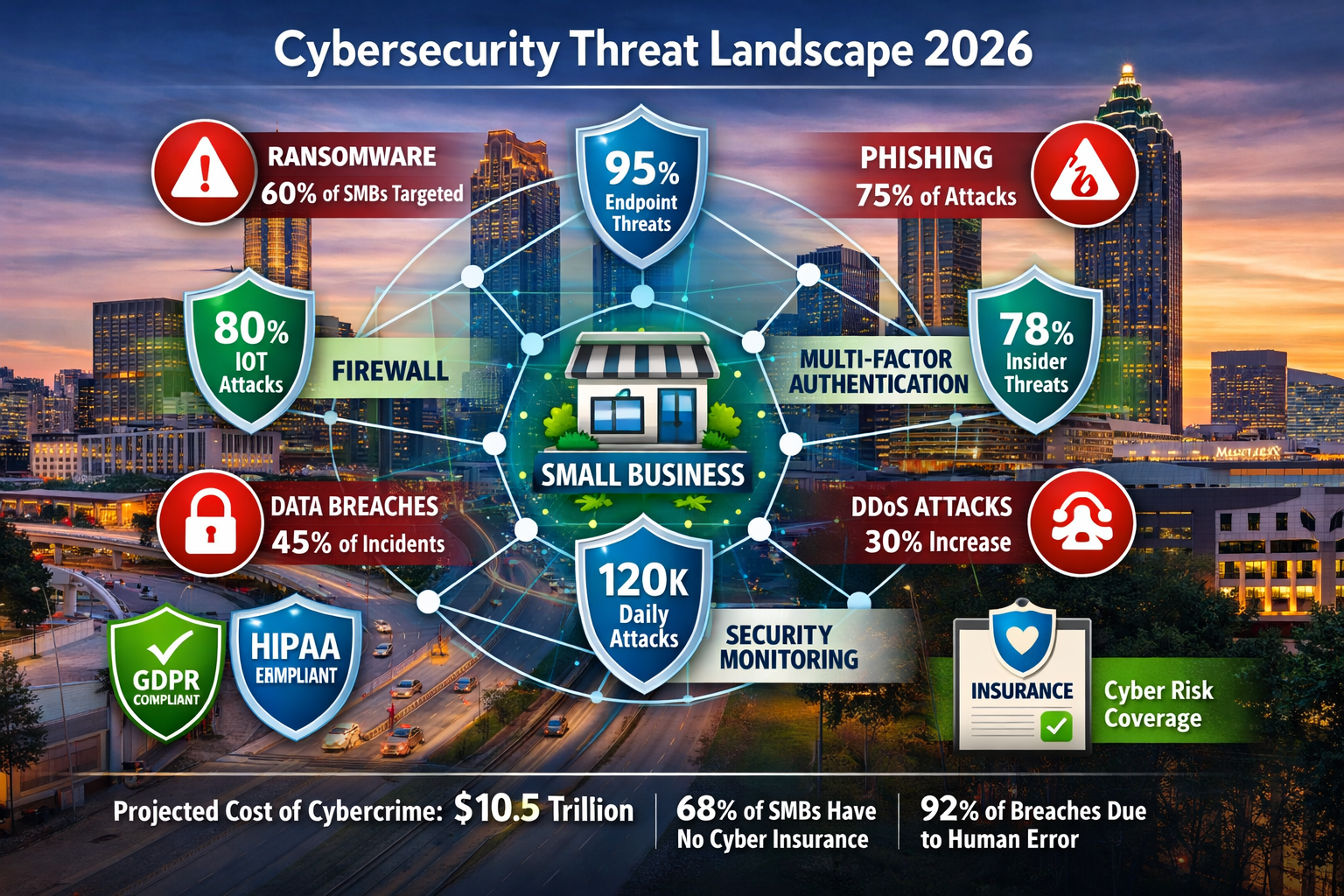
If you think cybersecurity is just about having good antivirus software, think again. The threats facing Metro Atlanta businesses in 2026 are more sophisticated than ever. Cybercriminals specifically target small businesses because they often lack the robust security measures of larger corporations.
Consider this sobering statistic: 60% of small businesses that experience a major cyber attack go out of business within six months. That’s not just about the immediate costs; it’s about lost customer trust, regulatory fines, and the time it takes to rebuild your reputation.
Real-World Impact on Local Businesses
I recently worked with a CPA firm in Alpharetta that experienced a ransomware attack during tax season. The criminals demanded $50,000, but the real cost was much higher:
- 3 weeks of downtime during their busiest period
- $120,000 in lost revenue from delayed tax filings
- Countless hours rebuilding client trust
- $75,000 in recovery and security upgrades
The owner told me, “I thought cybersecurity was an IT problem. I learned it’s actually a business survival issue.”
Essential Security Measures for 2026
Multi-Factor Authentication (MFA)
This simple step blocks 99.9% of automated attacks. If someone gets your password, they still can’t access your systems without the second authentication factor.
Regular Security Training
Your team is your first line of defense. Monthly training sessions help employees recognize phishing attempts and social engineering tactics.
Automated Backup and Recovery
24/7 monitoring ensures your data is continuously protected and can be restored quickly if something goes wrong.
Compliance Management
Whether you’re dealing with HIPAA, PCI DSS, or other regulations, staying secure and compliant protects you from both cyber threats and regulatory penalties.
The ROI of Cybersecurity Investment
Here’s how to think about cybersecurity costs: A comprehensive security solution typically costs 2-5% of your annual revenue. Compare that to the average cost of a data breach (which can be 10-20% of annual revenue or more), and the math becomes clear.
More importantly, robust cybersecurity gives you competitive advantages:
- Client confidence when handling sensitive information
- Faster sales cycles because prospects trust your security
- Lower insurance premiums with proper cybersecurity measures
- Peace of mind knowing your business is protected
Remote Work Evolution: Beyond the Home Office

The Hybrid Reality of 2026
Remote work isn’t going anywhere, but it’s evolving rapidly. The businesses thriving in 2026 aren’t just allowing remote work, they’re optimizing for it. This means creating seamless experiences whether your team is in the office, at home, or meeting clients across Metro Atlanta.
The challenge isn’t technical; it’s cultural and operational. How do you maintain company culture when half your team is remote? How do you ensure data security when people are working from coffee shops in Virginia-Highland? How do you collaborate effectively across different locations and time zones?
Technology That Enables True Flexibility
Cloud-First Infrastructure
Everything your team needs should be accessible from anywhere with an internet connection. This includes:
- File storage and sharing systems that work seamlessly
- Business applications that perform the same whether you’re in Midtown or Marietta
- Communication tools that make remote collaboration feel natural
Security for the Distributed Workforce
Traditional security models assumed everyone worked in the same building. Now you need:
- VPN solutions that don’t slow down productivity
- Endpoint protection for every device accessing company data
- Identity management that works across locations and devices
Productivity and Collaboration Tools
The right tools make remote work more productive than traditional office work:
- Project management systems that keep everyone aligned
- Video conferencing that actually works reliably
- Digital whiteboarding and brainstorming tools
Measuring Remote Work Success
Smart business owners track metrics that matter:
- Employee productivity (often increases with proper remote setup)
- Client satisfaction (can improve with more flexible meeting options)
- Cost savings (reduced office space, utilities, and commuting costs)
- Employee retention (flexibility is a major factor in job satisfaction)
One manufacturing company in Gwinnett County found that allowing its administrative team to work remotely reduced turnover by 40% and increased productivity by 25%. The owner said, “I was worried about losing control, but I actually gained visibility into what everyone was working on.”
Building Your Technology Integration Strategy
The Connected Business Advantage
The most successful SMBs in 2026 don’t just use technology – they integrate it strategically. This means choosing solutions that work together seamlessly, share data effectively, and grow with your business.
Think of your technology stack like a well-orchestrated team. Your CRM should talk to your accounting software. Your project management tools should integrate with your communication platforms. Your security systems should protect everything without creating barriers to productivity.
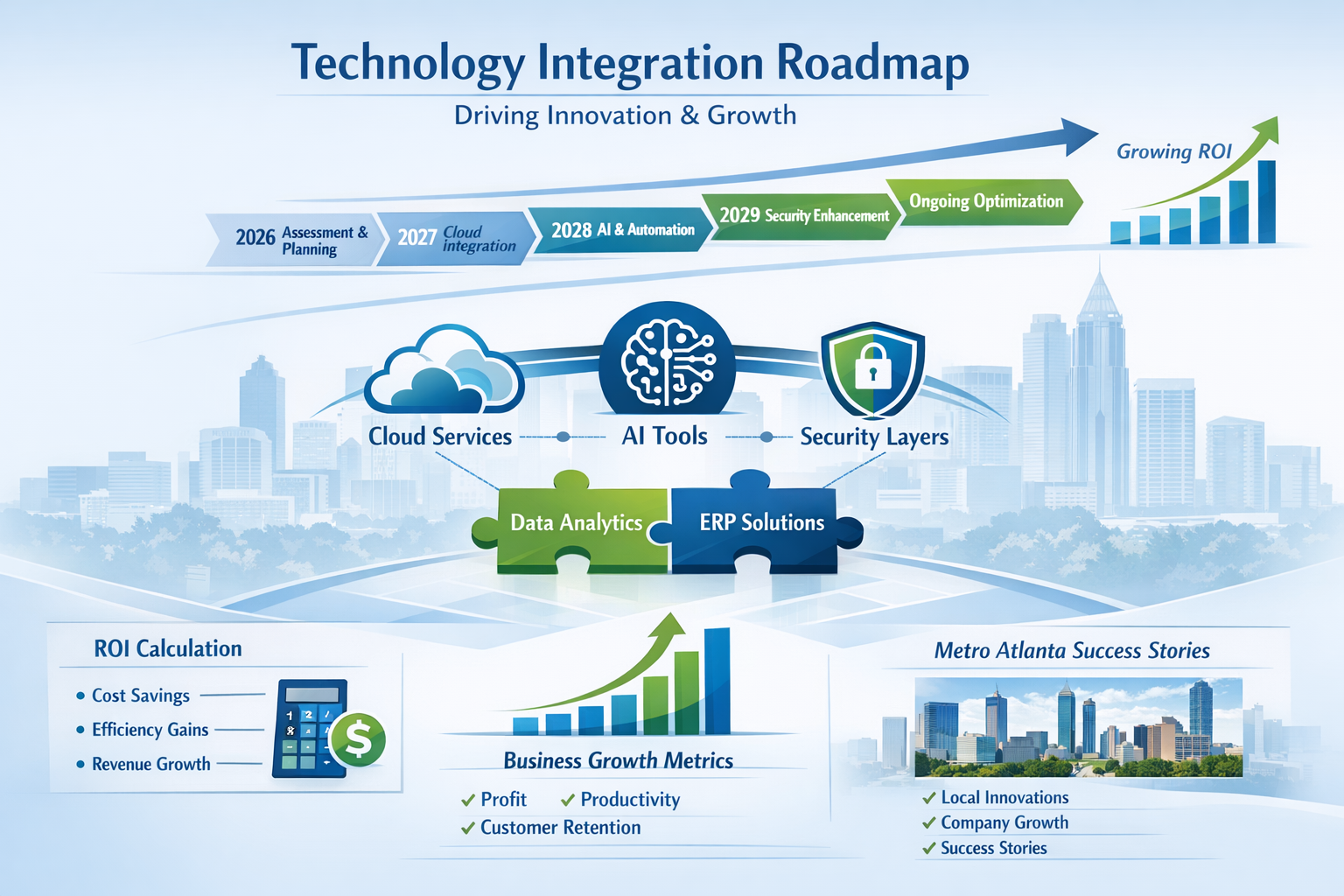
Creating Your Technology Roadmap
Assessment Phase
Start by understanding where you are today:
- What systems are working well?
- Where are the pain points and inefficiencies?
- What manual processes could be automated?
- How much time is your team spending on technology problems?
Planning Phase
Develop a realistic timeline for improvements:
- Immediate needs (security vulnerabilities, failing systems)
- Short-term goals (3-6 months: efficiency improvements)
- Medium-term objectives (6-18 months: integration and automation)
- Long-term vision (18+ months: advanced capabilities and growth enablers)
Implementation Phase
Roll out changes systematically:
- Start with foundational elements (security, backup, core systems)
- Add integration and automation capabilities
- Implement advanced features that drive growth
- Continuously monitor and optimize
The Role of Your Technology Partner
Here’s something I’ve learned after years of helping Metro Atlanta businesses: the most successful technology implementations happen when you have a reliable partner who understands your industry and business goals.
Your technology partner should provide:
- Industry expertise specific to your business type
- Proactive solutions that prevent problems before they occur
- Same-day support when issues do arise
- Straightforward pricing so you can budget effectively
- 24/7 monitoring to ensure everything runs smoothly
The goal isn’t just to fix problems – it’s to eliminate IT headaches entirely so you can focus on what you do best.
ROI Measurement and Optimization
Track the metrics that matter for your business:
Operational Efficiency
- Time saved on administrative tasks
- Reduction in manual errors
- Faster customer response times
- Improved employee productivity
Cost Management
- Reduced IT support calls and emergency fixes
- Lower software licensing costs through optimization
- Decreased downtime and lost productivity
- Predictable monthly technology costs
Growth Enablement
- Faster onboarding of new employees
- Ability to scale operations without proportional IT costs
- Improved customer satisfaction and retention
- Competitive advantages through better technology
Planning for Sustainable Growth
Scalability Considerations
The technology decisions you make today will impact your business for years to come. As you grow from 10 employees to 25, or from 50 to 100, your technology should scale seamlessly without requiring complete overhauls.
Cloud-based solutions naturally scale with your business. Instead of buying servers that might be too small in two years or too large today, you pay for what you use and adjust as needed.
Modular systems allow you to add capabilities without disrupting existing workflows. Your accounting software should be able to add inventory management features. Your CRM should integrate with marketing automation tools as your needs evolve.
Future-Proofing Your Investment
Technology changes rapidly, but smart choices today can serve your business for many years:
- Choose vendors with strong track records and ongoing development
- Prioritize open standards and integration capabilities
- Invest in training, so your team can maximize technology benefits
- Plan for regular updates and security patches
The Competitive Advantage
Businesses that implement their SMB Technology Roadmap for 2026: Trends That Will Impact Your Bottom Line strategically gain significant advantages:
Operational Excellence
- Fewer technology-related disruptions
- More predictable costs and performance
- Better data for decision-making
- Improved customer experiences
Market Position
- Ability to respond quickly to opportunities
- Professional image that builds client confidence
- Efficiency that allows competitive pricing
- Innovation that differentiates your services
Team Satisfaction
- Less time fighting with technology
- More time for meaningful work
- Professional development opportunities
- Work flexibility that attracts top talent
Your Next Steps: Implementing Your Technology Roadmap
The SMB Technology Roadmap for 2026: Trends That Will Impact Your Bottom Line isn’t just about keeping up with technology trends; it’s about making strategic decisions that drive real business results. Whether you’re running a dental practice in Buckhead, an accounting firm in Alpharetta, or a manufacturing company in Gwinnett County, the right technology strategy can transform your operations and boost your bottom line.
The key is starting with a clear assessment of where you are today and where you want to be tomorrow. Don’t try to implement everything at once. Focus on the areas that will have the biggest impact on your business goals, and build from there.
Remember, technology should make your life easier, not more complicated. When you have the right systems in place, supported by a reliable partner who provides personalized service and industry expertise, you can focus on growing your business instead of worrying about IT problems.
The businesses that thrive in 2026 and beyond will be those that view technology as a strategic advantage, not just a necessary expense. They’ll have systems that work seamlessly, teams that are productive and satisfied, and the peace of mind that comes from knowing their technology infrastructure supports their business goals.
Your technology roadmap for 2026 starts with a single decision: to stop accepting IT headaches as “just part of doing business” and start demanding technology that actually helps your business succeed.