
The Hidden Vulnerability on Your Manufacturing Floor
Last month, I walked through a thriving automotive parts manufacturer in Metro Atlanta. State-of-the-art machinery hummed efficiently, workers moved with practiced precision, and everything looked picture-perfect. But when I asked the plant manager about their cybersecurity for the shop floor equipment, he gave me a blank stare. “Cybersecurity? These machines aren’t even connected to the internet.”
That’s where he was wrong and where most manufacturers are unknowingly putting their entire operation at risk.
Modern PLCs and HMIs are far more connected than most business owners realize. They communicate with inventory systems, quality control databases, and often share network infrastructure with office computers. This connectivity creates a pathway that cybercriminals can exploit to move from your email system straight into your production equipment.
The sobering reality is that over 70% of manufacturing companies have experienced at least one cyberattack in the past year, according to recent industry reports. Yet many still operate under the dangerous assumption that their industrial control systems are somehow immune to digital threats.
Why Traditional IT Security Falls Short for Manufacturing
Your standard antivirus software and firewall setup – the kind that works fine for office computers – simply doesn’t cut it when it comes to protecting industrial control systems. PLCs and HMIs operate on different protocols, run specialized software, and require continuous uptime that traditional security updates might disrupt.
Here’s the challenge: these systems were designed for reliability and functionality, not security. Many PLCs still run on operating systems from the early 2000s, with default passwords that haven’t been changed since installation. HMIs often lack encryption for data transmission, making it easy for attackers to intercept and manipulate commands.
Think of it like trying to protect a modern smart home with security measures designed for a 1990s house. The threats have evolved, but the defenses haven’t kept pace.
Understanding the Scope of Industrial Cybersecurity Risks
What Makes PLCs and HMIs Attractive Targets
Cybercriminals aren’t just interested in stealing your customer data anymore. They’ve discovered that attacking manufacturing systems can be far more lucrative. When production stops, money stops flowing immediately. This makes manufacturers more likely to pay ransoms quickly to get operations back online.
Industrial control systems present several appealing characteristics to attackers:
- High-value disruption potential: Shutting down a production line can cost thousands of dollars per hour
- Limited security monitoring: Most manufacturers don’t have 24/7 monitoring specifically focused on industrial systems
- Interconnected dependencies: One compromised PLC can potentially affect multiple production processes
- Delayed detection: Attacks on industrial systems often go unnoticed for weeks or months
The Real-World Impact of Compromised Industrial Systems
Let me share a story that illustrates just how devastating these attacks can be. A mid-sized food processing company in Georgia experienced what initially seemed like random equipment malfunctions. Conveyor belts would stop unexpectedly, temperature controls would fluctuate, and quality sensors would give inconsistent readings.
For three weeks, they attributed these issues to aging equipment and scheduled maintenance appointments. It wasn’t until their IT coordinator noticed unusual network traffic that they discovered malware had been manipulating their PLCs. The attackers had been testing their control over the systems, preparing for a larger coordinated attack.
The financial impact was staggering: $2.3 million in lost production, emergency IT remediation costs, and regulatory compliance issues related to food safety protocols. All because their industrial control systems lacked proper cybersecurity protection.
Common Attack Vectors Targeting Manufacturing Systems
Understanding how these attacks typically unfold helps manufacturers recognize their vulnerabilities:
Phishing and Social Engineering: An employee receives an email that appears to be from a trusted vendor, clicks a malicious link, and unknowingly provides network access to attackers.
Supply Chain Compromises: Third-party vendors with access to your systems become the entry point for cybercriminals to reach your industrial controls.
Remote Access Exploitation: VPN connections and remote maintenance portals that lack proper security controls become highways for unauthorized access.
USB and Removable Media: Infected devices brought onto the shop floor can directly compromise air-gapped systems that seem completely isolated.
Network Lateral Movement: Attackers gain access through office systems and gradually work their way into industrial networks through shared infrastructure.
How AlphaCIS Approaches Manufacturing Cybersecurity
Industry-Specific Expertise That Makes the Difference
When manufacturers call AlphaCIS about cybersecurity concerns, they’re not just getting generic IT support. Our team understands the unique challenges of protecting industrial environments while maintaining the operational continuity that manufacturing depends on.
We’ve worked with automotive suppliers, food processors, textile manufacturers, and precision parts companies throughout Metro Atlanta. Each industry has specific compliance requirements, operational constraints, and risk profiles that require tailored security approaches.
For example, a pharmaceutical manufacturer can’t afford any downtime during FDA inspections, while an automotive supplier must maintain just-in-time delivery schedules that depend on perfectly synchronized production systems. Our security implementations account for these business-critical requirements from day one.
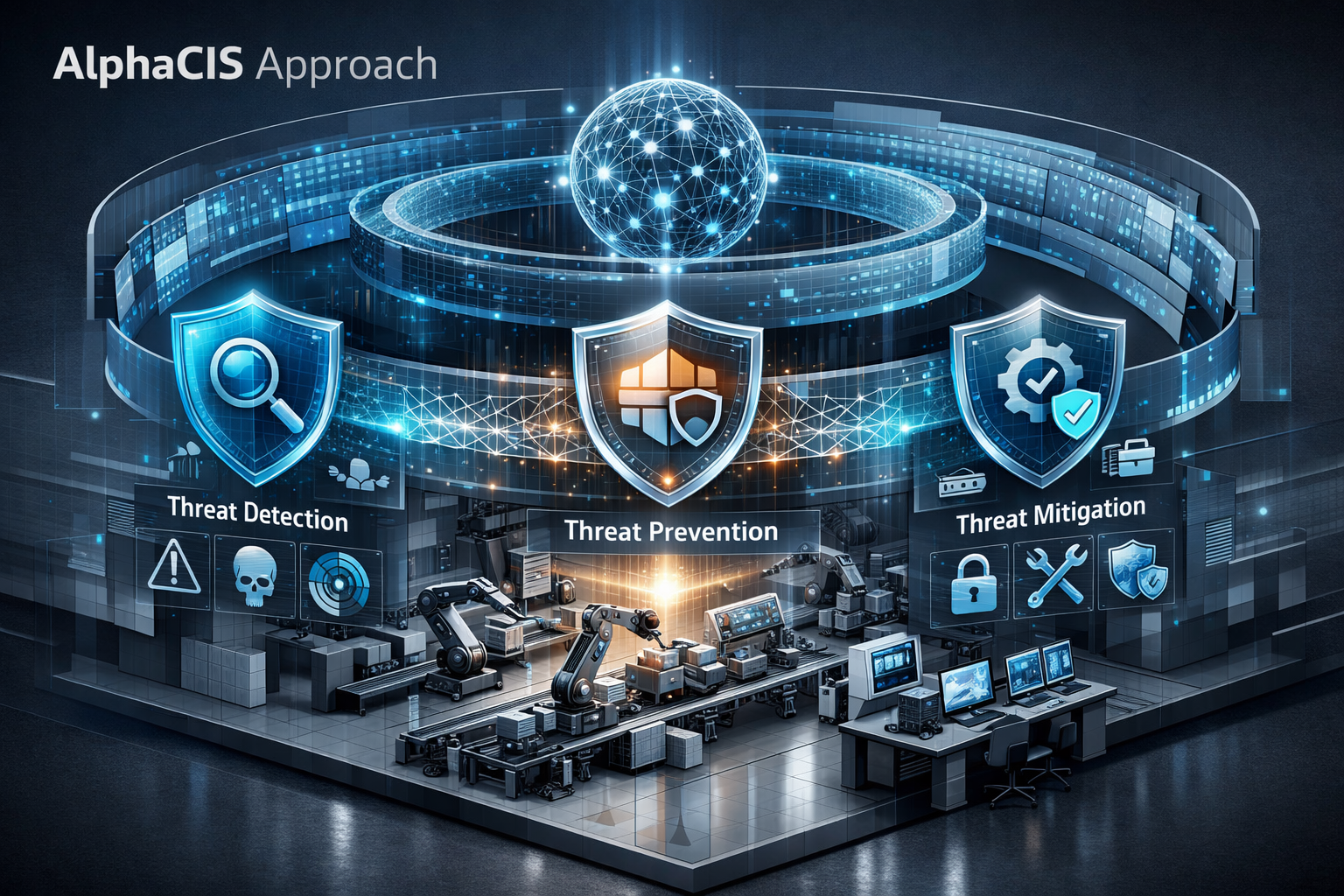
The AlphaCIS Layered Security Methodology
Rather than trying to bolt security onto existing systems as an afterthought, we implement what we call “defense in depth” – multiple layers of protection that work together to create comprehensive security coverage.
Network Segmentation: We create secure boundaries between your office network and industrial systems, ensuring that a compromised email account can’t directly access production equipment.
Continuous Monitoring: Our 24/7 monitoring specifically watches for the types of unusual activity that indicate attacks on industrial systems – not just traditional IT threats.
Access Control: We implement strict controls over who can access PLCs and HMIs, when they can access them, and what actions they’re authorized to perform.
Backup and Recovery: Specialized backup systems for industrial control configurations ensure you can quickly restore operations if systems are compromised.
Regular Security Assessments: Ongoing evaluations identify new vulnerabilities as your manufacturing systems evolve and new threats emerge.
Implementing Practical Security Measures Without Disrupting Operations
Balancing Security with Operational Requirements
One of the biggest concerns manufacturers express when we discuss cybersecurity is the fear that security measures will interfere with production. This concern is understandable but often based on outdated assumptions about how modern industrial cybersecurity works.
The key is implementing security measures during planned maintenance windows and designing protections that enhance rather than hinder operational visibility. For instance, our monitoring systems actually provide manufacturers with better insights into their equipment performance while simultaneously watching for security threats.
Phased Implementation Strategy
We don’t recommend trying to secure everything at once. A phased approach allows manufacturers to implement security improvements gradually while maintaining full operational control.
Phase 1 – Assessment and Quick Wins: Identify immediate vulnerabilities and implement basic protections that can be deployed without operational disruption.
Phase 2 – Network Infrastructure: Establish proper segmentation and monitoring capabilities during scheduled maintenance periods.
Phase 3 – Advanced Protection: Deploy sophisticated threat detection and response capabilities once basic security foundations are solid.
Phase 4 – Continuous Improvement: Ongoing optimization and enhancement based on operational experience and evolving threats.
Working Within Manufacturing Constraints
Every manufacturing environment has unique constraints that security implementations must respect:
Uptime Requirements: Some production lines can’t be shut down outside of quarterly maintenance windows. We design security deployments that work within these constraints.
Legacy System Integration: Older PLCs and HMIs may have limited security capabilities, but they can still be protected through network-level controls and monitoring.
Compliance Obligations: Industries like pharmaceuticals, food processing, and automotive have specific regulatory requirements that security measures must support, not complicate.
Budget Considerations: Security improvements need to provide a clear ROI and fit within operational budgets. We focus on high-impact, cost-effective solutions first.
The AlphaCIS Advantage: More Than Just Security
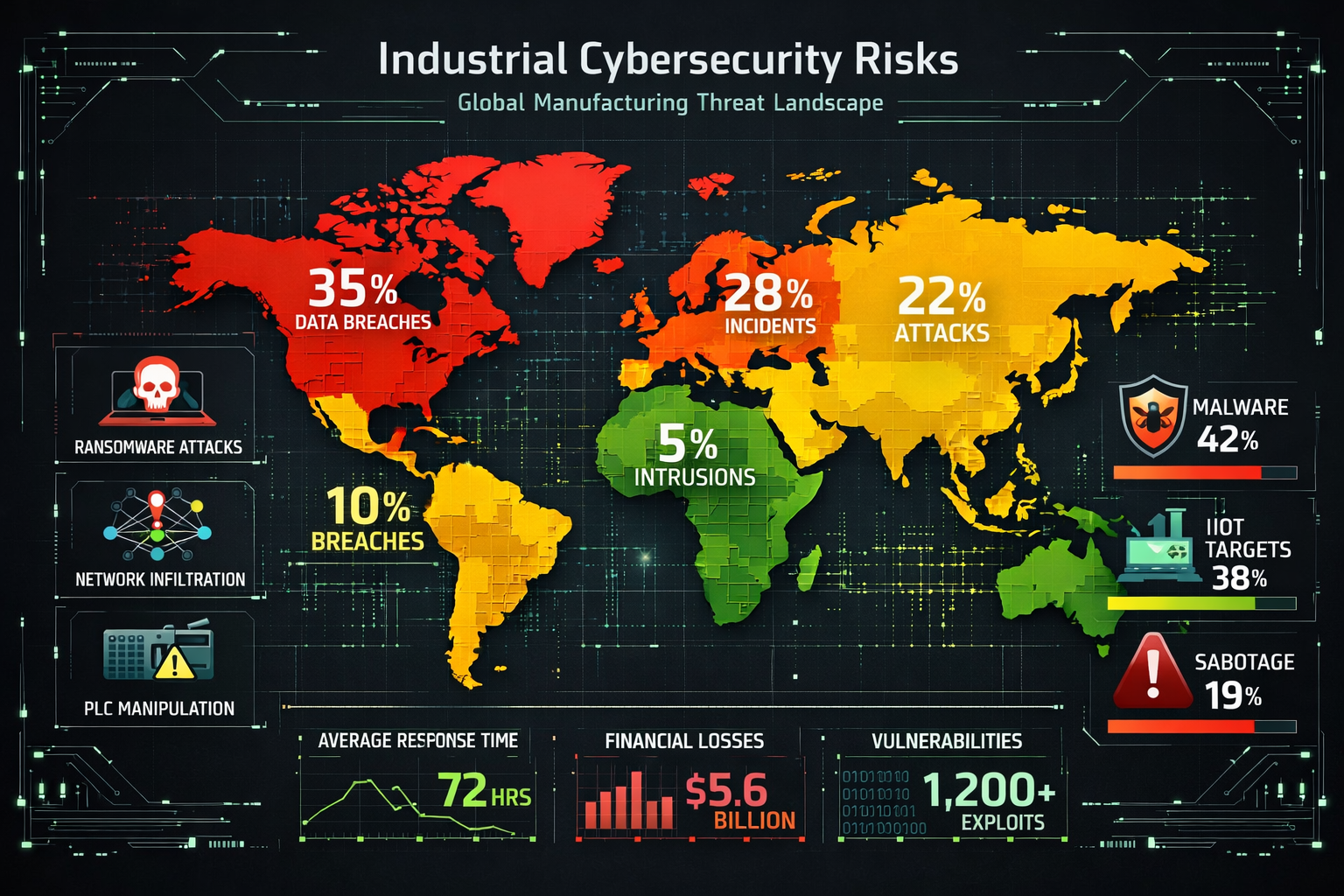
Proactive Solutions That Prevent Problems
The quiet risk in your PLCs and HMIs requires more than reactive security measures – it demands proactive solutions that identify and neutralize threats before they impact your operations. AlphaCIS doesn’t just respond to security incidents; we work to prevent them entirely.
Our proactive approach includes:
- Predictive threat analysis that identifies emerging risks specific to your industry
- Regular security health checks that catch vulnerabilities before attackers do
- Automated patch management for industrial systems during approved maintenance windows
- Employee training programs focused on manufacturing-specific security awareness
Same-Day Support When You Need It Most
Manufacturing doesn’t operate on a 9-to-5 schedule, and neither do cyber threats. When security issues arise, AlphaCIS provides same-day support to minimize any potential impact on your operations.
I remember getting a call at 11 PM from a precision machining company whose HMI screens were displaying error messages they’d never seen before. Within two hours, our team had remotely diagnosed the issue, confirmed it was a failed security update rather than a cyberattack, and guided their night shift supervisor through the resolution process. Production resumed before the day shift arrived, with no lost output.
Straightforward Pricing That Makes Sense
One of the biggest frustrations manufacturers express about IT services is unpredictable pricing and surprise charges. AlphaCIS believes in straightforward pricing that allows you to budget confidently for cybersecurity protection.
Our manufacturing security packages include:
- All monitoring and threat detection services
- Regular security assessments and updates
- 24/7 emergency response capabilities
- Employee training and awareness programs
- Compliance reporting and documentation
No hidden fees, no surprise charges, and no confusion about what’s included.
Building Long-Term Security Resilience
Creating a Security-Aware Manufacturing Culture
Technology alone can’t solve cybersecurity challenges. The most effective protection comes from combining robust technical measures with a security-aware workforce that understands how to recognize and respond to potential threats.
AlphaCIS works with manufacturing teams to develop practical security awareness that fits naturally into daily operations. This includes:
Recognizing Social Engineering: Training that helps employees identify suspicious emails, phone calls, and requests for system access.
Proper USB and Device Handling: Protocols for safely connecting laptops, tablets, and other devices to industrial networks.
Incident Reporting Procedures: Clear, simple processes for reporting suspicious activity without fear of blame or disruption.
Regular Security Reminders: Ongoing reinforcement that keeps security awareness top-of-mind without becoming burdensome.
Staying Ahead of Evolving Threats
The cybersecurity landscape changes constantly, with new threats emerging and attack methods evolving. Manufacturers need a reliable partner who stays current with these changes and adapts protection strategies accordingly.
Our team continuously monitors threat intelligence specifically related to manufacturing and industrial control systems. When new vulnerabilities are discovered or attack patterns emerge, we proactively update our clients’ protection measures and guide on any additional precautions needed.
Measuring Security Success
How do you know if your cybersecurity investments are working? AlphaCIS provides clear metrics and regular reporting that demonstrate the value of your security program.
We track and report on:
- Threat detection and prevention statistics
- System uptime and availability metrics
- Compliance status and audit readiness
- Security awareness training completion and effectiveness
- Cost savings from prevented incidents
This transparency helps manufacturers understand exactly what they’re getting from their cybersecurity investment and make informed decisions about future security enhancements.
Real-World Success Stories
Case Study: Automotive Supplier Transformation
A Tier 2 automotive supplier came to AlphaCIS after experiencing several “unexplained” production delays that were actually caused by subtle cyberattacks on their quality control systems. The attackers were manipulating measurement data just enough to cause parts to fail final inspection without triggering obvious alarms.
Within 90 days of implementing our layered security approach:
- Zero security-related production disruptions
- Improved visibility into production system performance
- Successful completion of customer security audits
- $450,000 in prevented losses based on the previous incident rate
The plant manager told us, “We finally have peace of mind about our production systems. We can focus on making great parts instead of worrying about digital threats.”
Case Study: Food Processor Compliance Success
A mid-sized food processing company needed to meet new FDA cybersecurity requirements while maintaining its existing production schedules. The challenge was implementing comprehensive security without disrupting their 24/7 operations or compromising food safety protocols.
AlphaCIS developed a customized implementation plan that:
- Achieved full FDA compliance within the required timeline
- Maintained 100% production uptime during the security upgrade process
- Improved overall system reliability through better monitoring and maintenance
- Reduced insurance premiums by 15% due to enhanced cybersecurity posture
The facility manager commented, “AlphaCIS made compliance feel manageable instead of overwhelming. Their industry expertise made all the difference.”