
Why Manufacturing Operations Depend on Reliable IT Infrastructure
Your production line runs on more than just machinery; it depends on a complex network of interconnected systems that must work flawlessly together. Modern manufacturing facilities rely on enterprise resource planning (ERP) systems, manufacturing execution systems (MES), programmable logic controllers (PLCs), human-machine interfaces (HMIs), and countless sensors that communicate through your IT network.
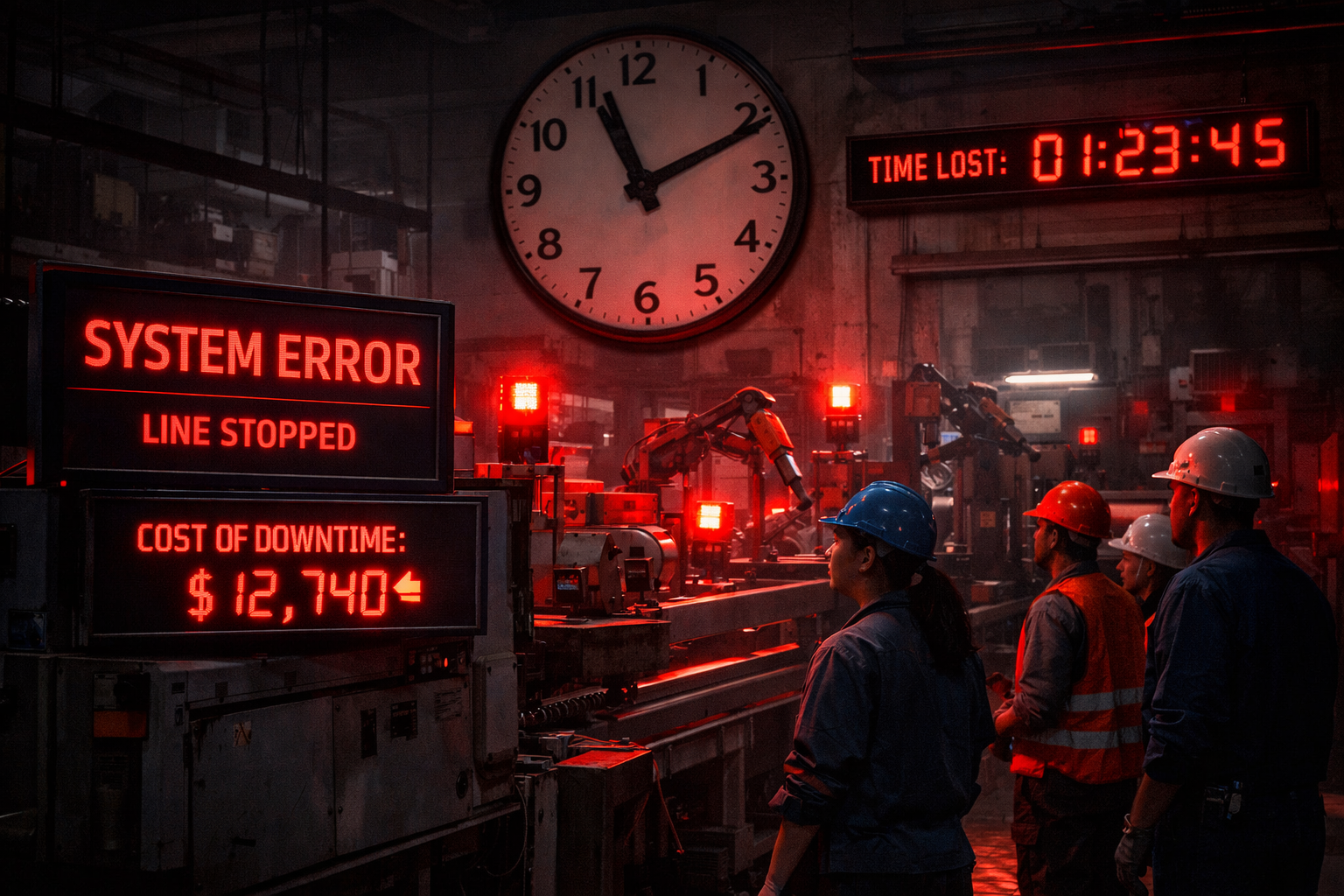
When any component in this digital ecosystem fails, the ripple effect can shut down entire production lines within minutes. A single server crash can halt order processing, prevent quality control systems from functioning, or block critical communications between production equipment and management systems.
I’ve seen manufacturers lose entire shifts of production because their network switch failed at 2 AM, and they didn’t discover the problem until the morning crew arrived to find nothing working. That’s exactly the kind of scenario that keeps plant managers awake at night and exactly what proper manufacturing IT support prevents.
The challenge is that most manufacturing companies don’t have dedicated IT staff on-site around the clock. Your production doesn’t stop at 5 PM, but your internal IT support often does. This gap creates vulnerability windows where problems can escalate from minor issues into major production shutdowns.
Manufacturing OT monitoring solutions bridge this gap by providing continuous oversight of both your information technology and operational technology systems. This comprehensive approach ensures that someone is always watching your critical infrastructure, ready to respond before small problems become big disasters.
Hidden Causes of Manufacturing Downtime That Managed IT Prevents

Reducing production downtime starts with understanding that most manufacturing interruptions stem from preventable IT issues that go unnoticed until they cause system failures. Here are the most common culprits that properly managed services catch early:
Network Infrastructure Failures
Aging network switches, overloaded wireless access points, and failing Ethernet cables cause intermittent connectivity issues that gradually worsen over time. These problems often manifest as slow data transfer, dropped connections between production systems, or communication failures between PLCs and control systems.
Proactive IT maintenance in manufacturing includes regular network health assessments, cable testing, and equipment lifecycle management that prevent these failures before they impact production.
Security Vulnerabilities That Disrupt Operations
Cybersecurity threats targeting manufacturing facilities have increased dramatically, with ransomware attacks specifically designed to shut down production lines until ransom payments are made. Even unsuccessful attacks can cause significant disruption as systems are taken offline for security assessments.
Manufacturing cybersecurity services provide continuous threat monitoring, regular security updates, and incident response capabilities that keep production systems secure and operational.
Outdated Software and Missing Updates
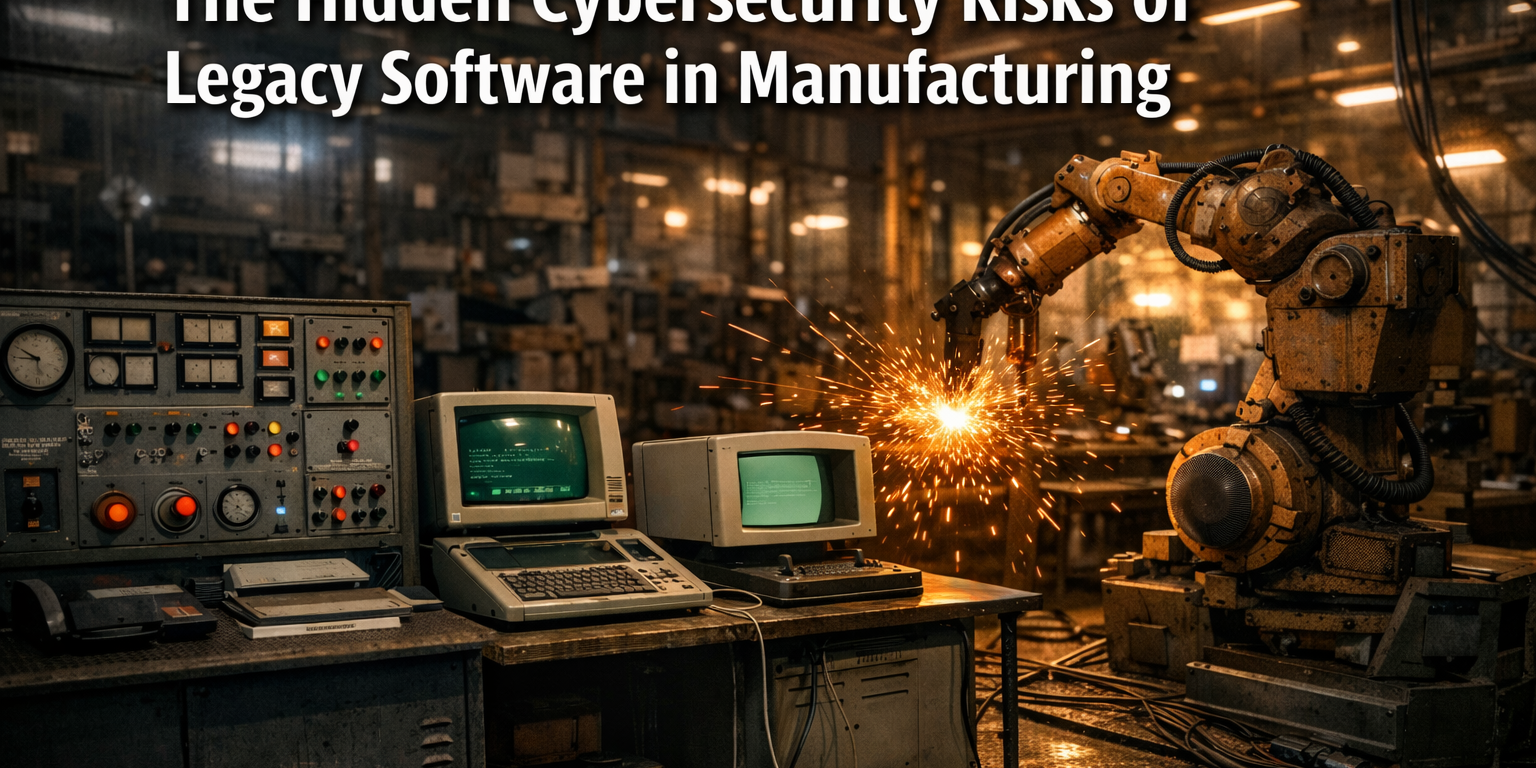
Legacy manufacturing software often runs on outdated operating systems that become increasingly unstable over time. Missing security patches, driver incompatibilities, and software conflicts create system instabilities that lead to unexpected crashes during critical production periods.
Managed services include scheduled maintenance windows for updates, compatibility testing, and rollback procedures that ensure updates enhance rather than disrupt operations.
Storage and Backup System Failures
Production data, quality control records, and operational logs require reliable storage systems. When storage devices fail or backup systems malfunction, the immediate impact may seem minimal until you need to recover critical data or restart systems after an unexpected shutdown.
Manufacturing disaster recovery planning includes redundant storage systems, automated backup verification, and rapid recovery procedures that minimize data-related downtime.
Environmental and Power-Related Issues
Manufacturing environments present unique challenges for IT equipment, including temperature fluctuations, dust, vibration, and power quality issues. Standard office IT equipment often fails prematurely in these conditions without proper environmental monitoring and protection.
Industrial-grade managed services include environmental monitoring, power conditioning recommendations, and equipment specifications designed for manufacturing environments.
Comprehensive Managed IT Services for Manufacturing Environments
24/7 Network and System Monitoring
Factory IT monitoring operates around the clock, tracking the health and performance of every critical system in your facility. This includes servers, network equipment, production databases, and communication links between operational technology and information technology systems.
Advanced monitoring tools provide real-time alerts when system performance degrades, storage space runs low, or network traffic patterns indicate potential problems. This early warning system allows technicians to address issues during planned maintenance windows rather than emergency shutdowns.
The monitoring extends beyond traditional IT equipment to include industrial systems like PLCs, HMIs, and SCADA systems that directly control production processes. This comprehensive approach ensures that both your business systems and production control systems receive proper oversight.
Proactive Maintenance and Patch Management
Proactive IT maintenance manufacturing follows carefully planned schedules that align with your production calendar. Critical updates are tested in isolated environments before deployment, ensuring that security patches and software updates enhance rather than disrupt operations.
Maintenance activities include:
• Regular system health checks to identify potential hardware failures before they occur
• Software updates and security patches applied during planned downtime windows
• Performance optimization to ensure systems run efficiently as production demands change
• Hardware lifecycle management with planning for equipment replacement
Cybersecurity Protection for Manufacturing
Manufacturing cybersecurity services address the unique security challenges of industrial environments where operational technology and information technology systems intersect. This specialized approach recognizes that manufacturing facilities face different threats than typical office environments.
Security measures include:
• Network segmentation to isolate production systems from business networks
• Industrial firewall management designed for manufacturing protocols and communications
• Endpoint protection for computers, tablets, and mobile devices used on the production floor
• Security awareness training tailored to manufacturing environments and threats
Backup and Disaster Recovery Solutions
Manufacturing disaster recovery planning ensures that critical systems can be restored quickly when unexpected events occur. This includes both data backup and system recovery procedures that minimize production interruptions.
Recovery planning addresses multiple scenarios:
• Hardware failures with rapid replacement and system restoration procedures
• Cyber incidents with isolated recovery environments and clean system restoration
• Natural disasters with off-site backup storage and alternative operational procedures
• Human error with point-in-time recovery capabilities for critical production data
Help Desk and Technical Support
Same-day support ensures that when problems occur, experienced technicians respond quickly with solutions tailored to manufacturing environments. Support teams understand the urgency of production-related issues and prioritize responses accordingly.
Support services include:
• Remote troubleshooting for rapid problem resolution without on-site delays
• On-site technical support when hands-on intervention is required
• Emergency response procedures for critical system failures that threaten production
• Documentation and knowledge transfer to help internal staff handle routine issues
How Managed IT Services Increase Manufacturing Uptime
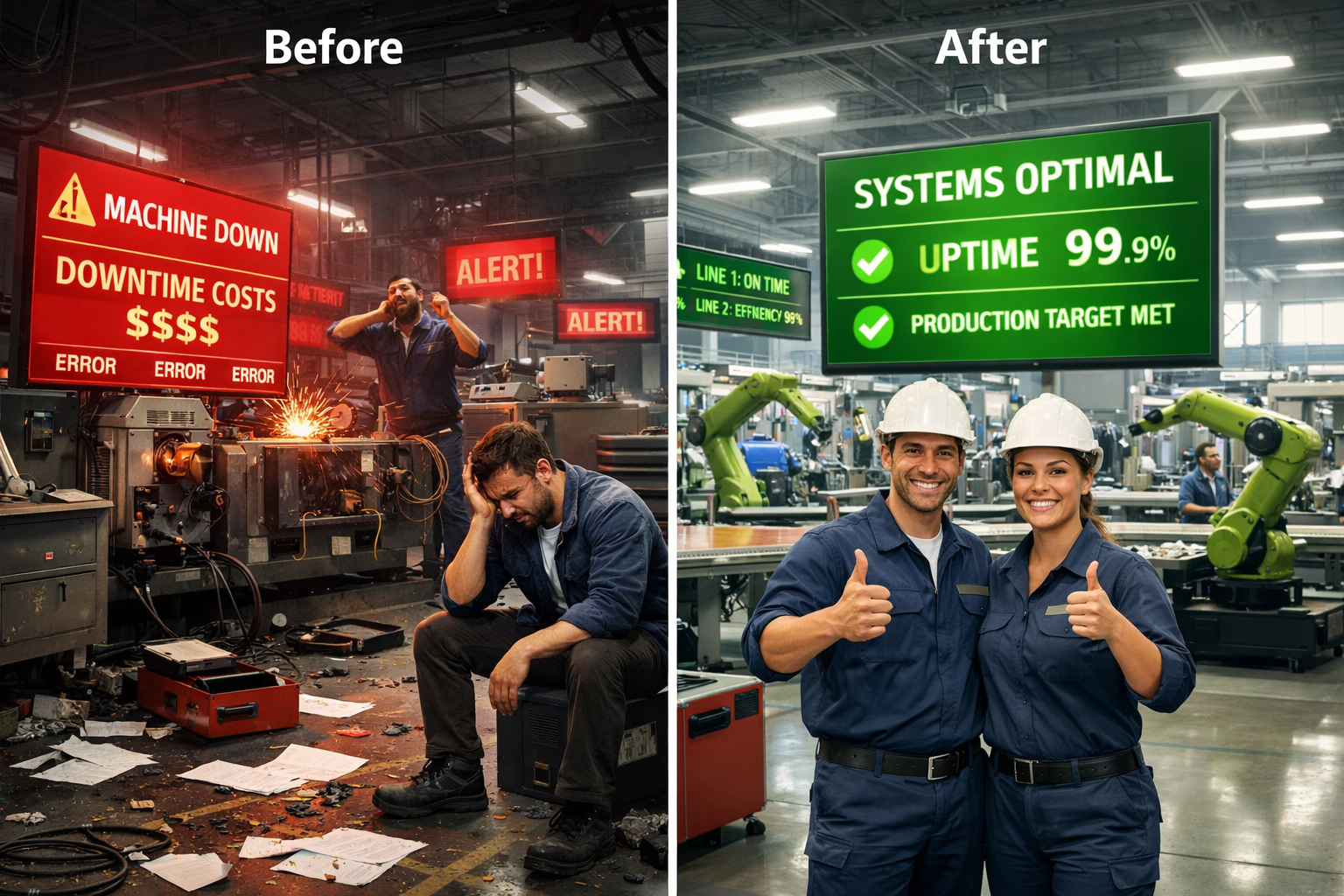
Manufacturing uptime optimization works by shifting from reactive problem-solving to proactive system management. Instead of waiting for equipment to fail and then scrambling to fix it, managed services continuously monitor system health and address potential issues before they impact production.
Predictive Maintenance for IT Infrastructure
Advanced monitoring tools track system performance trends over time, identifying patterns that indicate impending hardware failures. For example, hard drive health monitoring can predict disk failures weeks in advance, allowing for planned replacement during scheduled maintenance rather than emergency downtime.
Network performance monitoring identifies bandwidth constraints, latency issues, and communication problems before they affect production systems. This proactive approach prevents the gradual degradation that often leads to sudden system failures during peak production periods.
Rapid Response and Resolution
When issues do occur, industrial managed services provide immediate response capabilities that minimize downtime duration. Pre-configured spare equipment, established vendor relationships, and documented recovery procedures enable faster restoration than ad-hoc emergency responses.
Response capabilities include:
• Remote monitoring alerts that notify technicians of problems before production staff notices issues
• Pre-positioned spare equipment for critical systems that cannot tolerate extended downtime
• Vendor escalation procedures that ensure priority support from equipment manufacturers
• Documented recovery processes that eliminate guesswork during high-pressure situations
Integration Between IT and OT Systems
Modern manufacturing relies on seamless communication between information technology systems (like ERP and MES) and operational technology systems (like PLCs and SCADA). Manufacturing OT monitoring solutions ensure that both sides of this integration remain healthy and properly coordinated.
This integrated approach prevents common problems like:
• Data synchronization failures between production systems and business applications
• Communication timeouts that cause production equipment to fault or stop
• Version conflicts between software updates on IT and OT systems
• Security gaps at the intersection of business and production networks
Performance Optimization
Manufacturing uptime optimization includes ongoing performance tuning that ensures systems operate efficiently as production requirements evolve. This includes database optimization, network traffic management, and resource allocation adjustments that prevent performance degradation over time.
Regular performance reviews identify opportunities to improve system responsiveness, reduce processing delays, and enhance overall operational efficiency. These improvements often provide additional capacity for production growth without requiring major infrastructure investments.
ROI Analysis: Proactive IT Management vs. Reactive Repairs
The financial benefits of managed IT services for manufacturing become clear when comparing proactive management costs to the true cost of reactive repairs and unplanned downtime.
Downtime Cost Calculations
Manufacturing downtime costs extend far beyond the immediate repair expenses:
• Lost production revenue based on hourly production capacity and profit margins
• Labor costs for idle workers during downtime periods
• Overtime expenses to make up lost production after repairs are completed
• Customer satisfaction impact from delayed deliveries and missed commitments
• Emergency repair premiums for after-hours technician calls and expedited parts
A typical mid-sized manufacturer with $50 million annual revenue might lose $8,000-$15,000 per hour during unplanned production stops. A single 4-hour downtime event can cost $32,000-$60,000 in direct losses, not including the indirect costs of schedule disruption and customer impact.
Managed Services Investment vs. Downtime Prevention
Monthly managed services costs typically range from $3,000-$8,000 for comprehensive coverage of a mid-sized manufacturing facility. This investment provides:
• 24/7 monitoring that prevents most downtime events through early intervention
• Predictable monthly costs that eliminate surprise repair bills and emergency service charges
• Proactive maintenance that extends equipment life and improves reliability
• Rapid response capabilities that minimize downtime duration when issues do occur
Real-World ROI Examples
A automotive parts manufacturer reduced annual downtime from 48 hours to 8 hours after implementing managed services, saving approximately $600,000 in lost production while paying $72,000 annually for managed services an ROI of over 700%.
A food processing facility eliminated three major downtime events per year (averaging 6 hours each) by switching from reactive to proactive IT management. The annual savings of $270,000 in prevented downtime far exceeded their $60,000 managed services investment.
Peace of Mind Value
Beyond the quantifiable financial returns, managed services provide peace of mind that allows manufacturing leaders to focus on core business operations rather than IT crisis management. This intangible benefit often proves as valuable as the direct cost savings.
Real Manufacturing Scenarios: IT Support in Action
Scenario 1: Preventing a Weekend Production Shutdown
A plastic injection molding company’s monitoring system detected unusual network traffic patterns on Friday evening, indicating a potential security threat targeting their production control systems. The managed services team immediately isolated the affected network segment and implemented additional security measures before the weekend production run.
Without this proactive intervention, the security incident could have forced a complete production shutdown during their busiest weekend of the month, potentially costing over $200,000 in lost revenue and customer penalties.
Scenario 2: Rapid Recovery from Hardware Failure
When a critical database server failed at a metal fabrication facility, the managed services team had a replacement server configured and running within 2 hours using pre-tested backup systems. The company lost only one production shift instead of the 2-3 days typically required for emergency hardware replacement and system restoration.
The rapid recovery was possible because of:
• Pre-configured backup hardware maintained specifically for critical systems
• Automated backup systems that ensured current data was immediately available
• Documented recovery procedures that eliminated troubleshooting delays
• Vendor relationships that provided priority support for emergencies
Scenario 3: Preventing Gradual Performance Degradation
A pharmaceutical packaging facility experienced gradually increasing delays in its quality control database, which threatened to slow production line speeds. Monitoring data revealed that database performance was degrading due to storage capacity constraints and index fragmentation.
Proactive IT maintenance manufacturing addressed the issue during a planned maintenance window, optimizing database performance and expanding storage capacity. This prevented what could have become a significant production bottleneck affecting multiple product lines.
Implementation Roadmap for Manufacturing IT Services
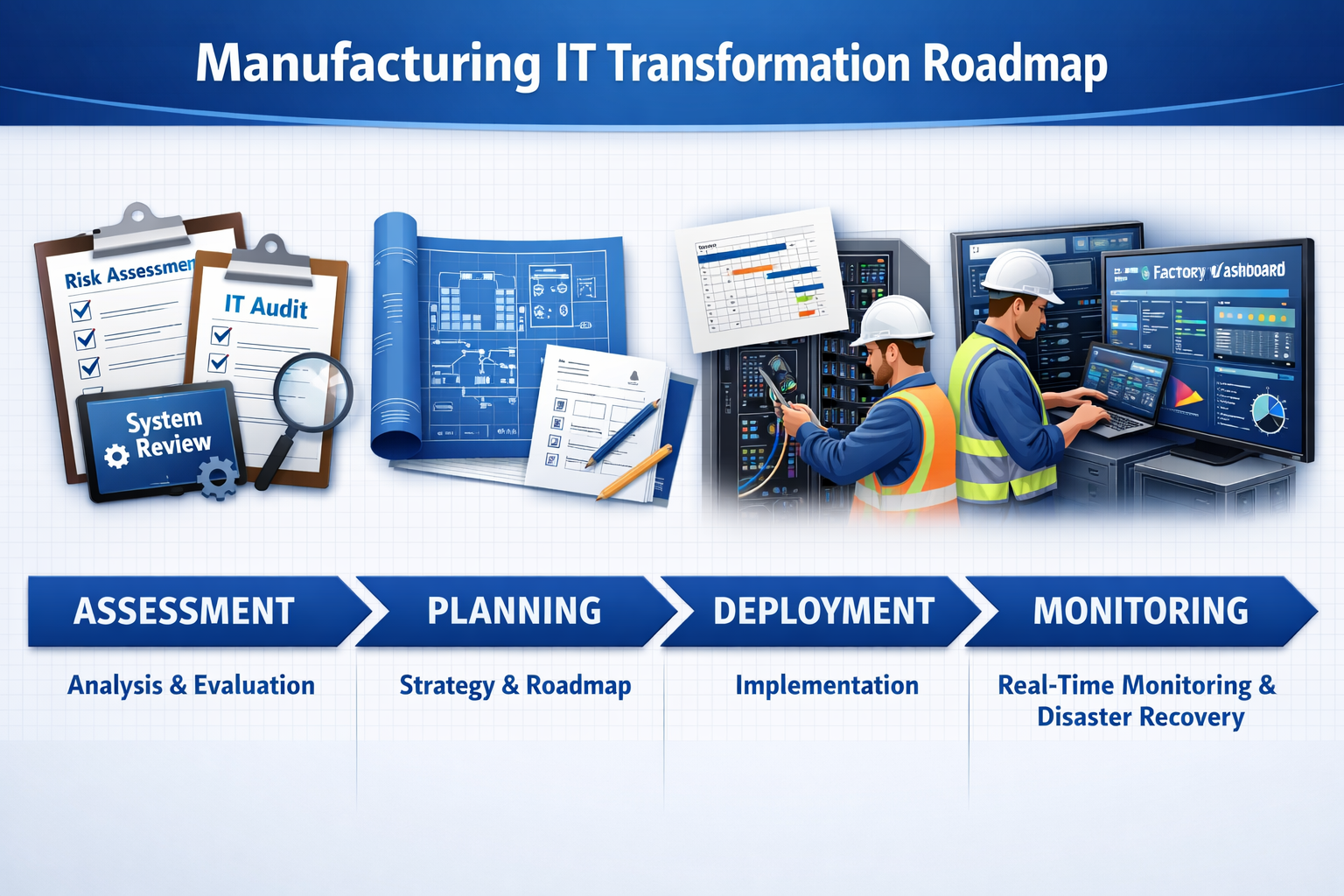
Phase 1: Assessment and Planning (Weeks 1-2)
The implementation process begins with a comprehensive assessment of your current IT infrastructure, production systems, and operational requirements. This evaluation identifies critical systems, potential vulnerabilities, and integration points between IT and OT environments.
Assessment activities include:
• Network infrastructure evaluation to identify equipment condition and capacity
• Security assessment focusing on manufacturing-specific threats and vulnerabilities
• System documentation review to understand current configurations and dependencies
• Operational requirements analysis to align IT services with production schedules
Phase 2: Service Design and Integration Planning (Weeks 3-4)
Based on the assessment results, the managed services provider designs a customized support plan that addresses your specific manufacturing environment and operational requirements. This includes monitoring system configuration, maintenance schedules, and response procedures.
Planning deliverables include:
• Monitoring system architecture designed for your specific equipment and systems
• Maintenance schedules aligned with production calendars and planned downtime windows
• Response procedures tailored to your facility layout and staffing patterns
• Integration specifications for connecting IT and OT monitoring systems
Phase 3: System Deployment and Configuration (Weeks 5-8)
The deployment phase implements monitoring systems, configures security measures, and establishes communication links between your facility and the managed services operations center. This work is carefully scheduled to minimize disruption to ongoing production.
Deployment activities include:
• Monitoring agent installation on servers, network equipment, and critical systems
• Network security implementation, including firewalls, intrusion detection, and access controls
• Backup system configuration with automated testing and verification procedures
• Communication system setup for alerts, reporting, and remote support access
Phase 4: Testing and Validation (Weeks 9-10)
Before going live, all systems undergo comprehensive testing to ensure proper operation and integration with existing production systems. This includes simulated failure scenarios and recovery procedures to validate response capabilities.
Testing procedures include:
• Monitoring system verification to confirm all critical systems are properly tracked
• Alert testing to ensure notifications reach appropriate personnel promptly
• Recovery procedure validation using non-production systems when possible
• Performance impact assessment to confirm monitoring doesn’t affect production systems
Phase 5: Go-Live and Optimization (Ongoing)
The final phase transitions to full managed services operation with continuous monitoring, regular performance reviews, and ongoing optimization based on operational experience and changing requirements.
Ongoing activities include:
• 24/7 monitoring operations with immediate response to critical alerts
• Regular performance reviews to identify optimization opportunities
• Service level reporting to track uptime improvements and response metrics
• Continuous improvement based on operational feedback and industry best practices
Choosing the Right Managed IT Partner for Manufacturing
Industry Expertise Requirements
Manufacturing IT support requires specialized knowledge of industrial environments, operational technology systems, and the unique challenges of production facilities. Look for providers with demonstrated experience in manufacturing environments and an understanding of both IT and OT systems.
Key qualifications include:
• Manufacturing client references with similar production environments and requirements
• Industrial system experience, including PLCs, SCADA, and manufacturing execution systems
• Compliance knowledge relevant to your industry (FDA, ISO, OSHA, etc.)
• Emergency response capabilities designed for 24/7 production environments
Service Level Agreements and Response Times
Manufacturing environments require faster response times and higher availability standards than typical office environments. Ensure your service level agreements reflect the urgency of production-related issues.
Critical SLA components include:
• Response time commitments for different severity levels of issues
• Uptime guarantees with penalties for failing to meet availability targets
• Escalation procedures for critical issues that threaten production
• Performance reporting that tracks actual service delivery against commitments
Local Support and Remote Capabilities
While remote monitoring and support provide efficient problem resolution, manufacturing facilities also need access to local technicians who can respond quickly for hands-on intervention when required.
Support structure should include:
• Local technician availability for same-day on-site response when needed
• Remote support capabilities for immediate troubleshooting and problem resolution
• Vendor relationship management to coordinate with equipment manufacturers
• Emergency contact procedures that ensure critical issues receive immediate attention
Scalability and Growth Planning
Your managed services provider should be able to scale support as your manufacturing operations grow and evolve. This includes adding new production lines, integrating acquired facilities, and adapting to changing technology requirements.
Scalability considerations include:
• Flexible service plans that can accommodate operational changes
• Technology roadmap planning to align IT infrastructure with business growth
• Integration capabilities for mergers, acquisitions, or facility expansions
• Vendor partnerships that provide access to emerging technologies and solutions
Frequently Asked Questions
Q: How quickly can managed IT services be implemented in a manufacturing facility?
A: Implementation typically takes 6-10 weeks for comprehensive coverage, including assessment, planning, deployment, and testing phases. Critical monitoring can often be established within 2-3 weeks for immediate protection.
Q: Will managed services interfere with our existing production systems?
A: Properly implemented managed services use non-intrusive monitoring methods that don’t affect production system performance. All installations are scheduled during planned maintenance windows to avoid operational disruption.
Q: What happens if our managed services provider experiences an outage?
A: Reputable providers maintain redundant operations centers and failover procedures to ensure continuous monitoring even during provider-side issues. Service level agreements should include uptime guarantees for the monitoring service itself.
Q: Can managed services help with compliance requirements like FDA or ISO standards?
A: Yes, managed services can support compliance through documentation, audit trails, security controls, and system validation procedures. Choose providers with experience in your specific regulatory environment.
Q: How do managed services handle emergencies outside normal business hours?
A: 24/7 monitoring ensures that critical issues receive immediate attention regardless of when they occur. Emergency response procedures include escalation paths and on-call technician availability for urgent situations.
Q: What’s the difference between IT and OT monitoring in manufacturing?
A: IT monitoring covers traditional computer systems like servers and networks, while OT monitoring focuses on operational technology like PLCs and SCADA systems. Comprehensive manufacturing OT monitoring solutions cover both domains.
Q: How do we measure the ROI of managed IT services?
A: ROI calculation includes prevented downtime costs, reduced emergency repair expenses, improved system reliability, and productivity gains. Most manufacturers see positive ROI within 6-12 months of implementation.
Q: Can we maintain some internal IT staff while using managed services?
A: Absolutely. Many manufacturers use a hybrid approach where managed services provide 24/7 monitoring and specialized expertise while internal staff handles day-to-day user support and facility-specific requirements.
Q: What happens to our data when using managed services?
A: Your data remains on your systems and under your control. Managed services providers typically access only the information necessary for monitoring and support, with strict security and confidentiality agreements in place.
Q: How often should we review and update our managed services agreement?
A: Annual reviews are recommended to ensure services continue meeting your evolving needs. Major operational changes, facility expansions, or technology upgrades may require more frequent service plan adjustments.
Q: What’s included in typical managed services pricing for manufacturing?
A: Pricing usually includes 24/7 monitoring, regular maintenance, security management, help desk support, and emergency response. Additional services like project work, major upgrades, or specialized consulting may be billed separately.
Q: How do managed services providers stay current with manufacturing technology trends?
A: Leading providers invest in ongoing training, maintain vendor partnerships, participate in industry associations, and continuously update their service offerings to incorporate emerging technologies and best practices.
Conclusion
Managed IT services for manufacturing represent a strategic investment in operational reliability and business continuity. By shifting from reactive problem-solving to proactive system management, manufacturers can dramatically reduce downtime, improve productivity, and achieve predictable IT costs.
The key to success lies in choosing a provider with genuine manufacturing expertise who understands the unique challenges of industrial environments. Look for industry expertise, proven track records, and service level agreements that reflect the urgency of production-related issues.
Implementation requires careful planning and coordination, but the results speak for themselves: reduced downtime, improved system reliability, and peace of mind that allows you to focus on core manufacturing operations rather than IT crisis management.
If unexpected downtime is costing your manufacturing operation thousands of dollars per hour, it’s time to consider how proactive IT maintenance, manufacturing, and comprehensive monitoring can protect your production investment.
Ready to eliminate IT headaches and protect your production uptime? Contact AlphaCIS today for a comprehensive manufacturing IT assessment that identifies your specific risks and opportunities for improvement. Our reliable partner approach and same-day support capabilities ensure your manufacturing operation gets the specialized attention it deserves.