
The Real Cost of IT Decisions in Manufacturing
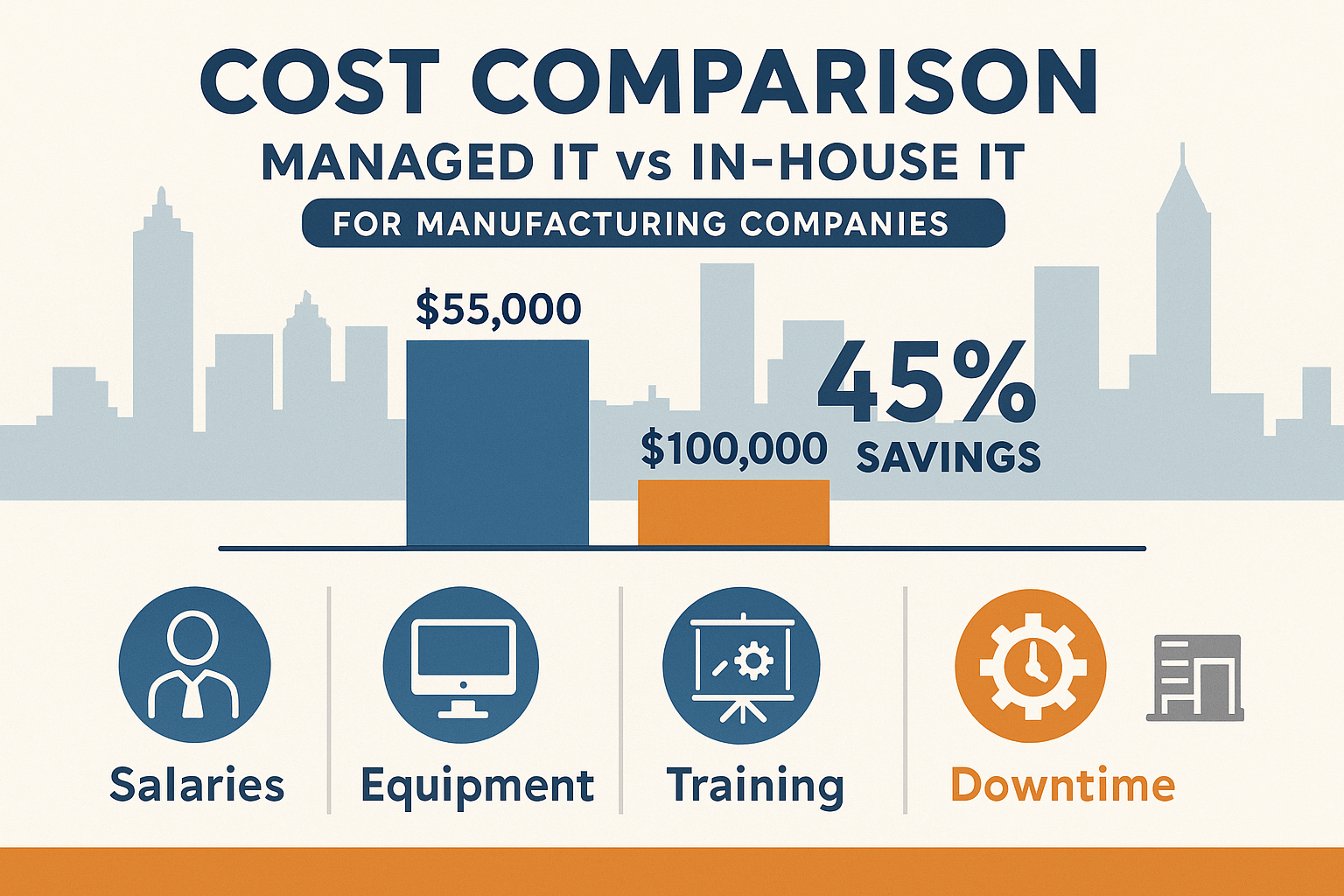
When I first started working with Precision Manufacturing Solutions (name changed for privacy), a mid-sized automotive parts manufacturer in Gwinnett County, their CEO, Mike, was convinced that having IT “under his roof” was the only way to maintain control. He had two full-time IT staff members and was spending roughly $180,000 annually on salaries alone, not counting benefits, training, equipment, or the hidden costs of downtime when issues arose.
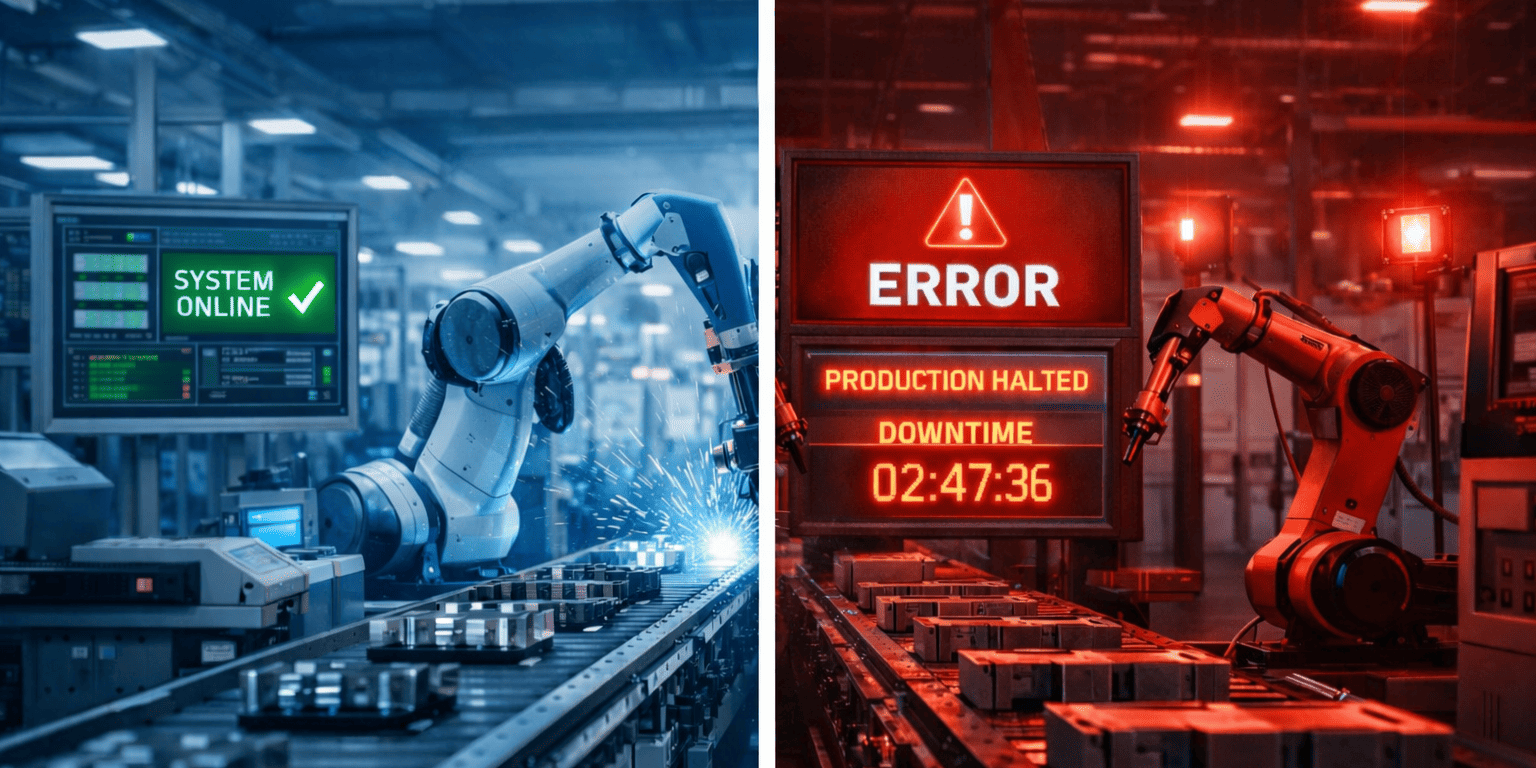
The wake-up call came during a ransomware attack that took their systems offline for 72 hours. Their in-house team, while dedicated, lacked the specialized cybersecurity expertise to respond effectively. The attack cost them $400,000 in lost production and emergency consulting fees to get back online.
This story illustrates a critical point: the question of managed IT vs. in-house IT for Metro Atlanta manufacturing companies isn’t just about day-to-day operations; it’s about crisis management and long-term resilience.
Understanding the True Cost Structure
Let’s break down what most manufacturing executives don’t see when calculating IT costs:
In-House IT Hidden Costs:
- Salary and benefits: $65,000-$120,000+ per qualified technician
- Ongoing training: $5,000-$15,000 per employee annually
- Equipment and software licensing: $10,000-$25,000 per year
- Recruitment and retention: 20-30% annual turnover costs
- Downtime during vacations/sick days: Immeasurable but significant
Managed IT Transparent Costs:
- Monthly service fee: Typically $100-$200 per user
- Predictable budgeting: No surprise expenses or emergency consulting fees
- Included training and updates: Built into service agreements
- 24/7 coverage: No additional staffing costs
Challenge #1: The Expertise Gap That’s Killing Manufacturing Productivity
Here’s what I’ve learned after working with over 50 manufacturing companies in Metro Atlanta: the technology skills gap is wider than ever, and it’s getting worse.
Modern manufacturing isn’t just about keeping computers running anymore. Today’s facilities require expertise in:
Industrial IoT and sensor networks
Cybersecurity for operational technology (OT)
Data analytics and predictive maintenance
Cloud integration and hybrid systems
Automation and robotics support
Why In-House Teams Struggle
I remember visiting Atlanta Textile Works last year. Their IT manager, Sarah, was brilliant. She could troubleshoot network issues like nobody’s business. But when they implemented new IoT sensors for predictive maintenance, she was in over her head. The company ended up paying $50,000 to specialized consultants to properly configure the system.
The problem? You can’t hire one person who’s an expert in everything, and most manufacturing companies can’t afford to hire specialists for every technology area they need.
The Managed IT Advantage
A quality managed service provider brings an entire team of specialists to your company for the cost of 1-2 in-house employees. When Managed IT vs. In-House IT becomes a question for Metro Atlanta manufacturing companies, consider this: you’re not just buying IT support—you’re buying access to:
- Cybersecurity specialists who understand industrial control systems
- Network engineers experienced with manufacturing environments
- Cloud architects who can design scalable, secure infrastructures
- Compliance experts familiar with industry regulations
Challenge #2: The 24/7 Manufacturing Reality
Manufacturing doesn’t stop. I learned this lesson the hard way when I got a call at 2 AM from a client whose production line had shut down due to a server failure. Their in-house IT person was great, but he wasn’t available around the clock.
The In-House Coverage Problem
To provide true 24/7 coverage, you’d need:
- 3-4 full-time technicians (minimum for shift coverage)
- $200,000-$400,000 annual salary costs
- Complex scheduling and backup procedures
- Higher skill requirements (each person needs broader knowledge)
Most Metro Atlanta manufacturing companies simply can’t justify this expense, so they accept the risk of after-hours downtime.
How Managed IT Solves the Coverage Gap
Professional managed service providers operate Network Operations Centers (NOCs) with 24/7/365 monitoring. When something goes wrong at 3 AM, you have:
Immediate response from trained technicians
Remote resolution for most issues
On-site support when needed
Escalation procedures for complex problems
Challenge #3: Cybersecurity Threats That Target Manufacturing
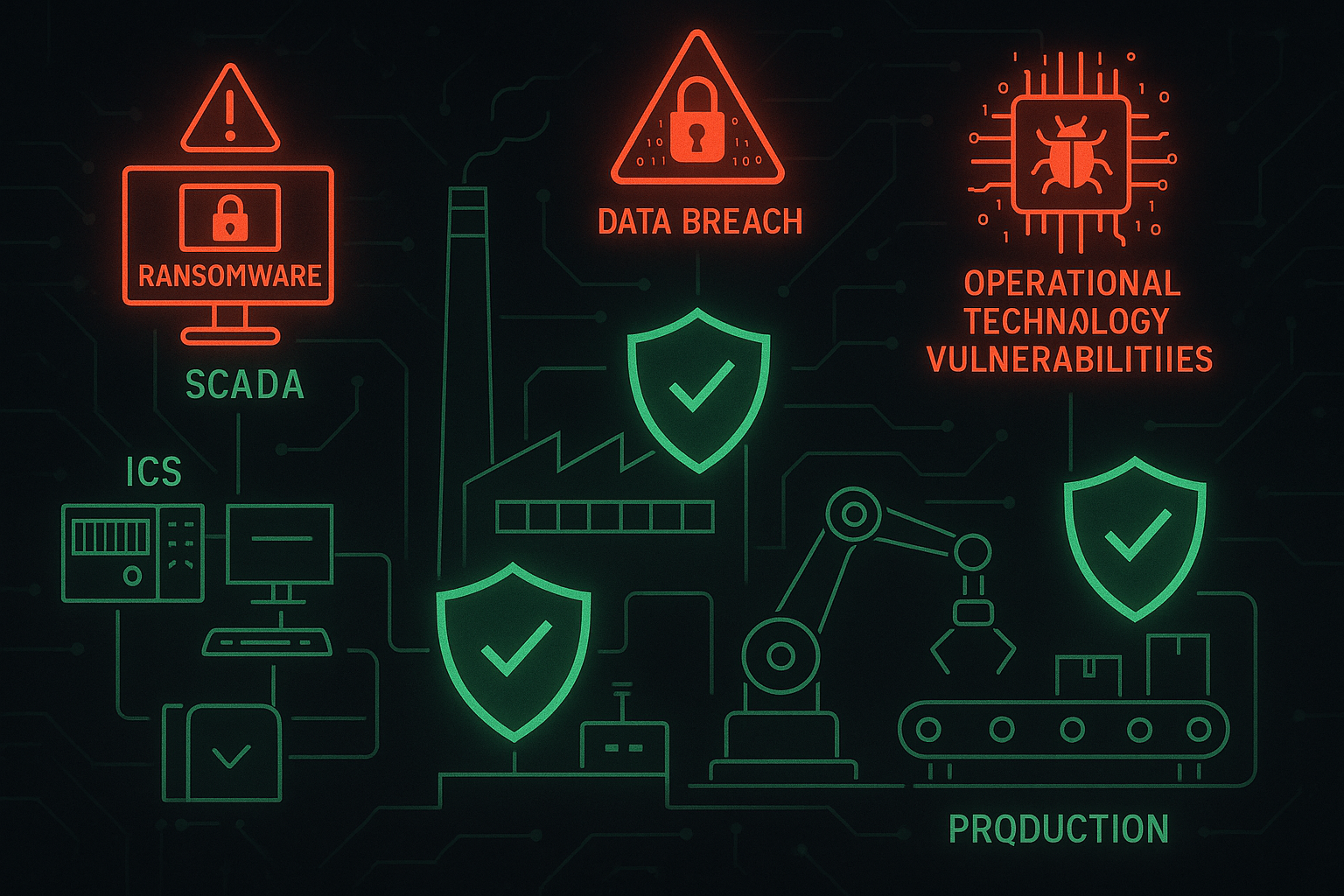
The cybersecurity landscape for manufacturing has changed dramatically. According to recent studies, manufacturing is now the #1 target for cyberattacks, with 23% of all incidents targeting industrial companies.
Why Manufacturers Are Prime Targets
High-value intellectual property (designs, processes, customer data)
Critical infrastructure that can’t afford downtime
Legacy systems with known vulnerabilities
Connected operational technology that’s often unsecured
The In-House Security Challenge
Building effective cybersecurity in-house requires:
- Specialized security expertise ($90,000-$150,000+ salaries)
- Continuous threat monitoring and response capabilities
- Regular security assessments and penetration testing
- Compliance management for industry regulations
- Incident response planning and execution
I’ve seen too many manufacturing companies try to handle this internally, only to discover critical vulnerabilities during an actual attack.
Managed IT Security Advantages
When evaluating Managed IT vs. In-House IT for Metro Atlanta manufacturing companies, security should be a primary consideration. Professional MSPs provide:
️ Enterprise-grade security tools that would cost $50,000+ to license individually
️ Security Operations Centers (SOCs) with trained analysts
️ Regular vulnerability assessments and penetration testing
️ Incident response teams available 24/7
️ Compliance expertise for industry-specific regulations
The Scalability Factor: Growing Without Growing Pains
One of my favorite success stories involves Metro Precision Components, a small machine shop that grew from 25 employees to 150 employees in just three years after landing a major automotive contract.
The In-House Scaling Problem
With an in-house IT approach, their growth would have required:
- Hiring additional IT staff (3-6 months process)
- Training new employees on existing systems
- Purchasing additional equipment and licenses
- Managing increased complexity with the same resources
Instead, their managed IT provider scaled seamlessly with their growth, adding new users, locations, and services without any hiring delays or capital expenditure.
How Managed IT Scales Effortlessly
Instant user additions without hardware purchases
Flexible service levels that adjust to your needs
Multi-location support as you expand
Predictable per-user pricing that scales with revenue
When In-House IT Might Make Sense
To be fair, there are situations where in-house IT could be the right choice for Metro Atlanta manufacturing companies:
Scenarios Favoring In-House IT
Large enterprises (500+ employees) with complex, unique requirements
Companies with highly specialized or proprietary systems
Organizations with significant IT budgets ($500,000+ annually)
Businesses requiring extensive customization and development
Hybrid Approaches
Many successful companies use a hybrid model:
- Core in-house team for daily operations and specialized knowledge
- Managed services for after-hours support, security, and specialized projects
- Cloud services for scalability and disaster recovery
Making the Right Choice for Your Manufacturing Company
Real-World Success Stories from Metro Atlanta
Case Study: Automotive Parts Manufacturer
The Challenge: A 75-employee automotive parts manufacturer in Marietta was struggling with frequent network outages and cybersecurity concerns. Their single IT employee was overwhelmed and considering leaving.
The Solution: They transitioned to a managed IT model, keeping their IT person focused on production systems while outsourcing infrastructure, security, and support.
The Results:
- 40% reduction in IT-related downtime
- $75,000 annual savings compared to hiring additional staff
- Zero security incidents in 18 months post-transition
- Improved employee satisfaction with IT responsiveness
Case Study: Food Processing Company
The Challenge: A rapidly growing food processing company needed to maintain FDA compliance while scaling its IT infrastructure across multiple locations.
The Solution: Implemented managed IT services with specialized compliance expertise and multi-site support capabilities.
The Results:
- Maintained FDA compliance during rapid expansion
️ Seamless integration of three new facilities
- Improved data analytics for production optimization
- ️ Enhanced cybersecurity posture with 24/7 monitoring
Key Questions to Ask When Evaluating Managed IT Providers
When considering Managed IT vs. In-House IT for Metro Atlanta manufacturing companies, not all managed service providers are created equal. Here are the critical questions to ask:
Technical Expertise Questions
“Do you have experience with manufacturing environments and industrial control systems?”
“What cybersecurity certifications do your technicians hold?”
“How do you handle compliance requirements specific to our industry?”
“Can you provide references from similar manufacturing companies?”
Service Level Questions
“What’s your guaranteed response time for critical issues?”
“Do you provide true 24/7/365 support or just emergency response?”
“How do you handle planned maintenance and updates?”
“What’s included in your base service vs. additional charges?”
Business Continuity Questions
“What’s your disaster recovery and business continuity process?”
“How do you ensure data backup and recovery for manufacturing data?”
“What happens if your company has an outage or issue?”
“Do you have redundant systems and backup technicians?”
The Future of IT in Manufacturing
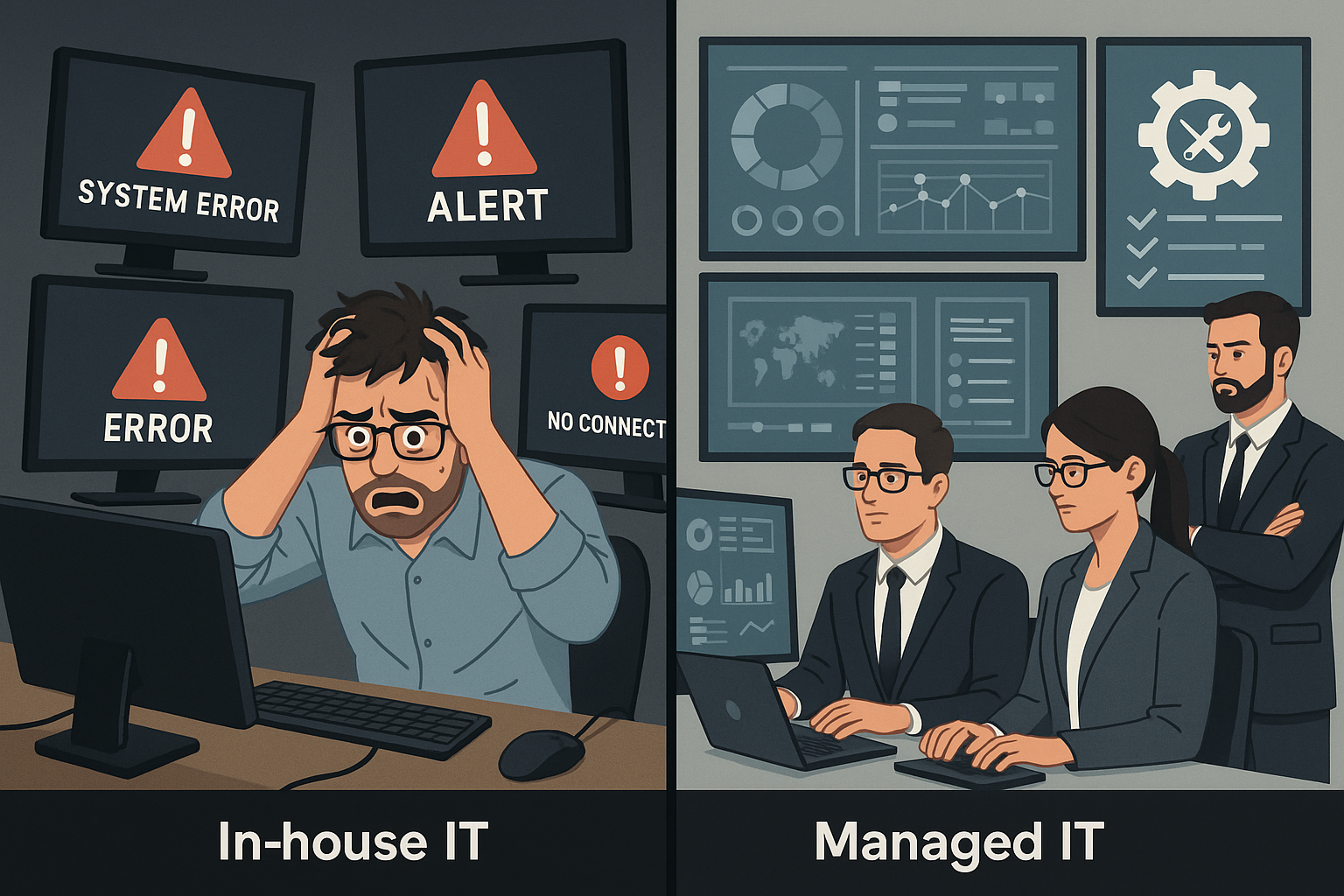
As we look ahead in 2025 and beyond, several trends are making the Managed IT vs. In-House IT decision even more critical for Metro Atlanta manufacturing companies:
Emerging Technology Demands
Industrial IoT and Industry 4.0: Smart sensors, predictive analytics, and automated systems require specialized expertise that’s constantly evolving.
Edge Computing: Manufacturing data processing at the source requires new infrastructure and security approaches.
Zero Trust Security: Modern cybersecurity requires sophisticated, layered approaches that most in-house teams can’t implement effectively.
AI and Machine Learning: Predictive maintenance and quality control systems need data science expertise beyond traditional IT.
Regulatory Compliance Evolution
Manufacturing companies face increasing compliance requirements:
- Cybersecurity regulations for critical infrastructure
- Data privacy laws affecting customer and employee information
- Environmental reporting requires integrated IT systems
- Supply chain security mandates
Making Your Decision: A Practical Framework
Here’s the framework I use when helping Metro Atlanta manufacturing companies decide between managed IT and in-house IT:
Step 1: Assess Your Current State
Calculate total IT costs (including hidden costs like downtime, training, and opportunity costs)
Identify skill gaps in your current IT capabilities
Evaluate risk factors (security vulnerabilities, compliance issues, single points of failure)
Project future needs based on business growth plans
Step 2: Define Your Requirements
Critical business needs (uptime requirements, security standards, compliance needs)
Budget constraints and cost optimization goals
Growth and scalability requirements
Technical complexity of your manufacturing environment
Step 3: Evaluate Options
Pure in-house: Full control, high cost, limited expertise
Pure managed: Lower cost, broad expertise, less direct control
Hybrid approach: Balanced solution with selective outsourcing
Common Mistakes to Avoid
Based on my experience helping Metro Atlanta manufacturing companies with IT decisions, here are the most common mistakes to avoid:
Mistake #1: Focusing Only on Initial Costs
Many companies compare the salary of one IT person to managed IT costs without considering:
- Benefits, training, and equipment costs
- Costs of downtime and security incidents
- Opportunity costs of limited expertise
Mistake #2: Assuming All MSPs Are the Same
Not all managed service providers understand manufacturing. Look for:
- Manufacturing industry experience
- Industrial control system knowledge
- Compliance expertise for your specific industry
- Local presence and support capabilities
Mistake #3: Making Emotional Decisions
Some executives feel they “lose control” with managed IT. Remember:
- You’re buying expertise, not giving up control
- Good MSPs provide more visibility, not less
- Control without capability isn’t really control
Mistake #4: Ignoring Cultural Fit
Your IT provider becomes part of your team. Ensure:
- Communication styles match your preferences
- Response times meet your operational needs
- Service philosophy aligns with your business values
- Local support is available when needed
Conclusion: Making the Right Choice for Your Manufacturing Future
After working with dozens of Metro Atlanta manufacturing companies on their IT strategies, I’ve learned that the question of “Managed IT vs. In-House IT: What Works Best for Metro Atlanta Manufacturing Companies?” doesn’t have a one-size-fits-all answer. However, the trends are clear: managed IT services provide compelling advantages for most manufacturing companies, especially those with fewer than 500 employees.
The key benefits that consistently drive success include:
Predictable costs that scale with your business
Enterprise-grade security that protects your operations
24/7 support that matches your manufacturing schedule
Specialized expertise in areas critical to modern manufacturing
Scalability that grows with your business
The most successful companies I work with don’t view this as an either/or decision. Instead, they strategically combine in-house capabilities where they add unique value with managed services where specialized expertise and 24/7 coverage are essential.
Your Next Steps
- Assess your current IT costs honestly, including all hidden expenses
- Evaluate your risk exposure in cybersecurity, compliance, and business continuity
- Define your growth plans and how IT needs to scale with your business
- Research qualified managed service providers with manufacturing experience
- Consider a hybrid approach that gives you the best of both worlds
The manufacturing landscape is becoming increasingly competitive and technology-dependent. Companies that make smart IT infrastructure decisions today will have significant advantages tomorrow. Whether you choose managed IT, in-house IT, or a hybrid approach, make sure your decision supports your long-term business goals rather than just solving today’s immediate problems.
Ready to explore how managed IT could transform your manufacturing operations? The best time to evaluate your options is before you face a crisis. Take the assessment above, calculate your true IT costs, and consider how the right IT strategy could give your Metro Atlanta manufacturing company a competitive edge in 2025 and beyond.