
The Growing Threat Landscape: Why Atlanta Businesses Are Prime Targets
When I first started working with Atlanta businesses on cybersecurity in 2020, social engineering attacks were relatively simple. A poorly written email claiming to be from a Nigerian prince, maybe a fake lottery notification. Fast forward to 2025, and the landscape has transformed dramatically. Your Next Cyberattack Could Start on Facebook: The Rise of Social-Engineering Scams in Atlanta, as attackers have become incredibly sophisticated in their approach.
The Atlanta Advantage (That Works Against Us)
Atlanta’s thriving business ecosystem makes it an attractive target for cybercriminals. We’re home to:
- Fortune 500 headquarters
- Rapidly growing tech startups
- Extensive professional networks
- High social media engagement
- Strong business-to-business relationships
These strengths create a perfect storm for social engineering attacks. Criminals exploit our collaborative business culture and extensive professional networks to gain trust and access.
Recent Atlanta Attack Patterns
In the past six months, I’ve documented several concerning trends:
The “Vendor Verification” Scam: Attackers create fake Facebook profiles impersonating existing vendors, then request updated payment information through Facebook Messenger.
The “Emergency Executive” Attack: Scammers impersonate C-suite executives on social media, creating fake urgent situations requiring immediate financial action.
The “Conference Connection” Scheme: Criminals use information from Atlanta business events and conferences to create convincing fake profiles and initiate seemingly legitimate business conversations.
“We thought we were being careful with email security, but we never considered Facebook as a business threat. That oversight cost us dearly.” – Jennifer M., Atlanta Restaurant Owner
How Social Engineering Attacks Exploit Facebook’s Business Features
Facebook’s business-friendly features, designed to help companies connect and grow, have become weapons in the hands of skilled social engineers. Understanding how these attacks work is crucial for Your Next Cyberattack Could Start on Facebook: The Rise of Social Engineering Scams in Atlanta prevention strategy.
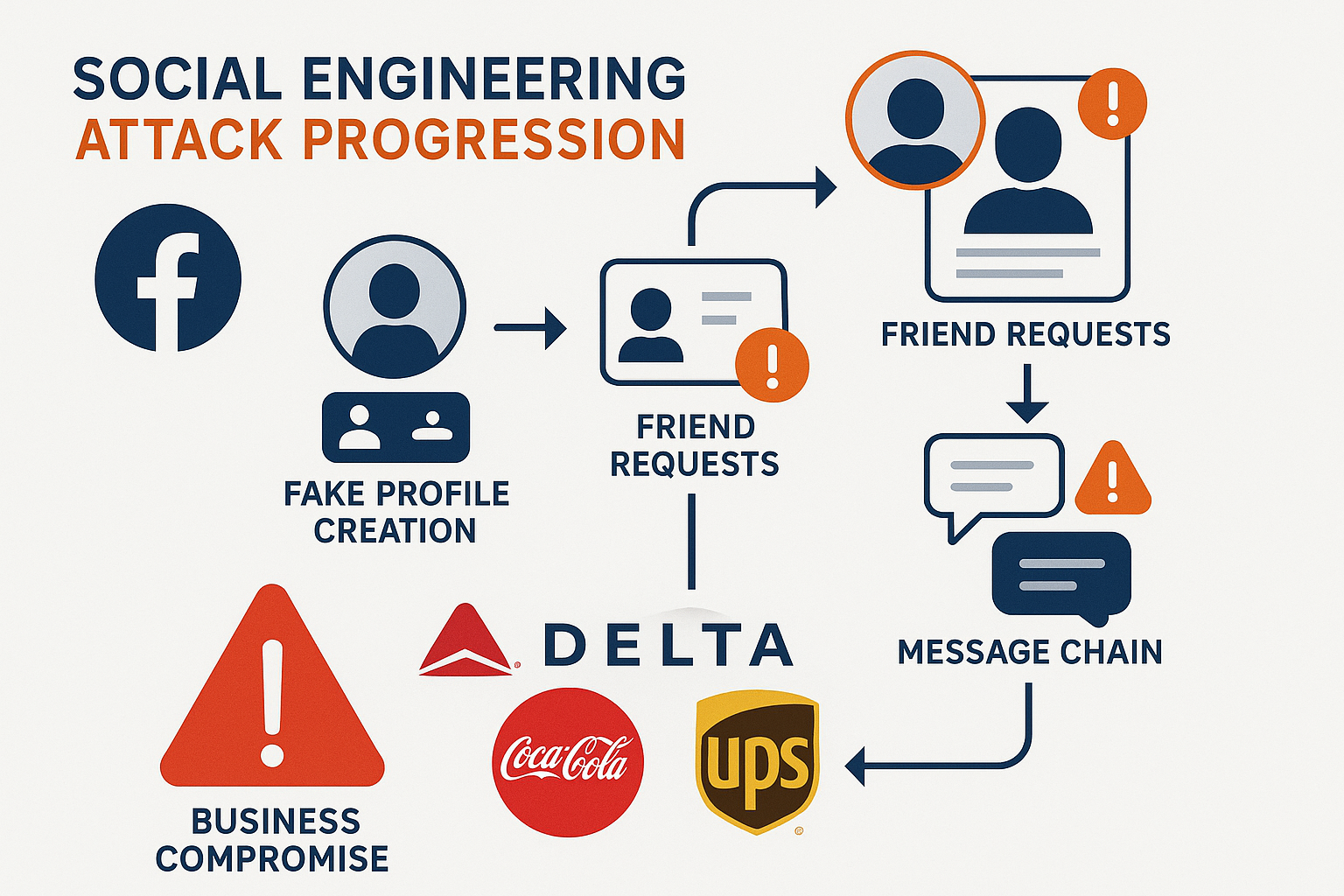
The Anatomy of a Facebook Business Attack
Let me walk you through a typical attack I investigated last month involving an Atlanta-based construction company:
Phase 1: Reconnaissance
- Attacker researches the company’s Facebook page, employee profiles, and recent projects
- Identifies key relationships, vendor partnerships, and communication patterns
- Gathers personal information about executives and decision-makers
Phase 2: Profile Creation
- Creates a convincing fake profile using stolen photos and information
- Builds connection history by adding mutual contacts and engaging with industry content
- Establishes credibility through strategic posts and interactions
Phase 3: Initial Contact
- Sends a friend request or a direct message referencing specific business details
- Uses familiar language and insider knowledge to build trust
- Gradually escalates communication to more sensitive topics
Phase 4: The Hook
- Creates artificial urgency around a business need
- Requests sensitive information or financial action
- Exploits established trust to bypass normal verification procedures
Phase 5: Exploitation
- Uses obtained access or information for financial gain
- May maintain access for future attacks
- Often targets additional contacts within the same network
Why These Attacks Succeed
Traditional cybersecurity training focuses on email threats, but social media attacks feel different. They’re more personal, more conversational, and they exploit our natural tendency to trust familiar platforms.
Key vulnerability factors include:
- Platform Trust: People inherently trust Facebook communications more than emails
- Visual Deception: Profile photos and mutual connections create false legitimacy
- Informal Communication: Casual messaging style bypasses formal business protocols
- Mobile Usage: Most Facebook interactions happen on mobile devices with smaller screens and less scrutiny
- Time Pressure: Attackers create artificial urgency that prevents careful verification
Real Atlanta Business Cases: Learning from Local Attacks
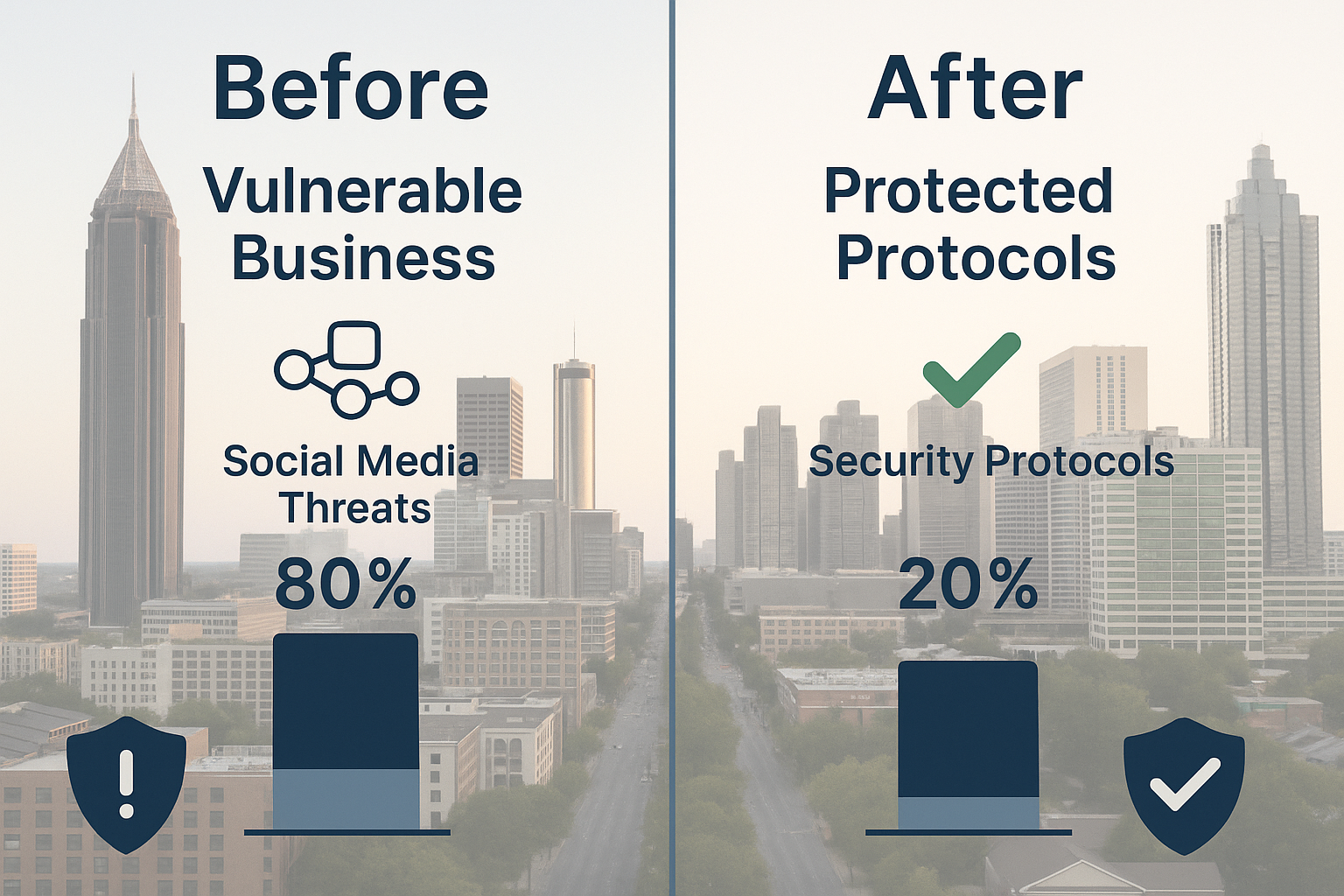
Nothing drives home the reality of Your Next Cyberattack Could Start on Facebook: The Rise of Social Engineering Scams in Atlanta like real examples from our business community. I’ve worked with dozens of local companies recovering from these attacks, and the patterns are both predictable and preventable.
Case Study 1: The Midtown Marketing Agency
The Setup: A 25-employee digital marketing agency in Midtown received a Facebook message from what appeared to be their largest client’s CEO. The profile looked legitimate correct company information, a professional headshot, and several mutual connections.
The Attack: The fake CEO claimed to be traveling internationally and needed to process an urgent payment to a new vendor. They provided detailed project information that seemed to confirm their identity and requested the agency’s banking details to “facilitate a quick wire transfer.”
The Damage: $35,000 transferred before the real CEO was contacted, and confirmed they had never sent such a message.
The Lesson: Even detailed project knowledge can be gathered from public social media posts and company websites. Verification protocols must extend beyond information that could be publicly available.
Case Study 2: The Buckhead Law Firm
The Setup: A prominent law firm received Facebook messages from several “potential clients” over two weeks. Each inquiry seemed legitimate and referenced specific legal services the firm provided.
The Attack: The fake clients gradually built relationships with different staff members, gathering information about internal processes, client management systems, and security protocols. They then used this information to launch a targeted email attack that bypassed the firm’s security systems.
The Damage: Client confidentiality was compromised for over 200 cases, resulting in regulatory fines and reputation damage exceeding $150,000.
The Lesson: Social engineering attacks often involve long-term relationship building. Single interactions may seem harmless, but attackers piece together information from multiple sources.
Case Study 3: The Alpharetta Tech Startup
The Setup: A growing SaaS company received a Facebook message from someone claiming to be a reporter from a major tech publication, requesting an interview about their recent funding round.
The Attack: The “reporter” conducted a lengthy video call, asking detailed questions about the company’s technology, security measures, and client base. The information was later used to create convincing phishing emails targeting the company’s clients.
The Damage: While the startup itself wasn’t directly compromised, three major clients fell victim to subsequent attacks, leading to contract cancellations worth $200,000.
The Lesson: Information shared in seemingly legitimate business contexts can be weaponized against your partners and clients.
Building Your Defense: Cybersecurity Hygiene That Actually Works
The good news about Your Next Cyberattack Could Start on Facebook: The Rise of Social Engineering Scams in Atlanta is that these attacks are highly preventable with proper protocols and training. I’ve helped hundreds of Atlanta businesses implement effective defense strategies, and the results speak for themselves.
The Three-Layer Defense Strategy
Layer 1: Technical Controls
Multi-Factor Authentication (MFA): Require MFA for all business-critical accounts, including social media profiles and financial systems. This single step prevents 99.9% of automated attacks.
Email and Communication Verification: Implement systems that flag external communications requesting sensitive information or financial actions.
Access Controls: Limit who can respond to financial requests and require multiple approvals for transactions above specified thresholds.
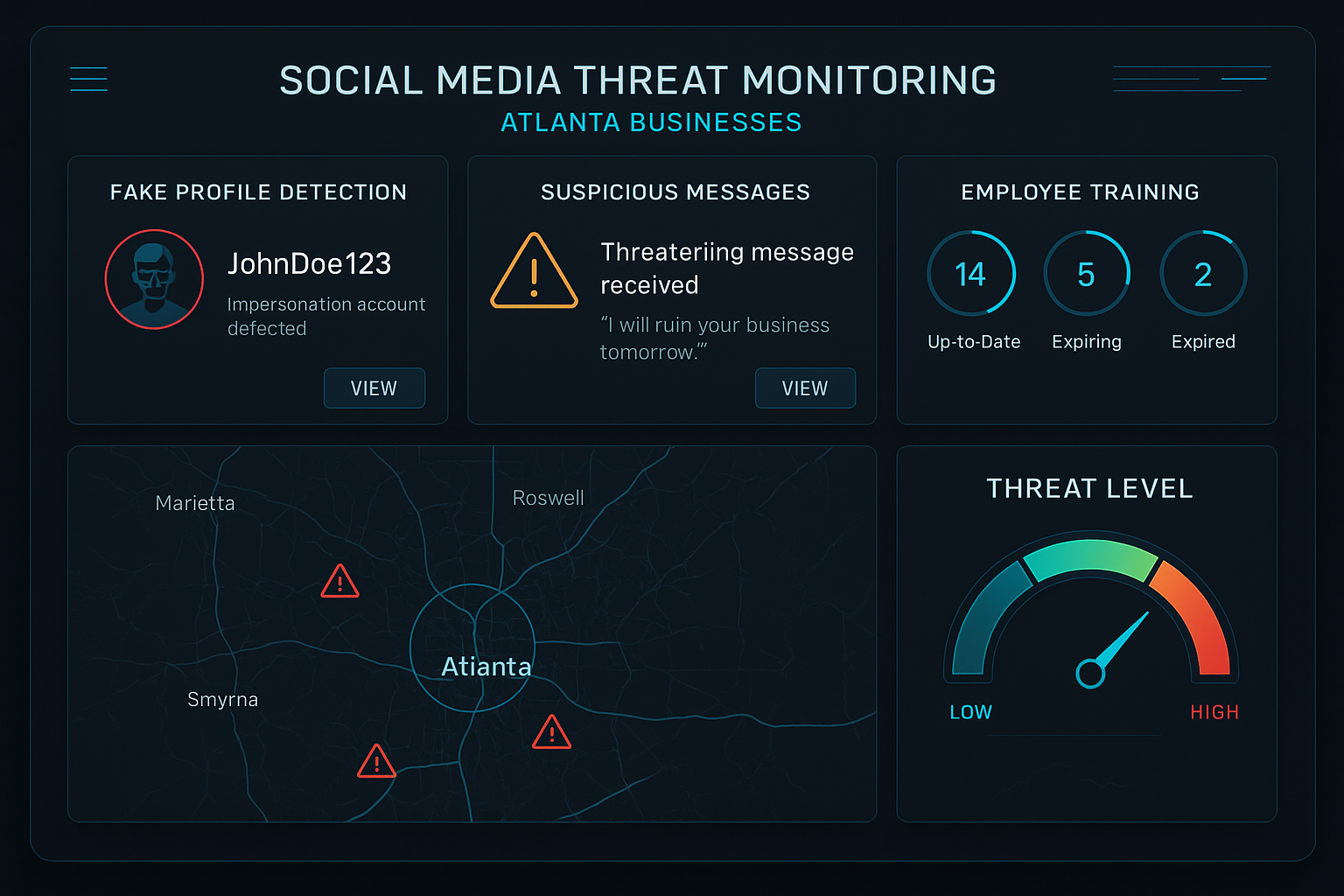
Social Media Monitoring: Use tools to monitor for fake profiles impersonating your business or employees.
Layer 2: Process Controls
Verification Protocols: Establish clear procedures for verifying identity before sharing sensitive information or processing financial requests.
Communication Channels: Designate specific channels for sensitive business communications and train employees to redirect suspicious requests to these channels.
Incident Response Plans: Develop clear procedures for responding to suspected social engineering attempts.
Regular Security Audits: Conduct quarterly reviews of social media presence and security protocols.
Layer 3: Human Controls
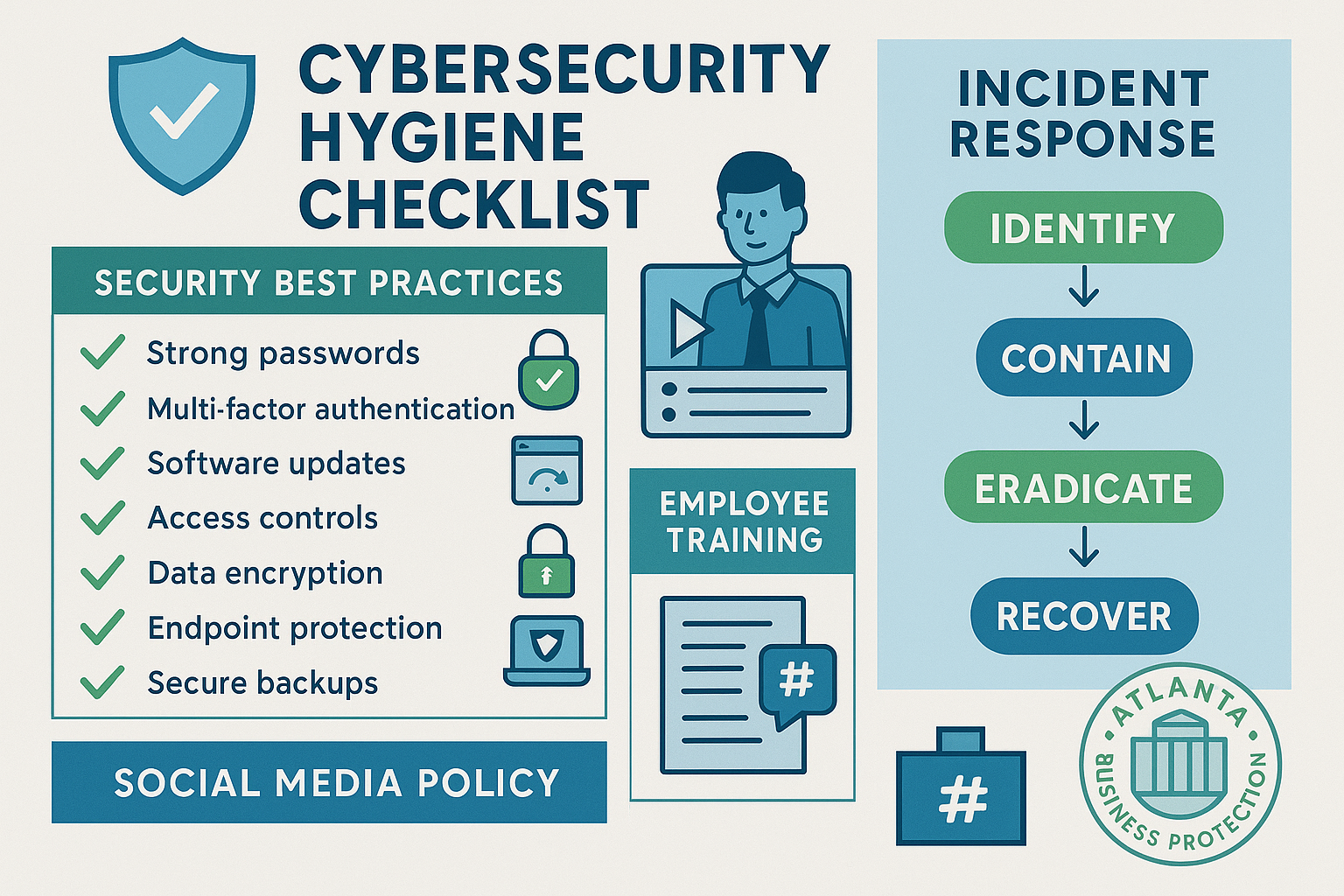
Awareness Training: Provide regular, updated training on current social engineering tactics and local threat patterns.
Simulated Attacks: Conduct controlled social engineering tests to identify vulnerabilities and improve responses.
Reporting Culture: Create an environment where employees feel comfortable reporting suspicious communications without fear of blame.
Continuous Education: Keep staff updated on emerging threats and attack patterns specific to Atlanta businesses.
Practical Implementation for Atlanta Businesses
Based on my experience working with local companies, here’s a realistic implementation timeline:
Week 1-2: Assessment and Planning
- Audit the current social media presence and security measures
- Identify key vulnerabilities and high-risk employees
- Develop customized policies and procedures
Week 3-4: Technical Implementation
- Deploy MFA across all business systems
- Implement monitoring and verification tools
- Update access controls and approval processes
Week 5-6: Training and Testing
- Conduct initial employee awareness training
- Run simulated social engineering tests
- Refine procedures based on results
Ongoing: Monitoring and Improvement
- Monthly security reviews and updates
- Quarterly training refreshers
- Annual comprehensive security audits
Cost-Effective Solutions for Small Businesses
You don’t need enterprise-level budgets to implement effective defenses. Here are budget-friendly options that provide maximum protection:
Free Tools:
- Google Authenticator for MFA
- Facebook’s Brand Protection tools
- Built-in email security features
Low-Cost Solutions ($50-200/month):
- Business-grade password managers
- Basic security awareness training platforms
- Social media monitoring tools
Professional Services ($500-2000/month):
- Managed security services
- Comprehensive employee training programs
- 24/7 monitoring and incident response
Advanced Threat Recognition: Spotting Sophisticated Attacks
As Your Next Cyberattack Could Start on Facebook: The Rise of Social Engineering Scams in Atlanta evolves, attackers are becoming increasingly sophisticated. The days of obvious scams with poor grammar and generic requests are largely over. Today’s social engineers are skilled professionals who research their targets extensively and craft highly convincing attacks.
Red Flags That Even Experts Miss
Subtle Urgency: Modern attackers avoid obvious pressure tactics. Instead, they create subtle time constraints: “I’m heading into meetings all day, but wanted to get this sorted quickly.”
Insider Knowledge: Attackers research public information extensively. They’ll reference recent company news, mutual connections, or industry events to build credibility.
Emotional Manipulation: Sophisticated attacks often include emotional elements, a vendor having cash flow problems, an executive dealing with a family emergency, or a client facing a deadline crisis.
Technology Excuses: Attackers often explain unusual communication channels with plausible technical excuses: “My email is acting up,” or “I’m traveling and can only access Facebook.”
Gradual Escalation: The most dangerous attacks don’t ask for sensitive information immediately. They build relationships over days or weeks before making their move.
The Atlanta Business Context
Local attackers understand our business culture and exploit it effectively:
Southern Hospitality: Our tendency to be helpful and accommodating can override security instincts.
Relationship-Based Business: Atlanta’s business community values personal relationships, making trust-based attacks more effective.
Growth Mindset: Our entrepreneurial culture sometimes prioritizes speed over security protocols.
Conference Culture: Atlanta hosts numerous business events, providing attackers with networking opportunities and inside information.
Advanced Detection Techniques
Linguistic Analysis: Pay attention to communication patterns. Even skilled attackers often have subtle differences in writing style, word choice, or cultural references.
Timeline Verification: Cross-reference claimed activities with known schedules. If someone claims to be traveling, verify through other sources.
Relationship Testing: Ask questions that only the real person would know, but do so naturally within conversation.
Channel Switching: Suggest moving to a different communication platform. Legitimate contacts will accommodate; attackers often resist.
Verification Callbacks: Establish protocols for calling known phone numbers to verify unusual requests, regardless of how legitimate they seem.
Creating a Culture of Cybersecurity Awareness
The most effective defense against Your Next Cyberattack Could Start on Facebook: The Rise of Social Engineering Scams in Atlanta isn’t technology, it’s people. After working with hundreds of Atlanta businesses, I’ve learned that companies with strong security cultures are virtually immune to social engineering attacks.
Building Security Awareness That Sticks
Make It Relevant: Use local examples and scenarios that resonate with your team. Generic training about Nigerian prince scams won’t prepare employees for sophisticated Facebook impersonation attacks targeting Atlanta businesses.
Regular Reinforcement: Security awareness isn’t a one-time training event. Implement monthly mini-sessions, quarterly updates, and annual comprehensive reviews.
Positive Recognition: Celebrate employees who identify and report suspicious communications. Make security awareness a positive part of your company culture.
Leadership Modeling: Executives must consistently demonstrate security best practices. Employees follow leadership examples more than policies.
Practical Exercises: Conduct regular simulated attacks using scenarios specific to your industry and local business environment.
Employee Training Program Framework
Module 1: Understanding the Threat
- Current social engineering tactics
- Local attack patterns and examples
- Business impact and consequences
- Personal responsibility and empowerment
Module 2: Recognition Skills
- Identifying suspicious communications
- Red flags and warning signs
- Verification techniques
- When and how to escalate concerns
Module 3: Response Protocols
- Step-by-step response procedures
- Communication channels and contacts
- Documentation requirements
- Recovery and follow-up processes
Module 4: Ongoing Vigilance
- Staying updated on emerging threats
- Personal social media security
- Protecting business information
- Building security habits
Measuring Program Effectiveness
Track these key metrics to ensure your awareness program is working:
- Simulation Success Rate: Percentage of employees who properly identify and report simulated attacks
- Incident Reporting: Number of suspicious communications reported by employees
- Response Time: How quickly employees escalate potential threats
- Policy Compliance: Adherence to verification and communication protocols
- Knowledge Retention: Regular testing of security awareness concepts
Your Action Plan: Implementing Protection Today
Understanding Your Next Cyberattack Could Start on Facebook: The Rise of Social Engineering Scams in Atlanta is only valuable if you take action. Based on my experience helping Atlanta businesses recover from attacks and implement prevention strategies, here’s your practical roadmap to protection.
Immediate Actions (This Week)
Day 1: Audit Your Current Exposure
- Review all company social media profiles and employee access
- Identify who can post, respond, and manage business communications
- Document current verification procedures for financial requests
- List all vendors and partners who communicate via social media
Day 2-3: Implement Basic Protections
- Enable two-factor authentication on all business social media accounts
- Update privacy settings to limit public information exposure
- Create a simple verification protocol for unusual requests
- Establish a communication channel for reporting suspicious contacts
Day 4-5: Employee Briefing
- Hold a team meeting about current threats and new protocols
- Share examples of recent local attacks (without identifying victims)
- Distribute contact information for reporting suspicious communications
- Set expectations for verification procedures
Short-Term Implementation (Next 30 Days)
Week 2: Policy Development
- Create written social media security policies
- Establish clear procedures for vendor communications
- Develop incident response protocols
- Design employee training materials
Week 3: Training Rollout
- Conduct comprehensive security awareness training
- Practice verification procedures with real scenarios
- Test incident response protocols
- Gather feedback and refine processes
Week 4: Testing and Refinement
- Run simulated social engineering attacks
- Evaluate employee responses and protocol effectiveness
- Update procedures based on results
- Plan ongoing training schedule
Long-Term Strategy (Next 90 Days)
Month 2: Advanced Implementation
- Deploy professional monitoring tools
- Establish relationships with cybersecurity professionals
- Implement comprehensive backup and recovery procedures
- Develop vendor verification systems
Month 3: Culture Integration
- Make security awareness part of regular operations
- Establish ongoing training and update schedules
- Create recognition programs for security vigilance
- Plan annual security assessments
Budget Planning for Atlanta Businesses
Startup/Small Business (1-10 employees): $500-2,000/year
- Basic training and awareness programs
- Essential security tools and monitoring
- Annual professional consultation
Growing Business (11-50 employees): $2,000-8,000/year
- Comprehensive training programs
- Professional monitoring services
- Quarterly security assessments
Established Business (50+ employees): $8,000-25,000/year
- Enterprise security solutions
- Dedicated security personnel or consultants
- Advanced monitoring and response capabilities
Key Takeaways: Protecting Your Business from Social Engineering
Your Next Cyberattack Could Start on Facebook: The Rise of Social Engineering Scams in Atlanta represents a clear and present danger to every business in our metro area. However, armed with knowledge, proper protocols, and a security-conscious culture, these attacks are highly preventable.
The most important lesson from my years of helping Atlanta businesses recover from and prevent social engineering attacks is this: technology alone cannot protect you. The human element; your employees, your culture, and your procedures determines whether your business becomes a victim or remains secure.
Remember that social engineering attacks succeed because they exploit our natural tendencies to trust, help, and maintain relationships. These aren’t weaknesses to eliminate they’re strengths that make Atlanta’s business community thrive. The goal is to maintain our collaborative culture while implementing smart verification procedures that protect against exploitation.
The three pillars of effective protection are:
- Technical safeguards that make attacks harder to execute
- Process controls that catch attacks before they succeed
- Human awareness that recognizes and reports threats
Every day you delay implementation is another day your business remains vulnerable. The attackers targeting Atlanta businesses are professional, persistent, and constantly evolving their tactics. Your defense must be equally professional and proactive.
The time to act is now. Every day you wait is another opportunity for attackers to exploit your vulnerabilities. Start with the immediate actions outlined above, then build toward comprehensive protection. Your business, your employees, and your clients depend on the security decisions you make today.
Remember: in the battle against social engineering, knowledge is your first line of defense, but action is what keeps you safe. Your Next Cyberattack Could Start on Facebook: The Rise of Social Engineering Scams in Atlanta doesn’t have to include your business as a victim.