Picture this: It’s a quiet Friday evening in May 2021, and somewhere in Georgia, a fuel pipeline operator notices something strange on their computer screen. By Saturday morning, the largest fuel pipeline system in the United States had gone completely dark. Gas stations from Texas to New Jersey ran dry. Panic buying ensued. And all because of a single ransomware attack that exposed just how vulnerable our industrial systems really are.
Inside the Cyberattack on Colonial Pipeline: What Manufacturers Can Learn and Do Now isn’t just a story about one company’s nightmare; it’s a wake-up call for every manufacturer who thinks their systems are safe. The truth is, if a company as large and well-funded as Colonial Pipeline could fall victim to cybercriminals, any manufacturing operation could be next.
Key Takeaways
- Legacy systems are sitting ducks: Outdated SCADA systems and industrial controls create massive security gaps that hackers actively target
- Network segmentation saves lives: The Colonial Pipeline attack spread because operational and business networks weren’t properly separated
- Employee training is your first line of defense: Most cyberattacks start with a single employee clicking the wrong link or downloading a malicious file
- Recovery planning matters more than prevention: Having a tested incident response plan can mean the difference between days of downtime and weeks of chaos
- Compliance isn’t enough: Meeting minimum security standards won’t protect you from determined attackers using modern techniques
Ready to Take IT Off Your Plate?
Stop worrying about downtime, security risks, or endless IT frustrations. AlphaCIS is the trusted IT partner for small and mid-sized businesses in Metro Atlanta, keeping systems secure, connected, and running the way they should every day.
Whether it’s preventing costly outages, protecting your data, or giving your team unlimited support, we make sure technology helps your business grow instead of holding it back.
📅 Book Your Free ConsultationThe Day the Fuel Stopped Flowing: What Really Happened
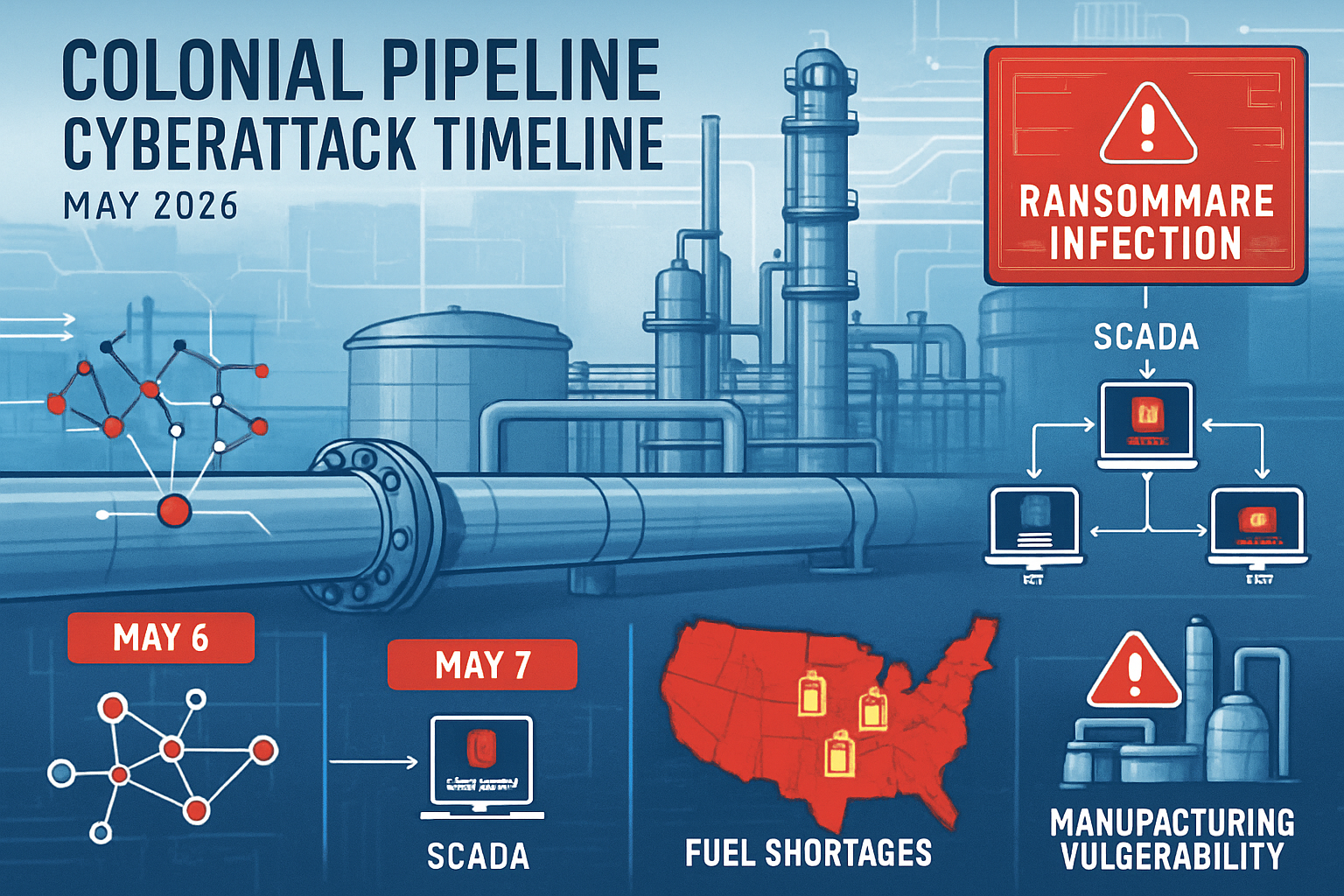
I remember watching the news coverage unfold that weekend in May 2021. Gas stations with “No Fuel” signs. Cars lined up for blocks. And at the center of it all was a cyberattack that seemed almost too simple to cause such widespread chaos.
The DarkSide ransomware group didn’t need to pull off some Hollywood-style hack. They gained access to Colonial Pipeline’s network through what cybersecurity experts call “the usual suspects,” likely a phishing email or compromised credentials. Once inside, they moved through the company’s systems like water through a broken dam.
Here’s what made this attack so devastating:
- The ransomware encrypted critical business systems, forcing Colonial to shut down operations as a precaution
- Operational technology (OT) and information technology (IT) networks weren’t properly segmented
- Legacy systems lacked modern security controls and monitoring
- The company’s incident response plan wasn’t prepared for this scale of attack
Colonial Pipeline paid approximately $4.4 million in ransom (though they later recovered much of it). But the real cost was far higher fuel shortages, economic disruption, and a stark reminder that our industrial infrastructure is more fragile than we’d like to admit.
The Manufacturing Connection
You might be thinking, “We’re not a pipeline company, how does this affect us?” But here’s the reality: manufacturing facilities face the exact same vulnerabilities that brought down Colonial Pipeline. In fact, manufacturers are often more exposed because they typically have:
- Older industrial control systems that were never designed with cybersecurity in mind
- Mixed environments where legacy equipment connects to modern networks
- Cost pressures that delay security upgrades and patches
- Skilled worker shortages that leave IT security gaps unfilled
The Colonial Pipeline attack wasn’t an anomaly; it was a preview of what’s coming for manufacturers who don’t take cybersecurity seriously.
Why Manufacturers Are Prime Targets for Cyberattacks
Let me share something that might surprise you. When I talk to manufacturing leaders, many still think of cybersecurity as an “office problem.” They picture hackers going after banks or stealing credit card numbers. But the reality is that manufacturers have become some of the most attractive targets for cybercriminals.
Here’s why your manufacturing facility is in the crosshairs:
You Have What They Want
Modern manufacturing operations are goldmines for cybercriminals. You have:
- Valuable intellectual property like product designs and manufacturing processes
- Customer data including contracts and shipping information
- Financial systems with access to bank accounts and payment processing
- Supply chain connections that can be used to attack your customers and vendors
Your Systems Are Often Vulnerable
Most manufacturing facilities grew organically over decades. You might have equipment from the 1990s connected to networks installed in the 2010s, all managed by security policies written last year. This creates what cybersecurity experts call “attack surface,” lots of different ways for hackers to get in.
I’ve seen facilities where the same password protects both the employee WiFi and the industrial control system that runs a $2 million production line. That’s not unusual; it’s typical.
Downtime Costs Are Enormous
Cybercriminals know that manufacturers can’t afford to be down. Every hour of production you lose costs real money. Every day your systems are offline, you’re falling behind on orders and disappointing customers. That pressure makes manufacturers more likely to pay ransoms quickly rather than fight back.
The Numbers Don’t Lie
According to recent industry data:
- Manufacturing accounts for 24% of all cyberattacks across industries
- The average downtime from a cyberattack in manufacturing is 23 days
- Recovery costs average $1.97 million per incident
- 76% of manufacturers experienced at least one cyberattack in 2024
The Hidden Vulnerabilities: SCADA, Firewalls, and Patch Management
Now let’s dig into the technical side of what made the Colonial Pipeline attack so successful and why these same vulnerabilities probably exist in your facility right now.
SCADA Systems: The Achilles Heel of Modern Manufacturing
SCADA (Supervisory Control and Data Acquisition) systems are the brains of your operation. They monitor temperatures, control conveyor belts, manage inventory, and keep your production lines running smoothly. They’re also some of the most vulnerable systems in your entire facility.
Why SCADA systems are so vulnerable:
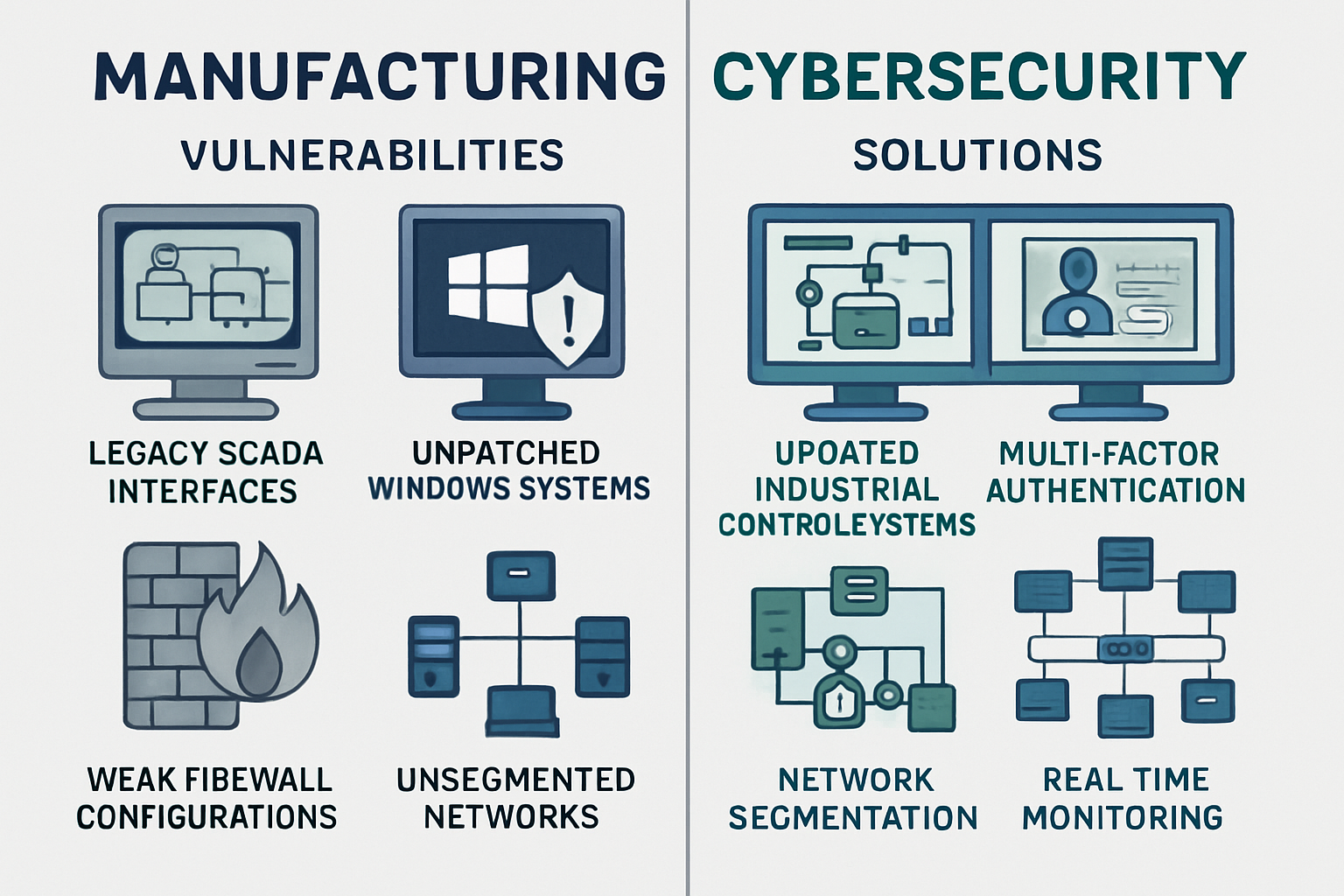
- They were designed for reliability, not security: Most SCADA systems were built when cybersecurity wasn’t a major concern
- They run on outdated operating systems: I’ve seen critical manufacturing systems running Windows XP or even older platforms
- They use default passwords: Many SCADA systems ship with standard passwords that never get changed
- They’re always connected: Modern manufacturing demands that these systems be networked, but that creates attack vectors
The Colonial Pipeline connection: The attackers didn’t directly target Colonial’s SCADA systems, but the threat was real enough that the company shut down operations entirely rather than risk losing control of its pipeline infrastructure.
Firewall Failures: When Your Security Becomes a Suggestion
Firewalls are supposed to be the digital equivalent of security guards checking credentials and blocking unauthorized access. But in many manufacturing facilities, firewalls have become more like suggestions than barriers.
Common firewall problems I see:
- Overly permissive rules: “Just open port 80 for everything” becomes the default solution
- Lack of internal segmentation: Once attackers get past the perimeter, they can move freely through your network
- Outdated firmware: Security vulnerabilities in firewall software don’t get patched
- Poor monitoring: Nobody’s watching the firewall logs to spot suspicious activity
The Patch Management Problem
Here’s a scenario that plays out in manufacturing facilities every day: Microsoft releases a critical security patch. Your IT team wants to install it immediately. But your production manager says, “If it ain’t broke, don’t fix it. We can’t afford downtime during our busy season.”
Guess what happens? The patch gets delayed. Then forgotten. Then six months later, hackers use that exact vulnerability to break into your systems.
Why is patch management so challenging in manufacturing?
- Uptime pressure: Production schedules don’t allow for maintenance windows
- Legacy system compatibility: New patches might break old equipment
- Limited IT resources: Many manufacturers don’t have dedicated cybersecurity staff
- Vendor dependencies: Some systems can only be patched by the original equipment manufacturer
Ready to Secure Your Manufacturing Operations?
Don’t wait for a cyberattack to expose your vulnerabilities. AlphaCIS provides comprehensive cybersecurity assessments specifically designed for manufacturers. Our industry expertise and proactive solutions deliver the peace of mind you need to focus on production, not security threats.

Ready to Take IT Off Your Plate?
Stop worrying about downtime, security risks, or endless IT frustrations. AlphaCIS is the trusted IT partner for small and mid-sized businesses in Metro Atlanta, keeping systems secure, connected, and running the way they should every day.
Whether it’s preventing costly outages, protecting your data, or giving your team unlimited support, we make sure technology helps your business grow instead of holding it back.
📅 Book Your Free ConsultationLearning from Colonial Pipeline: Specific Lessons for Manufacturers
The Colonial Pipeline attack offers a masterclass in what not to do and what you can do differently. Let’s break down the specific lessons that apply directly to manufacturing operations.
Lesson 1: Network Segmentation Isn’t Optional
Colonial Pipeline’s biggest mistake was allowing its business and operational networks to be too interconnected. When ransomware infected their billing and email systems, the company couldn’t risk it spreading to pipeline controls, so they shut everything down.
What this means for manufacturers:
Your production systems should be on completely separate networks from your office computers. If someone in accounting clicks on a malicious email, it shouldn’t be able to affect your production line.
Practical steps you can take:
- Create separate VLANs for production, office, and guest networks
- Implement strict firewall rules between network segments
- Use industrial DMZs for systems that need limited connectivity
- Monitor cross-network traffic for suspicious activity
Lesson 2: Incident Response Plans Must Be Tested
Colonial Pipeline had an incident response plan, but it wasn’t designed for the scale and complexity of what they faced. The company made decisions under pressure that prolonged their outage and increased their costs.
What this means for manufacturers:
Having a plan on paper isn’t enough. You need to practice, test, and update it regularly based on real-world scenarios.
Key elements of a manufacturing incident response plan:
- Clear decision-making authority: Who has the power to shut down production?
- Communication protocols: How do you notify customers, suppliers, and employees?
- System isolation procedures: Which systems can you safely disconnect?
- Recovery Priorities: What Gets Restored First?
- External support contacts: Who do you call for help?
Lesson 3: Employee Training Is Your Best Defense
Most cyberattacks start with human error. Someone clicks a malicious link, downloads infected software, or falls for a social engineering scam. The Colonial Pipeline attack likely began the same way.
What this means for manufacturers:
Your employees are either your strongest defense or your weakest link. Proper training makes all the difference.
Effective cybersecurity training should cover:
- Phishing recognition: How to spot suspicious emails and links
- Password security: Using unique, strong passwords and multi-factor authentication
- Physical security: Protecting access to computers and industrial systems
- Incident reporting: What to do when something seems wrong
- Social engineering: How attackers manipulate people to gain access
Lesson 4: Backup and Recovery Systems Need Regular Testing
Colonial Pipeline had backups, but restoring from them would have taken weeks. That’s why they chose to pay the ransom and use the decryption tools provided by the attackers (which were so slow they ended up using their own backups anyway).
What this means for manufacturers:
Backups are only as good as your ability to restore from them quickly and completely.
Best practices for manufacturing backup systems:
- Test restore procedures monthly: Don’t just backup practice recovering
- Maintain offline backups: Some backups should be completely disconnected from your network
- Document recovery procedures: Step-by-step instructions that anyone can follow
- Calculate recovery times: Know exactly how long each system takes to restore
- Prioritize critical systems: What needs to be restored first to resume production?
Building a Cybersecurity Strategy That Works for Manufacturing
Now that we’ve covered what went wrong at Colonial Pipeline and why manufacturers are vulnerable, let’s talk about practical solutions. Building effective cybersecurity for manufacturing isn’t about implementing every possible security tool; it’s about creating layered defenses that protect what matters most while keeping your operations running smoothly.
Start with a Risk Assessment
Before you can protect your systems, you need to understand what you’re protecting and what threats you face. A proper cybersecurity risk assessment for manufacturing should evaluate:
Your most critical assets:
- Production control systems and SCADA networks
- Product designs and intellectual property
- Customer data and order management systems
- Financial systems and payment processing
- Supply chain and vendor connections
Your biggest vulnerabilities:
- Unpatched systems and outdated software
- Weak authentication and access controls
- Inadequate network segmentation
- Insufficient employee training
- Poor incident response capabilities
Your threat landscape:
- Ransomware targeting manufacturing operations
- Industrial espionage from competitors
- Supply chain attacks through vendor systems
- Insider threats from disgruntled employees
- Nation-state attacks on critical infrastructure
Implement the Manufacturing Cybersecurity Framework
The National Institute of Standards and Technology (NIST) provides an excellent framework for manufacturing cybersecurity. Here’s how to apply it practically:
1. Identify What You Need to Protect
Create an inventory of all your systems, from the newest computer to the oldest piece of equipment that connects to your network. Document:
- What each system does
- How critical it is to operations
- What data does it contain or accesses
- How it connects to other systems
2. Protect Your Most Important Assets
Focus your security investments where they’ll have the biggest impact:
- Multi-factor authentication for all administrative accounts
- Network segmentation between production and business systems
- Endpoint protection on all computers and servers
- Regular patching with tested procedures for critical systems
- Access controls that limit who can access what systems
3. Detect Threats Before They Cause Damage
You can’t stop every attack, but you can catch them early:
- 24/7 monitoring of network traffic and system logs
- Intrusion detection systems that alert you to suspicious activity
- Regular vulnerability scans to identify new security gaps
- Employee reporting systems for suspicious emails or activities
4. Respond Quickly and Effectively
When an incident occurs, every minute counts:
- Incident response team with clear roles and responsibilities
- Communication plans for internal and external stakeholders
- System isolation procedures to contain threats
- Evidence preservation for forensic analysis and legal action
5. Recover Operations Safely
Getting back to normal operations safely requires planning:
- Tested backup and recovery procedures
- Clean system images for rapid restoration
- Lessons learned processes to improve future responses
- Supply chain continuity plans for extended outages
Technology Solutions That Make Sense for Manufacturers
Let’s talk about specific technologies that can dramatically improve your cybersecurity without breaking your budget or disrupting your operations.
Industrial Firewalls and Network Segmentation
Standard office firewalls aren’t designed for manufacturing environments. Industrial firewalls understand manufacturing protocols and can provide better protection for SCADA and control systems.
Key features to look for:
- Deep packet inspection for industrial protocols
- High availability configurations for 24/7 operations
- Integration with existing control systems
- Centralized management for multiple locations
Endpoint Detection and Response (EDR)
Traditional antivirus software is reactive; it only catches threats it already knows about. EDR solutions monitor system behavior and can detect new types of attacks.
Benefits for manufacturing:
- Catches ransomware before it spreads
- Monitors for unusual system behavior
- Provides forensic data for incident investigation
- Can automatically isolate infected systems
Security Information and Event Management (SIEM)
SIEM systems collect and analyze security data from across your entire network, helping you spot patterns and threats that might otherwise go unnoticed.
What SIEM can do for manufacturers:
- Correlate events across multiple systems
- Alert on suspicious patterns of activity
- Provide compliance reporting
- Support forensic investigations
The Role of Managed Security Services for Manufacturers
Here’s something I’ve learned after years of working with manufacturers: most companies don’t have the internal resources to handle cybersecurity effectively. You’re experts at making things, not at fighting cybercriminals. And that’s okay, that’s where managed security services come in.
Why Internal IT Teams Struggle with Cybersecurity
Your internal IT team is probably already stretched thin keeping production systems running, managing user accounts, and handling day-to-day technology issues. Adding comprehensive cybersecurity to their workload often means:
- Important security tasks get delayed while they handle urgent production issues
- Security expertise gaps because cybersecurity is a specialized field
- Limited visibility into the latest threats and attack techniques
- Insufficient resources for 24/7 monitoring and response
What Managed Security Services Provide
A good managed security service provider (like AlphaCIS) brings specialized expertise and resources that most manufacturers can’t justify hiring internally:
24/7 monitoring and response: Cybercriminals don’t work business hours, and neither should your security team. Professional monitoring means threats get detected and contained even when your facility is closed.
Industry expertise: Providers who specialize in manufacturing understand your unique challenges and regulatory requirements. They know how to secure SCADA systems without disrupting production.
Advanced security tools: Enterprise-grade security technologies that would be prohibitively expensive for individual companies become affordable when shared across multiple clients.
Incident response capabilities: When something goes wrong, you need experts who have handled similar situations before and know how to minimize damage and recovery time.
Proactive solutions: Rather than just responding to problems, good managed security providers help prevent them through regular assessments, patch management, and security improvements.
Choosing the Right Security Partner
Not all managed security providers understand manufacturing. When evaluating potential partners, look for:
Manufacturing experience: Do they have other manufacturing clients? Do they understand industrial control systems and operational technology?
Local presence: Can they provide same-day support when you need it? Do they understand your local business environment?
Straightforward pricing: Avoid providers with complex pricing models or hidden fees. You should know exactly what you’re paying for.
Personalized service: Your manufacturing operation is unique. Your security provider should take time to understand your specific needs and challenges.
Compliance expertise: If you’re in a regulated industry, make sure your provider understands your compliance requirements.
Real-World Implementation: A Manufacturing Cybersecurity Checklist
Let’s get practical. Based on the lessons from the Colonial Pipeline attack and best practices for manufacturing cybersecurity, here’s a comprehensive checklist you can use to assess and improve your security posture.
Immediate Actions (Do This Week)
Inventory Assessment
- List all computers, servers, and networked equipment
- Identify which systems are critical to production
- Document which systems contain sensitive data
- Map network connections between systems
Basic Security Hygiene
- Change all default passwords on industrial equipment
- Enable multi-factor authentication on all administrative accounts
- Update antivirus software on all computers
- Review and remove unnecessary user accounts
Employee Awareness
- Send a cybersecurity reminder to all employees
- Review and update incident reporting procedures
- Test employee knowledge with a simple phishing simulation
- Ensure all employees know who to contact about security issues
Short-Term Improvements (Next 30 Days)
Network Security
- Implement network segmentation between production and office systems
- Configure firewall rules to block unnecessary network traffic
- Set up monitoring for unusual network activity
- Create separate WiFi networks for guests and IoT devices
Backup and Recovery
- Test backup systems to ensure they’re working properly
- Create offline backups that are disconnected from the network
- Document step-by-step recovery procedures
- Calculate how long each system would take to restore
Policies and Procedures
- Create or update the incident response plan
- Establish patch management procedures
- Define roles and responsibilities for cybersecurity
- Set up regular security review meetings
Long-Term Strategic Initiatives (Next 90 Days)
Advanced Security Controls
- Implement endpoint detection and response (EDR) solutions
- Deploy industrial firewalls for SCADA and control systems
- Set up centralized log monitoring and analysis
- Establish va ulnerability management program
Training and Awareness
- Conduct comprehensive cybersecurity training for all employees
- Implement regular phishing simulation exercises
- Train key personnel on incident response procedures
- Establish an ongoing security awareness program
External Partnerships
- Evaluate managed security service providers
- Establish relationships with cybersecurity incident response firms
- Review cyber insurance coverage and requirements
- Connect with industry cybersecurity information sharing groups
The Cost of Inaction: What Happens When You Wait
Let me paint a picture that keeps me up at night. It’s Monday morning, and you arrive at your manufacturing facility to find that nothing is working. Your production lines are down. Your computers show ransom messages. Your phones are ringing with angry customers asking where their orders are.
This isn’t science fiction; it’s happening to manufacturers every week. And the costs go far beyond the ransom payment.
The Real Cost of Cyberattacks on Manufacturing
Direct Financial Impact:
- Average ransom payments in manufacturing: $312,000
- Average recovery costs: $1.97 million
- Average business interruption losses: $2.4 million per week
- Regulatory fines for data breaches: $50,000 to $5 million+
Operational Disruption:
- Average downtime: 23 days for manufacturing operations
- Production delays that cascade through supply chains
- Quality control systems that lose historical data
- Inventory management systems that require manual reconciliation
Long-Term Business Impact:
- Customer confidence and contract losses
- Insurance premium increases
- Regulatory scrutiny and compliance costs
- Competitive disadvantage from operational disruption
Why “It Won’t Happen to Us” Is Dangerous Thinking
I hear this phrase constantly: “We’re too small for hackers to notice” or “We don’t have anything valuable enough to steal.” Both assumptions are dangerously wrong.
Small and medium manufacturers are actually preferred targets because:
- They have valuable data and systems, but less sophisticated security
- They can afford to pay ransoms but can’t afford long recovery times
- They often have connections to larger companies through supply chains
- They’re less likely to have incident response capabilities
The Supply Chain Multiplier Effect
When your manufacturing operation gets compromised, the damage doesn’t stop with your company. Modern manufacturing is interconnected through complex supply chains. Your cyberattack becomes your customers’ problem, your suppliers’ problem, and potentially a national economic security issue.
Consider this: Colonial Pipeline’s attack didn’t just affect one company; it disrupted fuel supplies across multiple states, caused panic buying, and demonstrated how a single point of failure can cascade through critical infrastructure.
Your manufacturing facility might seem small in comparison, but if you supply components to automotive, healthcare, or defense industries, your cyberattack could have similar ripple effects.
Taking Action: Your Next Steps After Reading This
Knowledge without action is just expensive entertainment. You now understand the vulnerabilities that brought down Colonial Pipeline and how they apply to your manufacturing operation. The question is: what are you going to do about it?
This Week: Emergency Assessment
Don’t wait for the perfect solution. Start with these immediate actions:
- Walk through your facility and identify all networked equipment
- Check for default passwords on industrial systems and change them immediately
- Review your backup systems and test one critical system restore
- Talk to your employees about cybersecurity awareness and reporting procedures
- Document your current incident response plan (even if it’s informal)
This Month: Foundation Building
Focus on the fundamentals that will provide the biggest security improvements:
- Implement network segmentation between production and office systems
- Establish patch management procedures with defined testing and deployment schedules
- Conduct cybersecurity training for all employees, focusing on phishing and social engineering
- Create or update your incident response plan with clear roles and contact information
- Evaluate your cyber insurance coverage and understand what’s included
This Quarter: Professional Assessment
Bring in outside expertise to identify gaps you might have missed:
- Conduct a comprehensive cybersecurity assessment with a provider who understands manufacturing
- Implement advanced security controls like endpoint detection and response systems
- Establish ongoing monitoring for your critical systems and networks
- Test your incident response plan with a simulated cyberattack scenario
- Review and update all security policies based on assessment findings
The Partnership Approach
Here’s what I’ve learned after helping dozens of manufacturers improve their cybersecurity: the most successful companies don’t try to do everything internally. They find a reliable partner who understands their industry and can provide the expertise they need.
What to look for in a cybersecurity partner:
- Manufacturing experience: They should understand industrial control systems, production environments, and operational constraints
- Local presence: When systems are down, you need same-day support, not a phone number for a call center
- Proactive approach: Look for partners who focus on preventing problems, not just fixing them after they happen
- Straightforward pricing: Avoid complex contracts with hidden fees or surprise charges
- 24/7 monitoring capabilities: Cyber threats don’t respect business hours
- Personalized service: Your manufacturing operation is unique, and your security approach should be too
Conclusion: Learning from Colonial Pipeline to Protect Your Manufacturing Future
The Colonial Pipeline cyberattack wasn’t just a wake-up call for the energy industry; it was a preview of what’s coming for manufacturers who don’t take cybersecurity seriously. The same vulnerabilities that brought down America’s largest fuel pipeline exist in manufacturing facilities across the country: outdated industrial systems, poor network segmentation, inadequate patch management, and insufficient employee training.
But here’s the good news: you don’t have to become the next cautionary tale. Inside the Cyberattack on Colonial Pipeline: What Manufacturers Can Learn and Do Now isn’t just about understanding what went wrong; it’s about taking action to protect your operations, your employees, and your customers.
The steps I’ve outlined aren’t theoretical recommendations; they’re practical actions that manufacturing companies are implementing right now to protect themselves from the same types of attacks that devastated Colonial Pipeline. Network segmentation, employee training, incident response planning, and professional security partnerships aren’t just nice-to-have security measures; they’re business survival strategies.
The key takeaways that should guide your next steps:
- Start immediately with basic security hygiene: Change default passwords, implement multi-factor authentication, and separate your networks
- Invest in employee training: Most cyberattacks start with human error, and proper training is your best defense
- Plan for incidents, not just prevention: Having a tested response plan can mean the difference between days of downtime and weeks of chaos
- Consider professional help: Manufacturing cybersecurity is complex enough that most companies benefit from expert partnership
The Colonial Pipeline attack cost the company millions of dollars and disrupted fuel supplies across multiple states. But the real tragedy would be if other companies—including manufacturers like yours—failed to learn from their experience.
Your manufacturing operation is too important to your customers, your employees, and your community to leave it vulnerable to cyberattacks. The question isn’t whether cyber threats will continue to evolve and target manufacturers; they will. The question is whether you’ll be prepared when they come for you.
Don’t wait for your own Colonial Pipeline moment. The peace of mind that comes from knowing your operations are secure and compliant is worth far more than the cost of implementing proper cybersecurity measures. Your business, your employees, and your customers are counting on you to get this right.
Ready to Take IT Off Your Plate?
Stop worrying about downtime, security risks, or endless IT frustrations. AlphaCIS is the trusted IT partner for small and mid-sized businesses in Metro Atlanta, keeping systems secure, connected, and running the way they should every day.
Whether it’s preventing costly outages, protecting your data, or giving your team unlimited support, we make sure technology helps your business grow instead of holding it back.
📅 Book Your Free Consultation
Dmitriy Teplinskiy
I have worked in the IT industry for 15+ years. During this time I have consulted clients in accounting and finance, manufacturing, automotive and boating, retail and everything in between. My background is in Networking and Cybersecurity