

How AI is Revolutionizing IT Support for Metro Atlanta Small Businesses
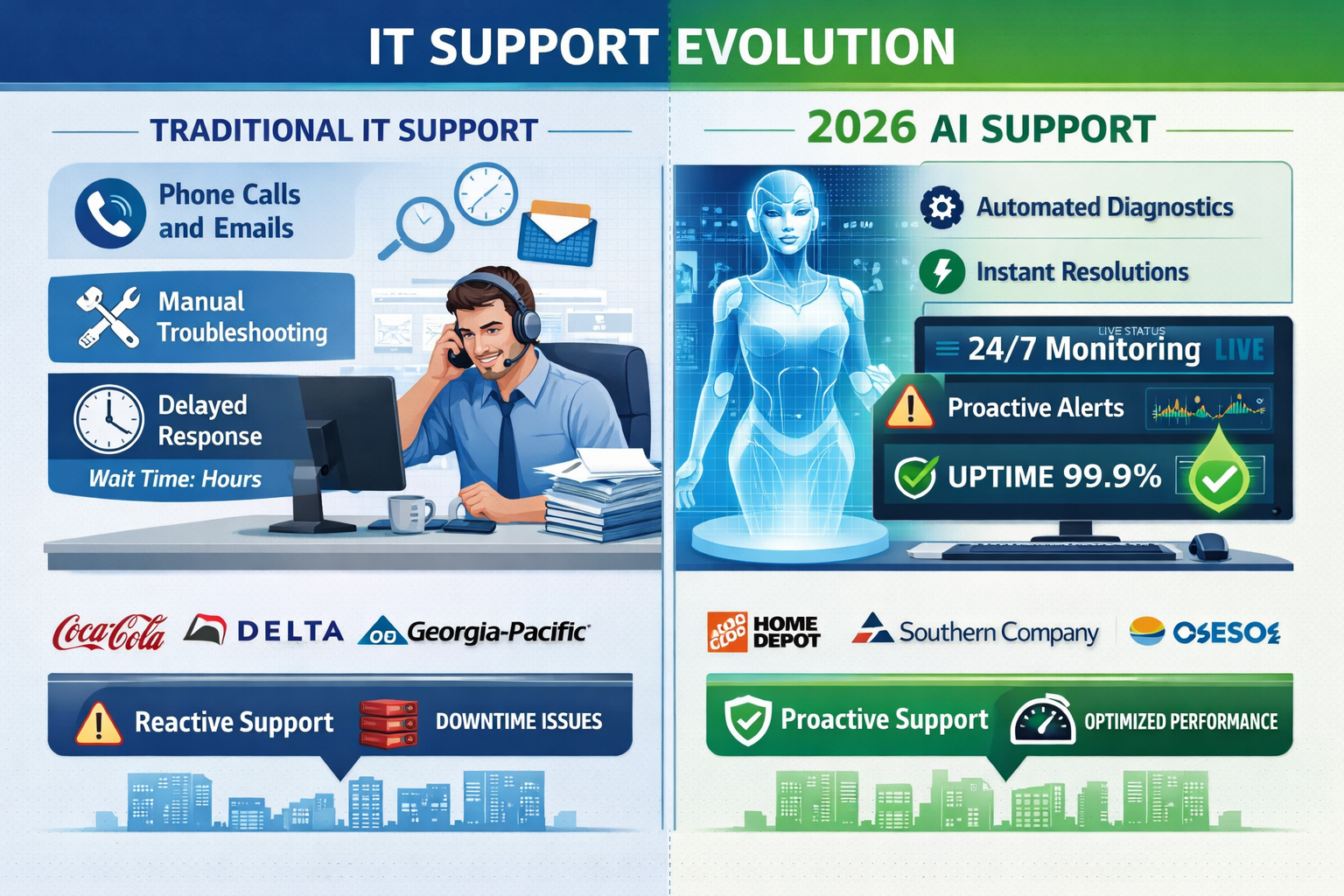
The days of waiting hours or even days for IT support are rapidly becoming a thing of the past. In 2026, artificial intelligence is transforming how small businesses in Metro Atlanta receive IT support, and the results are nothing short of remarkable.
What’s happening: AI-powered support systems are now capable of diagnosing and resolving many common IT issues automatically, often before users even notice there’s a problem. These systems can monitor network performance, predict hardware failures, and even optimize software performance in real-time.
I recently spoke with Sarah, who owns a dental practice in Buckhead. She told me about a Friday afternoon when her practice management software started running slowly. In the old days, this would have meant frantic calls to support, potential downtime over the weekend, and frustrated staff on Monday morning. Instead, her AI-powered monitoring system detected the performance degradation, identified a memory leak in a background process, and automatically restarted the affected service all within minutes and without any human intervention.
Why it matters: For small businesses, downtime isn’t just inconvenient; it’s expensive. Every minute your systems are down translates directly to lost productivity and revenue. AI-powered support systems are delivering:
- Predictive maintenance that prevents 80% of potential IT issues
- Same-day support for complex problems that require human intervention
- 24/7 monitoring that never sleeps, ensuring your business stays protected around the clock
- Automated resolution for routine issues, freeing up your team to focus on what matters most
What to do about it: The key is partnering with an IT provider that has embraced AI technology while maintaining the personal touch that small businesses need. Look for providers who offer:
- Proactive monitoring with AI-powered predictive analytics
- Transparent communication about what their AI systems can and cannot do
- Human expertise readily available when complex issues arise
- Industry expertise that understands your specific business needs
The most successful small businesses in Metro Atlanta are already leveraging these AI-powered solutions to gain a competitive advantage. They’re experiencing fewer disruptions, lower IT costs, and most importantly, genuine peace of mind knowing their technology is being monitored by systems that never take a coffee break.
The Cybersecurity Reality Check: New Threats and Requirements in 2026
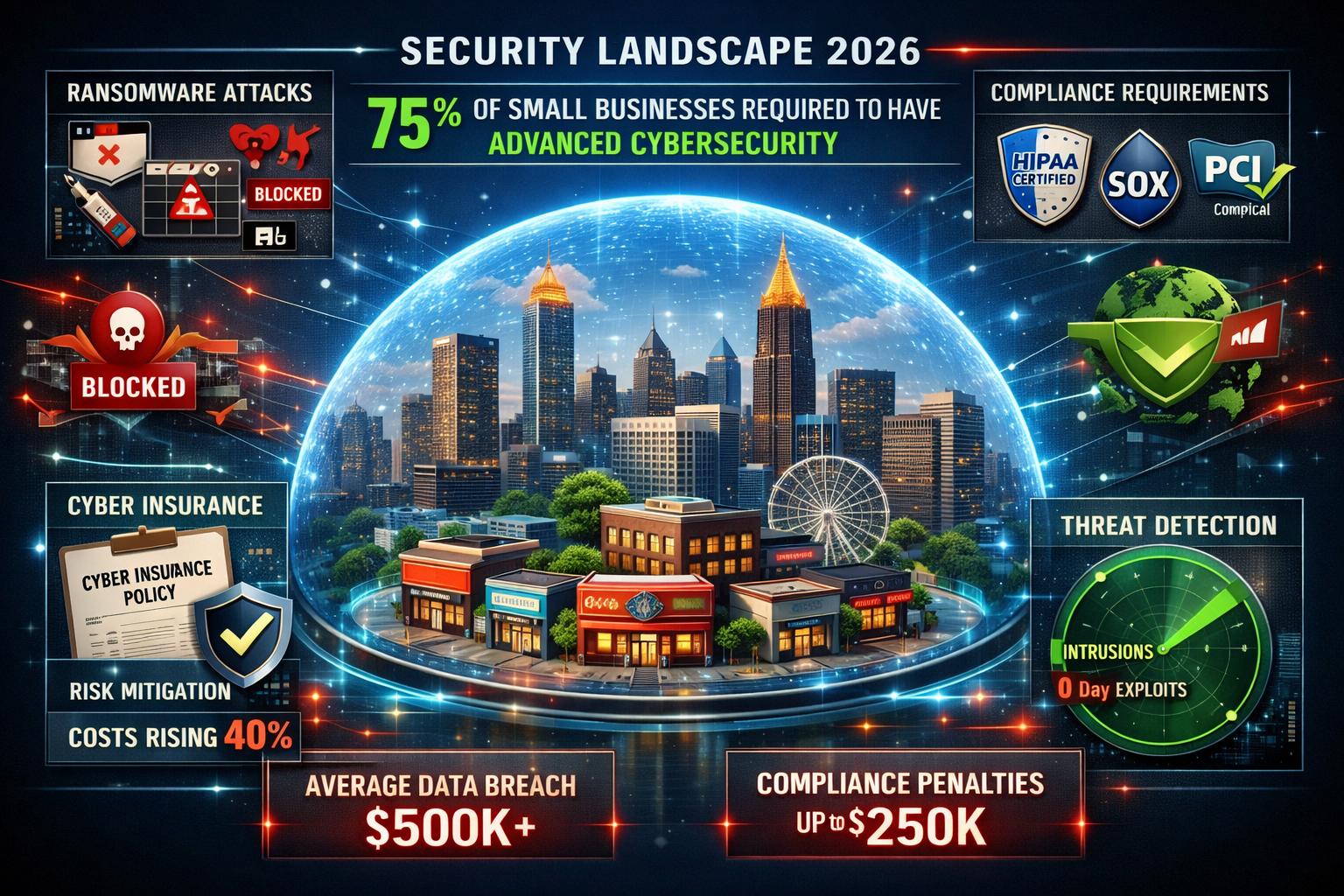
If you think cybersecurity was complicated in previous years, 2026 has brought a whole new level of complexity—and urgency—to protecting your small business. The threat landscape has evolved dramatically, and so have the requirements for staying secure and compliant.
What’s happening: Cybercriminals have become more sophisticated, targeting small businesses with precision attacks that exploit specific vulnerabilities. At the same time, regulatory requirements have tightened significantly, and cyber insurance providers are demanding more stringent security measures before they’ll provide coverage.
The numbers tell a sobering story. In Metro Atlanta alone, small business cyberattacks have increased by 40% over the past year, with the average cost of a data breach now exceeding $200,000 for businesses with fewer than 100 employees. Meanwhile, new federal and state regulations are requiring businesses in healthcare, finance, and even retail to implement specific security controls or face substantial penalties.
Why it matters: This isn’t just about technology anymore; it’s about business survival. I’ve seen too many small businesses in Metro Atlanta struggle with the aftermath of a security incident. Take Mike, who owns an automotive dealership in Marietta. Last year, a ransomware attack encrypted his customer database and financial records. Even though he had backups, the downtime and recovery process cost him over $150,000 in lost sales and remediation efforts.
But the financial impact was just the beginning. His cyber insurance claim was initially denied because his security measures didn’t meet the policy requirements. It took months of legal battles to get partial coverage, and the stress nearly forced him to close his doors.
The new reality includes:
- Mandatory multi-factor authentication for all business systems
- Regular security assessments required by insurance providers
- Employee training programs that must be documented and updated quarterly
- Incident response plans that meet specific regulatory standards
- Data encryption for all sensitive information, both in transit and at rest
What to do about it: The good news is that becoming secure and compliant doesn’t have to be overwhelming when you have the right partner. Here’s what you need to focus on:
Immediate Actions:
- Conduct a security assessment to understand your current vulnerabilities
- Review your cyber insurance policy to ensure you meet all requirements
- Implement multi-factor authentication across all business systems
- Establish regular backup procedures with tested recovery processes
Ongoing Requirements:
- Monthly security training for all employees
- Quarterly security reviews to address new threats
- Annual penetration testing to validate your defenses
- Continuous monitoring for suspicious activities
The businesses that are thriving in this new environment are those that have made cybersecurity a priority rather than an afterthought. They’re working with IT partners who understand both the technical requirements and the business impact of security decisions.
“Security isn’t just about protecting data—it’s about protecting your reputation, your customers’ trust, and your ability to operate.” – AlphaCIS Security Specialist
Cloud Strategy Evolution: What’s Working for Small Businesses in 2026
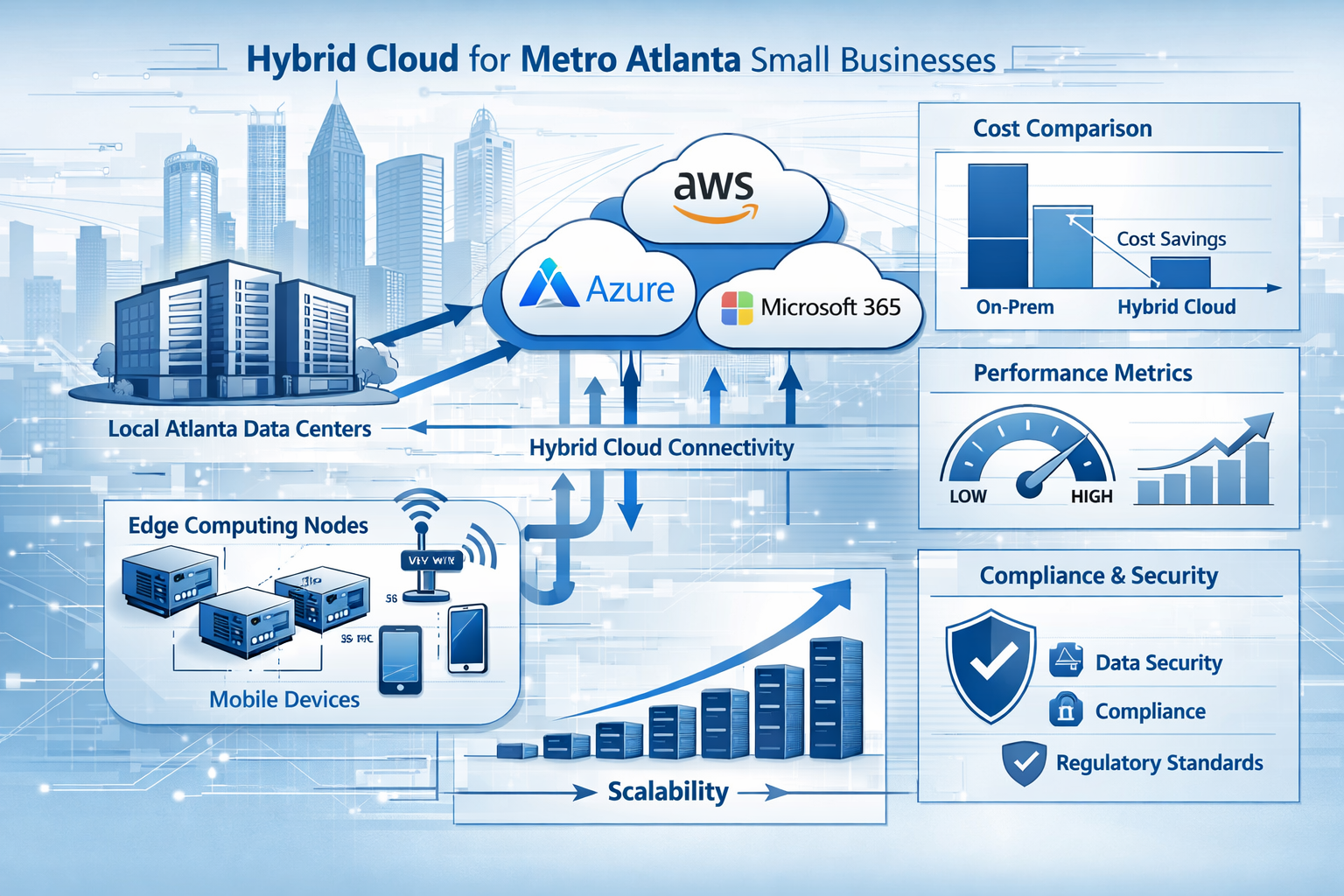
The cloud conversation has shifted dramatically in 2026. It’s no longer about whether to move to the cloud; it’s about finding the right cloud strategy that balances performance, cost, security, and compliance for your specific business needs.
What’s happening: Small businesses in Metro Atlanta are discovering that a one-size-fits-all cloud approach doesn’t work. Instead, successful companies are implementing hybrid strategies that combine the best of cloud services with on-premises solutions where it makes sense.
The cloud landscape itself has matured significantly. Major providers like Microsoft, Amazon, and Google have developed specialized offerings for small businesses, while local data centers in Atlanta are providing hybrid solutions that keep sensitive data close to home while leveraging cloud scalability for other applications.
Why it matters: The right cloud strategy can transform your business operations, but the wrong approach can lead to unexpected costs, performance issues, and compliance headaches. I’ve worked with businesses that saw their IT costs skyrocket after moving everything to the cloud without proper planning, and others that achieved significant savings and improved performance with a thoughtful approach.
Consider Jennifer’s accounting firm in Alpharetta. When she first moved to the cloud three years ago, she simply migrated everything to a single provider. By 2026, she was paying over $3,000 monthly for cloud services that weren’t performing well during tax season when she needed them most. After reassessing her needs and implementing a hybrid approach, she reduced her costs by 40% while improving performance and ensuring compliance with financial regulations.
The 2026 cloud reality includes:
Hybrid is King: Most successful small businesses are using a combination of:
- Cloud-based email and collaboration tools (Microsoft 365, Google Workspace)
- Local file storage for sensitive documents and frequently accessed files
- Cloud backup and disaster recovery for business continuity
- Industry-specific cloud applications for specialized business functions
Cost Optimization: Smart businesses are:
- Right-sizing their cloud resources to avoid paying for unused capacity
- Using local providers for hybrid solutions that reduce data transfer costs
- Implementing automated scaling to handle peak usage periods efficiently
- Negotiating enterprise-level pricing through managed service providers
Performance Focus: The emphasis has shifted to:
- Low-latency connections to cloud services
- Redundant internet connections to ensure reliability
- Edge computing for applications that require real-time processing
- Content delivery networks for customer-facing applications
What to do about it: Developing an effective cloud strategy requires understanding your specific business needs and growth plans. Here’s how to approach it:
Assessment Phase:
- Audit your current applications and data storage needs
- Identify compliance requirements for your industry
- Calculate total cost of ownership for different scenarios
- Assess your internet infrastructure and reliability needs
Implementation Strategy:
- Start with non-critical applications to test performance and costs
- Maintain local backups of critical data during transition periods
- Plan for scalability to handle business growth
- Establish clear data governance policies
Ongoing Optimization:
- Monitor usage and costs monthly to identify optimization opportunities
- Review performance metrics to ensure service levels meet business needs
- Update security measures as new threats emerge
- Plan for technology refresh cycles
The most successful small businesses are treating cloud strategy as an ongoing process rather than a one-time decision. They’re working with IT partners who can provide industry expertise and help them navigate the complex landscape of cloud options while ensuring they get the best value for their investment.
The Rise of Managed IT Services: True Partnership in 2026
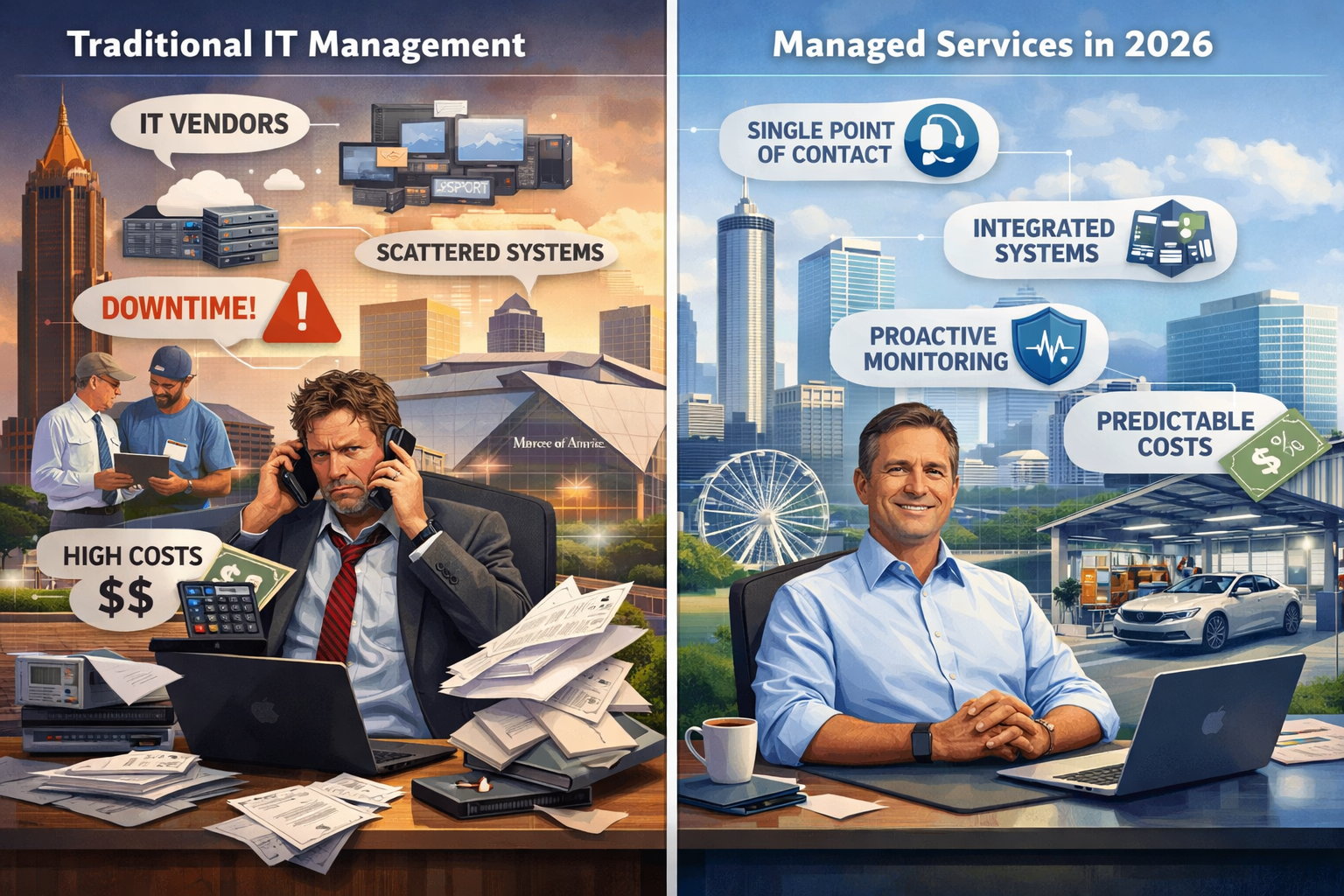
The managed IT services landscape has undergone a fundamental transformation in 2026. What was once primarily about break-fix support and basic monitoring has evolved into true strategic partnerships that drive business growth and provide genuine peace of mind.
What’s happening: Small businesses in Metro Atlanta are discovering that the most successful IT relationships go far beyond technical support. Today’s managed service providers are becoming integral business partners, offering personalized service that aligns technology decisions with business objectives.
The shift has been driven by several factors: the increasing complexity of technology environments, the critical importance of cybersecurity, and the recognition that technology is no longer just a cost center; it’s a competitive advantage when managed properly.
Why it matters: The difference between a traditional IT vendor and a true managed services partner can literally make or break your business in 2026. I’ve seen companies transform their operations when they find the right partner, and I’ve witnessed others struggle with providers who treat them as just another ticket number.
Take Robert’s manufacturing company in Duluth. For years, he worked with an IT company that responded to problems but never seemed to prevent them. His team was constantly dealing with slowdowns, security scares, and unexpected costs. When he switched to a managed services provider that offered true partnership, everything changed.
His new provider took the time to understand his business processes, implemented proactive solutions that prevented most issues before they occurred, and provided straightforward pricing that allowed him to budget accurately. Most importantly, they became a trusted advisor who helped him make technology decisions that supported his growth plans.
What a true managed IT partnership looks like in 2026:
Proactive vs. Reactive Approach:
- Predictive monitoring that identifies issues before they impact operations
- Regular system optimization to maintain peak performance
- Strategic planning sessions to align technology with business goals
- Preventive maintenance that reduces unexpected failures by 85%
Personalized Service Delivery:
- Dedicated account management with a deep understanding of your business
- Industry-specific expertise that addresses unique challenges
- Customized solutions rather than one-size-fits-all approaches
- Flexible service levels that scale with your business needs
Transparent Communication:
- Regular business reviews to discuss performance and future needs
- Clear reporting on system health, security status, and project progress
- Straightforward pricing with no hidden fees or surprise charges
- Accessible support when you need it most
Strategic Value:
- Technology roadmap planning aligned with business objectives
- Vendor management to optimize costs and performance
- Compliance assistance to meet industry requirements
- Growth support that scales with your business expansion
What to do about it: Finding the right managed services partner requires looking beyond technical capabilities to evaluate their partnership approach. Here’s what to look for:
Partnership Indicators:
- They ask about your business goals before discussing technology solutions
- They provide industry references from businesses similar to yours
- They offer transparent pricing with clear service level agreements
- They demonstrate proactive communication during the evaluation process
Service Evaluation Criteria:
- Response time commitments that meet your business requirements
- Monitoring capabilities that prevent issues rather than just detect them
- Security expertise that addresses current and emerging threats
- Scalability planning that supports your growth trajectory
Red Flags to Avoid:
Providers who focus only on technical features without understanding your business
Pricing that seems too good to be true or lacks transparency
References only from very different industries or business sizes
Pressure to make immediate decisions without proper evaluation
Questions to Ask Potential Partners:
- “How do you handle after-hours emergencies in our industry?”
- “What’s your approach to preventing problems rather than just fixing them?”
- “How do you stay current with compliance requirements for our sector?”
- “What’s included in your base service, and what costs extra?”
The most successful small businesses in Metro Atlanta are treating their managed IT services relationship as a strategic partnership rather than a vendor relationship. They’re finding providers who offer industry expertise, reliable partner status, and the kind of personalized service that truly eliminates IT headaches.
“The right managed services partner doesn’t just fix your technology they help you use technology to achieve your business goals.” – AlphaCIS Business Consultant
This partnership approach is delivering measurable results: businesses report 60% fewer IT-related disruptions, 40% lower total technology costs, and most importantly, the confidence to focus on growth rather than worry about their technology infrastructure.
Preparing Your Business for the IT Future: Actionable Next Steps
As we’ve explored The Future of Small Business IT in Metro Atlanta: What to Expect in 2026, one thing is clear: the businesses that thrive will be those that prepare proactively rather than react to changes as they happen. The technology landscape is moving fast, but with the right approach, you can stay ahead of the curve.
The Integration Challenge: The biggest challenge facing small businesses isn’t any single technology trend; it’s integrating all these advances into a cohesive strategy that supports business growth while managing costs and risks effectively.
I’ve worked with hundreds of Metro Atlanta businesses over the years, and the pattern is always the same: companies that take a strategic approach to technology planning consistently outperform those that make ad-hoc decisions when problems arise.
Consider the story of Maria’s accounting firm in Roswell. In early 2025, she was struggling with outdated systems, increasing cyber insurance requirements, and growing client demands for digital services. Instead of addressing each issue separately, she worked with our team to develop a comprehensive technology roadmap that addressed all her challenges simultaneously.
By taking a holistic approach, she was able to:
- Implement AI-powered monitoring that reduced IT issues by 75%
- Achieve compliance with new cybersecurity requirements ahead of schedule
- Deploy a hybrid cloud strategy that cuts her IT costs by 30%
- Establish a managed services partnership that gave her true peace of mind
The key was treating technology as a strategic business asset rather than a necessary expense.
Your 2026 IT Readiness Checklist:
Immediate Actions (Next 30 Days):
- Conduct a comprehensive IT assessment to understand your current state
- Review your cybersecurity posture against the 2026 requirements
- Evaluate your current IT support model and response times
- Assess your backup and disaster recovery capabilities
Short-term Planning (Next 90 Days):
- Develop a cloud strategy that balances cost, performance, and compliance
- Implement multi-factor authentication across all business systems
- Establish relationships with potential managed services partners
- Create a technology budget that accounts for proactive improvements
Strategic Initiatives (Next 6-12 Months):
- Deploy AI-powered monitoring and predictive maintenance systems
- Implement comprehensive cybersecurity measures, including employee training
- Optimize your cloud infrastructure for cost and performance
- Establish ongoing technology planning processes
Partnership Evaluation:
- Interview potential IT partners who offer true strategic partnership
- Verify industry expertise and local Metro Atlanta presence
- Confirm 24/7 monitoring and same-day support capabilities
- Ensure transparent pricing and clear service level agreements
The ROI of Proactive Planning: Businesses that invest in proactive IT planning typically see:
- 50-70% reduction in unexpected IT costs
- 80% fewer business-disrupting technology issues
- 30-40% improvement in overall operational efficiency
- Significant peace of mind knowing their technology is properly managed
Common Planning Mistakes to Avoid:
- Waiting for problems before addressing technology needs
- Making decisions based on price alone without considering total value
- Ignoring compliance requirements until they become urgent
- Treating IT as a cost center rather than a business enabler
Success Factors for 2026 and Beyond:
- Partner with experts who understand your industry and business goals
- Invest in proactive solutions that prevent problems rather than just fix them
- Maintain focus on security as a fundamental business requirement
- Plan for scalability to support business growth
- Embrace emerging technologies that provide competitive advantages
The businesses that will thrive in the evolving IT landscape are those that view technology as a strategic advantage rather than a necessary burden. They’re working with partners who provide industry expertise, reliable partner relationships, and proactive solutions that truly eliminate IT headaches.
Conclusion
The Future of Small Business IT in Metro Atlanta: What to Expect in 2026 is both exciting and challenging. The opportunities for small businesses to leverage advanced technology for competitive advantage have never been greater, but the complexity and risks have also increased significantly.
The key insights we’ve explored from AI-powered support systems to evolving cybersecurity requirements, from cloud strategy optimization to the rise of true managed services partnerships, all point to one fundamental truth: success in 2026 requires a proactive, strategic approach to technology.
The businesses that are already thriving understand that technology isn’t just about keeping the lights on anymore. It’s about creating sustainable competitive advantages, ensuring business continuity, and providing the foundation for growth. They’ve moved beyond reactive IT management to embrace proactive solutions that provide genuine peace of mind.
As you consider your own technology future, remember that you don’t have to navigate these changes alone. The right IT partner, one that offers industry expertise, personalized service, and 24/7 monitoring, can help you not just adapt to these changes but leverage them for business success.
The future of small business IT in Metro Atlanta is bright for those who prepare properly. The question isn’t whether these changes will impact your business; it’s whether you’ll be ready to capitalize on them when they do.