

Understanding the FTC Safeguards Rule: What Metro Atlanta Business Owners Need to Know

I remember sitting across from Maria, a small business owner in Buckhead, just last month. She runs a successful auto dealership and had no idea that her business fell under the FTC Safeguards Rule. “I thought this was just for big banks,” she told me, looking genuinely surprised. Unfortunately, Maria’s confusion is shared by thousands of business owners across Metro Atlanta.
The FTC Safeguards Rule isn’t new; it’s been around since 2003. However, the updated requirements that take effect in 2026 are significantly more stringent and comprehensive. The rule applies to “financial institutions,” but here’s where it gets tricky: the FTC’s definition is much broader than most people realize.
Who Does the Rule Actually Cover?
If your business handles customer financial information in any of these ways, you’re likely covered:
- Auto dealerships that arrange financing
- Mortgage brokers and loan officers
- Tax preparation services
- Real estate professionals handling earnest money
- Check cashing services
- Debt collectors
- Credit counseling services
- Payday lenders
The rule essentially covers any business that regularly obtains customer information in connection with providing a financial product or service. That’s a lot more businesses than just traditional banks and credit unions.
What Makes the 2026 Updates Different?
The updated Safeguards Rule requires businesses to implement a comprehensive information security program that includes:
Written Information Security Program (WISP) Your business must have a documented security program that’s approved by your board of directors or senior management.
Designated Security Officer You need to appoint a qualified individual to oversee your information security program.
Regular Risk Assessments Conduct periodic assessments to identify and address security vulnerabilities.
Data Encryption Encrypt customer information both in transit and at rest.
Incident Response Plan Develop and maintain procedures for responding to security incidents.
Employee Training Provide regular security awareness training to all staff members.
The Clock is Ticking: Why 2026 is Closer Than You Think for FTC Compliance
When I tell business owners that 2026 is Closer Than You Think: Preparing Your Business for the New FTC Safeguards Rule, I often get the same response: “We have plenty of time.” But do you really?
Let me share what happened to James, who owns three quick-service restaurants in Marietta. In late 2024, James figured he had “years” to worry about compliance. Fast forward to early 2025, and he’s scrambling to understand what data his POS systems collect, where it’s stored, and how it’s protected. What seemed like ample time suddenly felt like a sprint to the finish line.
The Reality of Implementation Timelines
Here’s what most business owners don’t realize about preparing for the new FTC Safeguards Rule:
Phase 1: Assessment and Planning (3-4 months)
- Inventory all systems that handle customer data
- Identify current security gaps
- Develop an implementation roadmap
- Budget for necessary upgrades
Phase 2: Infrastructure Implementation (4-6 months)
- Deploy encryption solutions
- Implement access controls
- Upgrade network security
- Install monitoring systems
Phase 3: Policy and Training Development (2-3 months)
- Create written security policies
- Develop incident response procedures
- Design employee training programs
- Establish vendor management protocols
Phase 4: Testing and Refinement (2-3 months)
- Conduct penetration testing
- Test incident response procedures
- Refine policies based on results
- Train staff on new procedures
That’s 11-16 months minimum for proper implementation, and that’s assuming everything goes smoothly. Factor in potential delays, budget approvals, and the learning curve, and you’re looking at 18-24 months for comprehensive compliance.
Common Roadblocks That Cause Delays
Through my work with Atlanta-area businesses, I’ve seen several common issues that can derail compliance timelines:
Budget Approval Delays Security infrastructure isn’t cheap, and getting budget approval often takes longer than expected.
Legacy System Challenges Older systems may not support modern encryption or may require complete replacement.
Staff Resistance Employees often resist new security procedures that seem to slow down their workflow.
Vendor Compliance Issues Third-party vendors may not meet your security requirements, forcing you to find alternatives.
“The businesses that start preparing now have the luxury of doing things right the first time. Those who wait until 2026 will be forced to make hasty decisions that could compromise both security and operations.” – IT Security Consultant
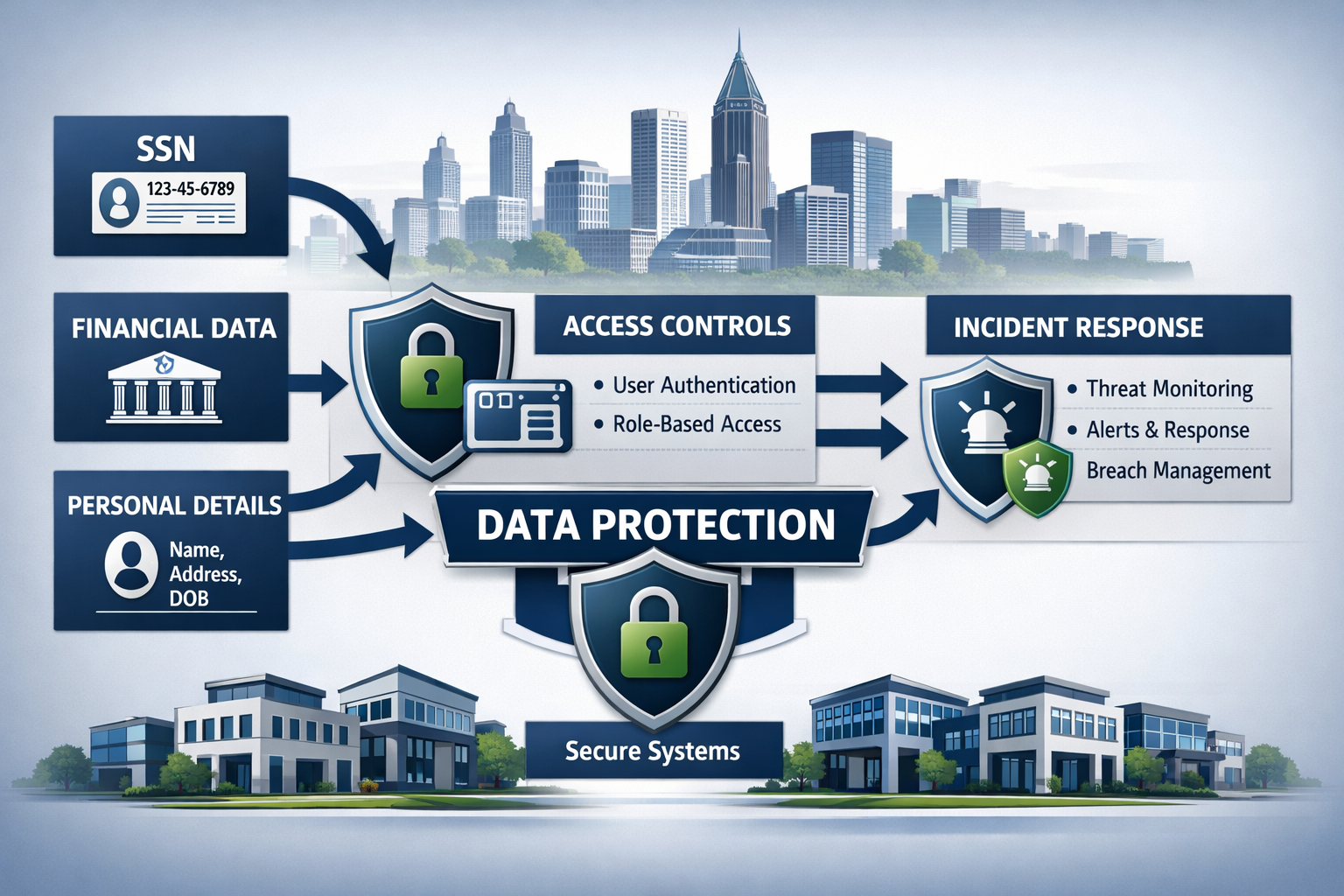
Essential Steps Small Businesses Must Take Now to Prepare for the FTC Safeguards Rule
The good news? 2026 is Closer Than You Think: Preparing Your Business for the New FTC Safeguards Rule doesn’t have to be overwhelming if you start with the right approach. I’ve helped dozens of Metro Atlanta businesses navigate this process, and there’s a clear roadmap that works.
Step 1: Conduct a Data Inventory and Risk Assessment
Before you can protect your data, you need to know what data you have and where it lives. This sounds simple, but it’s often the most eye-opening part of the process.
Start by mapping your data flow:
| Data Collection Point | Type of Information | Storage Location | Access Level |
|---|---|---|---|
| Customer applications | SSN, income, credit info | Local server | All staff |
| Payment processing | Credit card numbers | Cloud service | Managers only |
| Email communications | Personal details | Email server | Department heads |
| Paper files | Loan documents | File cabinets | Office manager |
When Sarah, who runs a tax preparation service in Roswell, completed this exercise, she discovered customer data in 12 different locations, including old backup drives she’d forgotten about. “I had no idea we were so scattered,” she admitted.
Step 2: Implement Core Security Controls
The FTC requires specific security measures, but these five are your foundation:
Multi-Factor Authentication (MFA) Require MFA for any system that accesses customer information. This single step can prevent 99.9% of automated attacks.
Data Encryption Encrypt customer data both “at rest” (stored) and “in transit” (being transmitted). Modern solutions make this much easier than it used to be.
Access Controls Implement role-based access – employees should only see the data they need for their job functions.
Device Management Secure all devices that access customer data, including smartphones, tablets, and laptops.
Regular Updates Keep all software and systems updated with the latest security patches.
Step 3: Develop Written Policies and Procedures
The FTC requires a Written Information Security Program (WISP). This isn’t just a checkbox exercise; it’s your roadmap for maintaining security.
Your WISP should include:
- Data handling procedures for collection, storage, and disposal
- Employee access policies defining who can access what information
- Incident response procedures for handling security breaches
- Vendor management requirements for third-party service providers
- Training requirements for all staff members
Step 4: Create an Incident Response Plan
When (not if) a security incident occurs, you need a clear plan. The FTC expects businesses to respond quickly and appropriately to minimize damage.
Your incident response plan should cover:
- Detection and Analysis – How will you identify a potential breach?
- Containment – What immediate steps will you take to limit damage?
- Investigation – How will you determine what happened and what data was affected?
- Notification – Who needs to be notified and when?
- Recovery – How will you restore normal operations?
- Lessons Learned – How will you prevent similar incidents?
Step 5: Establish Ongoing Monitoring and Maintenance
Compliance isn’t a one-time project; it’s an ongoing commitment. The FTC expects businesses to regularly review and update their security programs.
Monthly Tasks:
- Review access logs for unusual activity
- Update software and security patches
- Check backup integrity
Quarterly Tasks:
- Conduct security awareness training
- Review and update policies
- Test incident response procedures
Annual Tasks:
- Comprehensive risk assessment
- Penetration testing
- Policy review and updates
Working with a Trusted IT Provider: Your Key to Successful FTC Safeguards Compliance
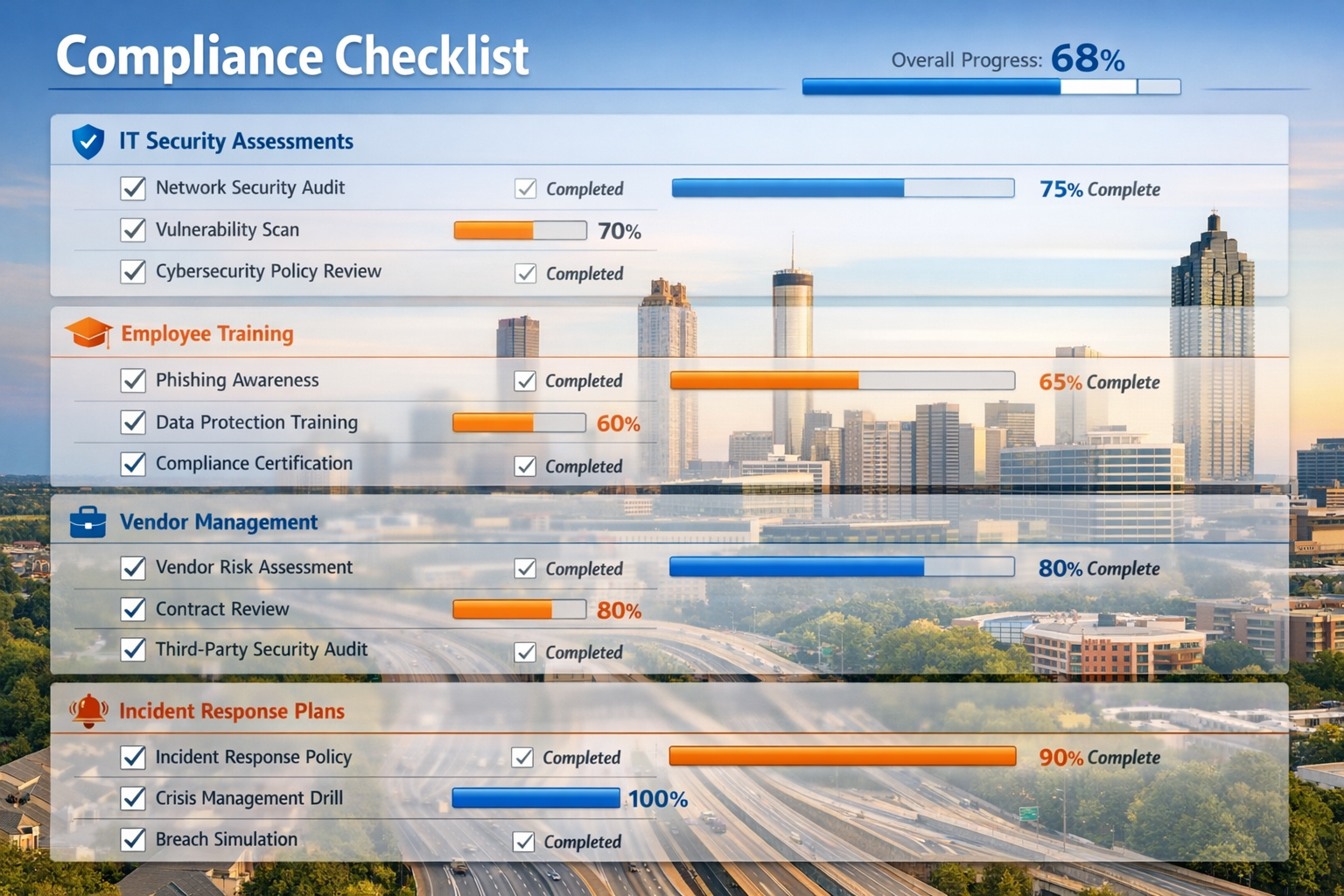
Here’s what I’ve learned after helping hundreds of Metro Atlanta businesses: trying to handle the FTC Safeguards Rule compliance alone is like trying to perform surgery on yourself. Technically possible, but not recommended.
Why DIY Compliance Often Fails
Last year, I met with Robert, who owns a small lending company in Sandy Springs. He’d spent six months trying to implement compliance measures himself. “I thought I could save money by doing it internally,” he told me. “Instead, I wasted half a year and still wasn’t compliant.”
Robert’s experience isn’t unusual. Here’s why businesses struggle with DIY compliance:
Time Constraints Business owners are already stretched thin. Adding complex compliance requirements to your plate means something else gets neglected.
Knowledge Gaps Cybersecurity is a specialized field that changes rapidly. What worked last year might be obsolete today.
Hidden Costs The “free” approach often becomes expensive when you factor in mistakes, rework, and opportunity costs.
Technical Complexity Modern security solutions require expertise to implement correctly. Poor implementation can be worse than no security at all.
What to Look for in an IT Provider
Not all IT providers are created equal when it comes to preparing your business for the new FTC Safeguards Rule. Here’s what you should demand:
FTC Compliance Experience Ask for specific examples of businesses they’ve helped achieve compliance. A generic “cybersecurity” experience isn’t enough.
Local Presence Choose a provider with a strong Metro Atlanta presence. They understand local business challenges and can provide on-site support when needed.
Comprehensive Services Look for providers who can handle everything from risk assessments to employee training. Coordinating multiple vendors is a compliance nightmare.
Ongoing Support Compliance is ongoing, not a one-time project. Your provider should offer continuous monitoring and support.
Clear Communication They should be able to explain complex technical concepts in plain English and provide regular updates on your compliance status.
The Right Partnership Approach
The best IT providers don’t just implement technology – they become your compliance partner. Here’s what that looks like:
Strategic Planning They start by understanding your business, not just your technology. Compliance solutions should support your operations, not hinder them.
Regular Reporting You should receive clear, understandable reports on your compliance status and any areas that need attention.
Employee Education Your provider should train your team, not just install software. Human error is still the biggest security risk.
Incident Support When something goes wrong, you need immediate support. Look for providers who offer 24/7 incident response.
Continuous Improvement Your compliance program should evolve as your business grows and threats change.
Questions to Ask Potential IT Providers
When evaluating IT providers for FTC Safeguards compliance, ask these specific questions:
- “How many businesses have you helped achieve FTC Safeguards compliance?”
- “Can you provide references from similar businesses in Metro Atlanta?”
- “What’s your typical timeline for achieving compliance?”
- “How do you handle ongoing monitoring and maintenance?”
- “What happens if we have a security incident?”
- “How do you stay current with changing FTC requirements?”
- “What’s included in your compliance support, and what costs extra?”
Red Flags to Avoid
Be wary of IT providers who:
- Promise instant compliance – Legitimate compliance takes time
- Focus only on technology – Ignore policies, training, and procedures
- Can’t explain their approach – Use technical jargon without clear explanations
- Offer one-size-fits-all solutions – Every business has unique requirements
- Don’t provide ongoing support – Compliance is continuous, not a project
Creating Your 2025 Action Plan: Steps to Take Before 2026 Arrives
The difference between businesses that successfully achieve compliance and those that scramble at the last minute comes down to planning. 2026 is Closer Than You Think: Preparing Your Business for the New FTC Safeguards Rule requires a methodical approach starting now.
Your Q1 2025 Priorities (January – March)
Week 1-2: Initial Assessment
- Determine if your business falls under the FTC Safeguards Rule
- Inventory all systems that handle customer financial information
- Identify your current security measures
Week 3-4: Budget Planning
- Get quotes from qualified IT providers
- Develop a compliance budget
- Secure management approval for necessary investments
Month 2: Provider Selection
- Interview potential IT partners
- Check references and credentials
- Select your compliance partner
Month 3: Detailed Assessment
- Conduct a comprehensive risk assessment with your IT provider
- Identify all compliance gaps
- Develop a detailed implementation timeline
Your Q2 2025 Priorities (April – June)
Infrastructure Foundation
- Implement core security controls (MFA, encryption, access controls)
- Upgrade network security infrastructure
- Deploy monitoring and logging solutions
Policy Development
- Create Written Information Security Program (WISP)
- Develop incident response procedures
- Establish vendor management protocols
Your Q3 2025 Priorities (July – September)
Employee Training
- Conduct initial security awareness training
- Implement ongoing training programs
- Test employee understanding and compliance
System Testing
- Conduct penetration testing
- Test incident response procedures
- Validate all security controls
Your Q4 2025 Priorities (October – December)
Final Preparations
- Complete any remaining implementation tasks
- Conduct final compliance review
- Document all compliance measures
Ongoing Operations
- Establish regular monitoring procedures
- Schedule ongoing training and assessments
- Prepare for the 2026 compliance deadline
Monthly Compliance Checklist
To stay on track, use this monthly checklist throughout 2025:
Security Monitoring
- Review access logs and security alerts
- Check for software updates and patches
- Verify backup integrity
Policy Review
- Update policies based on business changes
- Review vendor compliance status
- Document any security incidents
Training and Awareness
- Conduct monthly security training
- Test employee knowledge
- Update training materials as needed
Progress Tracking
- Review compliance timeline
- Identify any delays or issues
- Adjust plans as necessary
Conclusion: Taking Action Before It’s Too Late

As I write this in 2025, I can’t help but think about all the conversations I’ll have with business owners over the next 12 months. Some will be proactive discussions about compliance planning. Others will be emergency calls from businesses that waited too long and are now facing the reality that 2026 is Closer Than You Think: Preparing Your Business for the New FTC Safeguards Rule isn’t just a catchy phrase; it’s an urgent business imperative.
The businesses that succeed will be those that start now. They’ll have the time to implement solutions properly, train their teams effectively, and build security into their operations rather than bolting it on at the last minute. They’ll also have a competitive advantage; customers increasingly prefer to work with businesses that take data protection seriously.
Your Next Steps
Don’t let 2026 is Closer Than You Think: Preparing Your Business for the New FTC Safeguards Rule become a crisis for your Metro Atlanta business. Here’s what you need to do this week:
Schedule a Compliance Assessment Contact a qualified IT provider to evaluate your current security posture and identify gaps.
Secure Your Budget Get approval for compliance investments now, before budgets get locked for the year.
Create Your Timeline Develop a month-by-month plan that ensures you’re ready well before the 2026 deadline.
Engage Your Team Start educating your employees about the importance of data security and their role in compliance.
Document Everything Begin creating the policies and procedures you’ll need for your Written Information Security Program.
The FTC Safeguards Rule isn’t going away, and the deadline isn’t moving. However, with the right preparation and the right partner, compliance doesn’t have to be a burden; it can be a competitive advantage that fosters customer trust and safeguards your business for years to come.
The clock is ticking, but you still have time to do this right. The question is: will you take action now, or will you be making emergency calls in late 2025?