

The Perfect Storm: Why Manufacturers Have Become Prime Targets
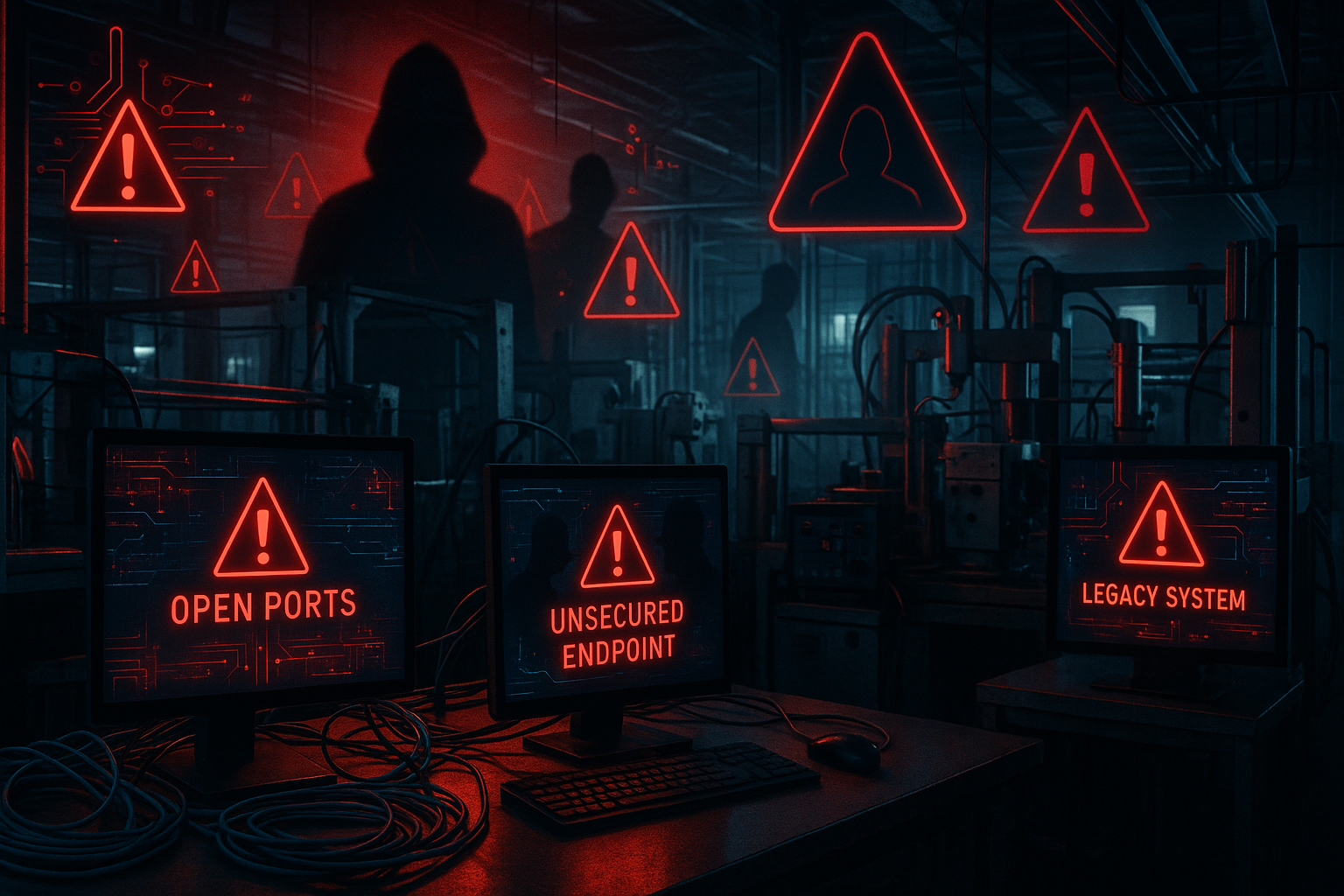
I’ve spent the last decade working with manufacturing companies, and I can tell you firsthand that the landscape has changed dramatically. Why cybercriminals love manufacturers isn’t just about the money though that’s certainly part of it. It’s about the perfect storm of factors that make these companies incredibly attractive targets.
The High-Stakes Game of Industrial Disruption
Manufacturing companies operate on razor-thin margins and tight schedules. When production stops, money hemorrhages at an alarming rate. A single hour of downtime at a major automotive plant can cost upwards of $50,000. Cybercriminals know this, and they’ve weaponized it.
Here’s what makes manufacturers so appealing to cybercriminals:
- High-value targets: Manufacturing companies typically have substantial revenue and can afford significant ransom payments
- Time-sensitive operations: Every minute of downtime costs money, creating pressure to pay quickly
- Supply chain impact: Attacking one manufacturer can disrupt entire industry ecosystems
- Valuable intellectual property: Trade secrets, designs, and proprietary processes are worth millions
- Connected systems: Modern factories are digital goldmines with thousands of connected devices
The Legacy System Vulnerability
One of my clients, a steel manufacturer in Ohio, learned this lesson the hard way. They had been running the same control systems for nearly 15 years, systems that were never designed to be connected to the internet but had gradually become networked as the company modernized. These legacy systems became the entry point for a sophisticated attack that cost them three weeks of production.
The reality is stark: Most manufacturing facilities are running on a patchwork of systems spanning decades of technology evolution. You might have:
- Industrial control systems from the 1990s
- Modern ERP software from the cloud
- IoT sensors installed last month
- Legacy databases that “just work.”
Each of these represents a potential entry point, and cybercriminals are experts at finding the weakest link.
The Anatomy of a Manufacturing Cyberattack: What You Can Do to Stay Off Their Radar
Understanding why cybercriminals love manufacturers and what you can do to stay off their radar requires looking at their playbook. These aren’t random attacks they’re carefully orchestrated campaigns that exploit specific vulnerabilities unique to industrial environments.
The Three-Phase Attack Strategy
Phase 1: Reconnaissance and Entry. Cybercriminals spend weeks or months studying their targets. They’re looking for:
- Publicly exposed industrial control systems
- Unpatched software vulnerabilities
- Weak employee credentials
- Unsecured remote access points
Phase 2: Lateral Movement and Escalation Once inside, they move quietly through your network, mapping systems and identifying critical assets. They’re particularly interested in:
- Production control systems
- Financial databases
- Customer information
- Intellectual property repositories
Phase 3: Execution and Extortion The final phase involves encrypting critical systems and demanding payment. But here’s what many don’t realize by this point: they’ve often been stealing data for months.
Real-World Attack Vectors
Let me share some of the most common ways I’ve seen manufacturers get compromised:
Spear Phishing Campaigns Attackers research your employees on LinkedIn and craft personalized emails that look legitimate. I once saw an attack where criminals impersonated a supplier’s CEO, requesting “urgent” system access for a “critical order.”
USB Drops. This old-school tactic still works. Attackers drop infected USB drives in parking lots, knowing curious employees will plug them in. One automotive manufacturer lost $3.2 million this way.
Exposed HMI Systems Human-Machine Interface systems are often connected to the internet without proper security. Shodan.io, a search engine for connected devices, reveals thousands of exposed manufacturing systems daily.
IoT Device Exploitation Smart sensors, cameras, and monitoring devices often ship with default passwords. These become stepping stones into larger networks.
Building Your Digital Fortress: Practical Steps to Stay Off Their Radar
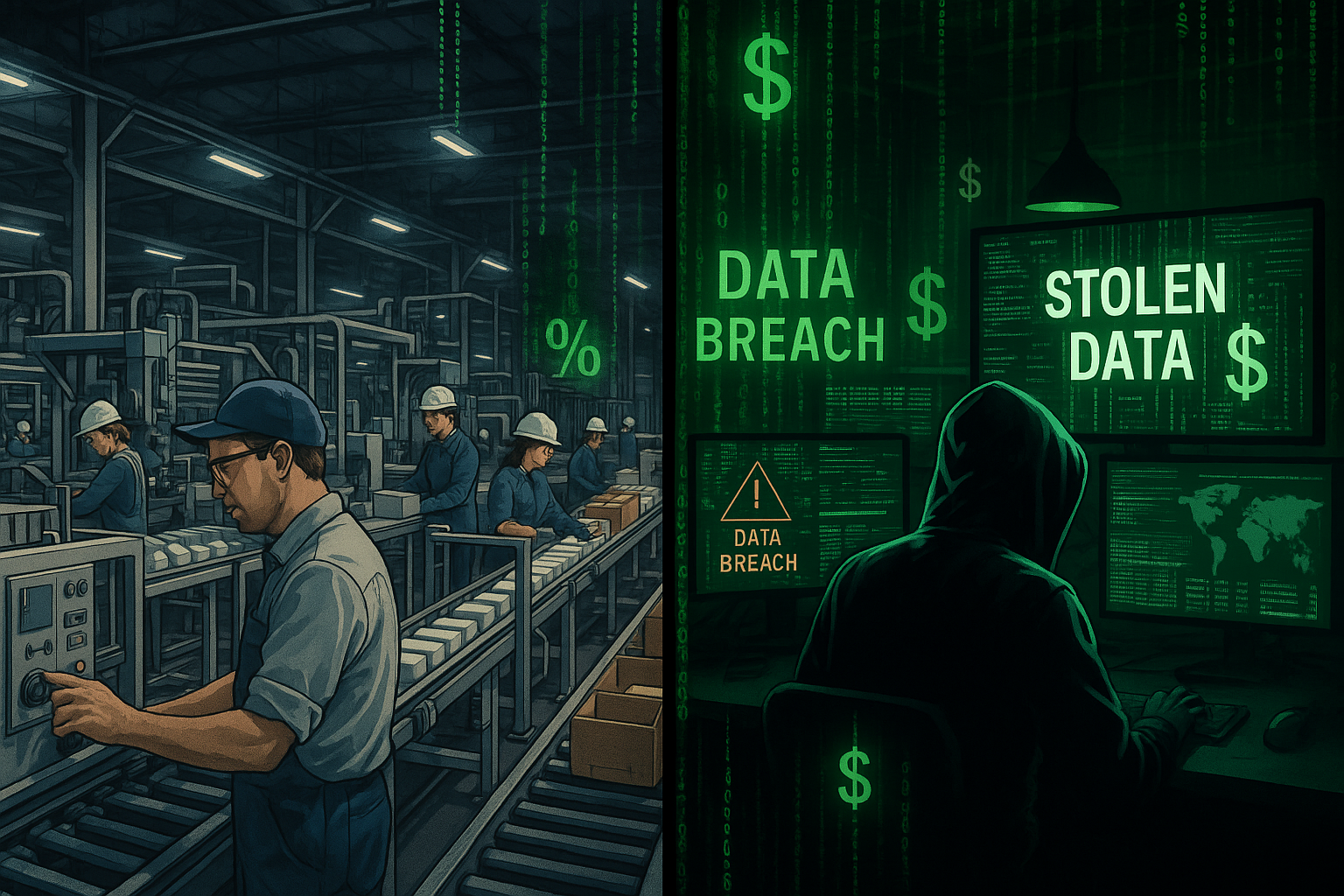
Now that we understand the threat landscape, let’s talk about what you can do to stay off their radar. The good news? Most attacks are preventable with the right strategies and mindset.
The Layered Defense Approach
Think of cybersecurity like physical security for your facility. You wouldn’t rely on just one lock you have fences, guards, cameras, and access controls. Digital security works the same way.
Layer 1: Perimeter Security
- Next-generation firewalls that inspect traffic at the application level
- Intrusion detection systems that monitor for suspicious activity
- VPN solutions for secure remote access
- Email security that blocks phishing attempts
Layer 2: Network Segmentation. This is crucial for manufacturers. Your production networks should be isolated from your business networks. I recommend:
- Separate VLANs for different operational areas
- Air-gapped systems for critical control processes
- Micro-segmentation to limit lateral movement
- Zero-trust architecture, where nothing is trusted by default
Layer 3: Endpoint Protection. Every device on your network needs protection:
- Advanced endpoint detection that uses behavioral analysis
- Application whitelisting to prevent unauthorized software
- Device management for IoT and industrial devices
- Regular patching and update management
The Human Element: Your First and Last Line of Defense
Technology alone won’t save you. I’ve seen companies with million-dollar security systems compromised by a single employee clicking the wrong link. Your people are both your greatest vulnerability and your strongest asset.
Essential Training Components:
- Monthly security awareness sessions with real-world examples
- Simulated phishing campaigns to test and improve responses
- Incident response drills so everyone knows their role
- Vendor and contractor security requirements
“The best firewall in the world is useless if an employee opens the front door for an attacker.” – Security Expert
The Cost of Inaction vs. Investment: Why Prevention Pays

Let’s talk numbers, because I know that’s what ultimately drives decisions in manufacturing. The math on cybersecurity investment is compelling when you break it down.
The True Cost of a Cyberattack
When calculating the cost of a cyberattack, most companies only consider the ransom payment. But that’s just the tip of the iceberg:
| Cost Category | Average Impact | Duration |
|---|---|---|
| Production Downtime | $50,000-$200,000/hour | 3-21 days |
| Data Recovery | $500,000-$2M | 2-8 weeks |
| Regulatory Fines | $100,000-$5M | Ongoing |
| Customer Loss | 10-30% revenue drop | 6-24 months |
| Reputation Damage | Immeasurable | Years |
| Legal Costs | $200,000-$1M | 6-18 months |
The ROI of Proactive Security
Compare those costs to a comprehensive cybersecurity program:
Annual Investment Breakdown:
- Security tools and software: $50,000-$200,000
- Professional services: $100,000-$300,000
- Training and awareness: $10,000-$50,000
- Incident response planning: $25,000-$75,000
Total annual investment: $185,000-$625,000
Even at the high end, you’re looking at an investment that’s a fraction of a single successful attack. And here’s the kicker, proper cybersecurity often improves operational efficiency, reduces insurance costs, and opens doors to new business opportunities.
Case Study: Midwest Manufacturer’s Transformation
One of my favorite success stories involves a $500M manufacturer of industrial equipment. When I first met their leadership team, they had experienced three “minor” security incidents in 18 months and were spending countless hours dealing with malware infections and system slowdowns.
Their transformation included:
- Network segmentation, separating production from business systems
- Endpoint detection and response on all devices
- Security awareness training for all 1,200 employees
- Incident response plan with quarterly drills
Results after 12 months:
- Zero successful cyberattacks
- 85% reduction in security incidents
- 15% improvement in system uptime
- $2.3M in avoided downtime costs
- 25% reduction in cyber insurance premiums
The total investment was $380,000, and they saved over $2.8M in the first year alone.
Advanced Strategies: Staying Ahead of Evolving Threats
Understanding why cybercriminals love manufacturers and what you can do to stay off their radar requires thinking like an attacker. The threat landscape evolves constantly, and your defenses must evolve with it.
Emerging Threat Vectors in 2025
AI-Powered Attacks: Cybercriminals are now using artificial intelligence to:
- Create more convincing phishing emails
- Automate vulnerability discovery
- Generate deepfake audio for social engineering
- Bypass traditional security controls
Supply Chain Infiltration Rather than attacking you directly, criminals target your suppliers and use those relationships to gain access. This is particularly dangerous for manufacturers with complex supply chains.
Cloud Misconfigurations. As manufacturers move to hybrid cloud environments, misconfigurations create new vulnerabilities. I’ve seen companies accidentally expose entire databases because of incorrect cloud storage settings.
Building Resilience Through Intelligence
Threat Intelligence Integration Modern cybersecurity isn’t just about blocking known threats—it’s about predicting and preparing for new ones. This includes:
- Industry-specific threat feeds that focus on manufacturing targets
- Dark web monitoring to detect if your data is being sold
- Vulnerability intelligence that prioritizes patches based on active exploitation
- Behavioral analytics that detect anomalies before they become breaches
Continuous Monitoring and Response. The days of “set it and forget it” security are over. You need:
- 24/7 security operations center (either in-house or outsourced)
- Automated response capabilities that can isolate threats immediately
- Regular penetration testing to identify weaknesses
- Compliance monitoring to ensure ongoing adherence to standards
The Partnership Approach
Here’s something I’ve learned after years in this industry: You don’t have to go it alone. The most successful manufacturers I work with treat cybersecurity as a partnership between internal teams and external experts.
Internal Capabilities to Develop:
- Security-minded culture from the factory floor to the C-suite
- Basic incident response capabilities
- Vendor risk management processes
- Regular security assessments and audits
External Partnerships to Consider:
- Managed security service providers for 24/7 monitoring
- Cybersecurity consultants for strategic planning
- Incident response specialists for when things go wrong
- Industry groups for threat intelligence sharing
Taking Action: Your Cybersecurity Roadmap

Understanding why cybercriminals love manufacturers and what you can do to stay off their radar is just the beginning. The real challenge is translating that knowledge into action. Based on my experience working with hundreds of manufacturing companies, here’s a practical roadmap you can follow.
The 90-Day Quick Wins
Week 1-2: Assessment and Inventory
- Complete a comprehensive asset inventory of all connected devices
- Identify critical systems that would halt production if compromised
- Document current security controls and their effectiveness
- Review cyber insurance policies and coverage gaps
Week 3-6: Immediate Risk Reduction
- Change all default passwords on industrial devices and systems
- Implement basic network segmentation between critical and non-critical systems
- Deploy endpoint protection on all computers and servers
- Establish backup and recovery procedures with offline storage
Week 7-12: Foundation Building
- Launch security awareness training for all employees
- Implement multi-factor authentication for all administrative accounts
- Establish vendor security requirements and assessment procedures
- Create an incident response plan with clear roles and responsibilities
The 6-Month Strategic Implementation
Months 2-3: Advanced Defenses
- Deploy network monitoring tools with industrial protocol awareness
- Implement application whitelisting on critical control systems
- Establish vulnerability management processes with regular scanning
- Create secure remote access solutions for maintenance and support
Months 4-6: Operational Excellence
- Conduct tabletop exercises to test incident response procedures
- Implement security metrics and reporting for executive visibility
- Establish threat intelligence feeds relevant to your industry
- Begin regular penetration testing to validate security controls
The Long-Term Vision (12+ Months)
Year 1 and Beyond:
- Achieve compliance with relevant frameworks (NIST, ISO 27001, etc.)
- Implement zero-trust architecture principles throughout the organization
- Establish security operations center capabilities (in-house or outsourced)
- Create a culture of security where every employee is a defender
The Partnership Advantage: Why Going It Alone Isn’t Enough
Here’s something I’ve learned after working with manufacturers of all sizes: The most successful cybersecurity programs combine internal expertise with external partnerships. You don’t need to become a cybersecurity expert overnight, but you do need to know how to leverage the right resources.
Building Your Internal Capabilities
Start with these key roles:
- Security champion from operations who understands both IT and OT
- Executive sponsor who can drive organization-wide change
- IT leader who can implement technical controls
- Training coordinator who can drive awareness programs
Strategic External Partnerships
Consider these partnership models:
- Managed Security Service Provider (MSSP) for 24/7 monitoring and response
- Cybersecurity consultant for strategic planning and assessments
- Industry groups for threat intelligence and best practice sharing
- Technology vendors who understand manufacturing environments
“The question isn’t whether you’ll face a cyberattack; it’s whether you’ll be ready when it happens. The manufacturers who survive and thrive are those who prepare proactively, not reactively.”
Conclusion: Your Manufacturing Cybersecurity Action Plan
The reality is clear: cybercriminals love manufacturers because of the unique combination of valuable assets, time-sensitive operations, and often outdated security practices. But understanding what you can do to stay off their radar puts you ahead of 70% of your competitors who are still treating cybersecurity as an afterthought.
The manufacturers who will thrive in 2025 and beyond are those who recognize that cybersecurity isn’t just an IT issue; it’s a business imperative that requires leadership commitment, employee engagement, and strategic investment.
Your next steps should be:
- Assess your current risk using the framework outlined in this article
- Prioritize quick wins that can immediately reduce your exposure
- Develop a comprehensive strategy that aligns with your business objectives
- Build the right partnerships to fill capability gaps
- Create a culture where cybersecurity is everyone’s responsibility
Remember, the cost of prevention is always less than the cost of recovery. The question isn’t whether you can afford to invest in cybersecurity, it’s whether you can afford not to.
The cybercriminals are already studying your industry, your company, and your vulnerabilities. The time to act is now, before you become their next success story.